
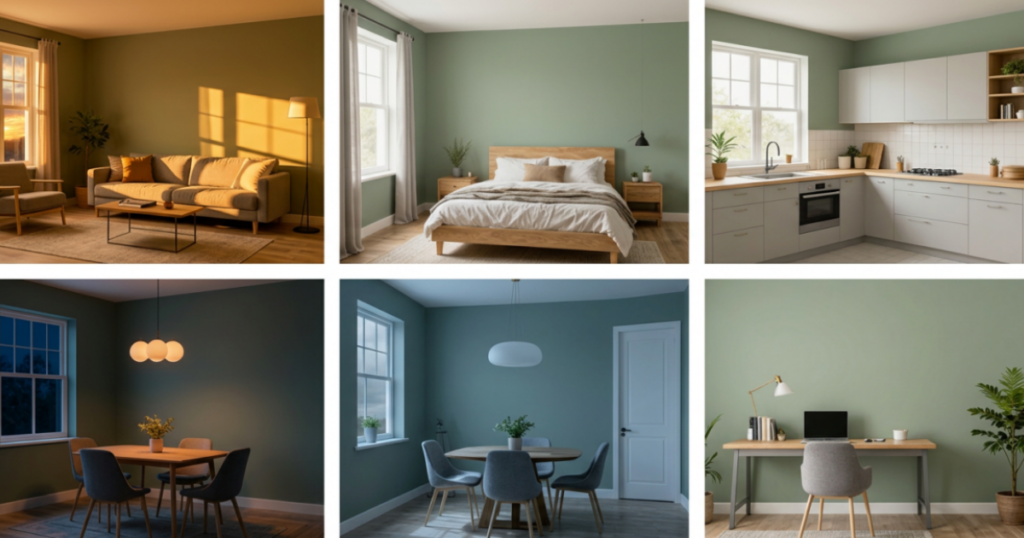
One of the most surprising parts of choosing paint is realizing that the same color can look completely different from one room to another.
A color that appears warm and soft in one space may suddenly look cooler, darker, brighter, or even slightly different in tone elsewhere. This is completely normal and happens because paint color is heavily influenced by lighting, surrounding materials, sheen, and the environment around it.
Understanding why paint color changes from room to room can help homeowners make more confident color decisions and avoid unexpected results.
Lighting Has the Biggest Impact
All paint colors have an LRV, which measures how much light they reflect. Lighting is one of the most important factors affecting how paint color appears. Both natural and artificial light can dramatically change:
- Brightness
- Warmth
- Depth
- Undertones
- Overall color perception
For example:
- North-facing rooms often create cooler light
- South-facing rooms tend to feel warmer and brighter
- East-facing rooms change throughout the day
- West-facing rooms may appear warmer in the afternoon
The same paint color may appear entirely different depending on the amount and direction of light entering the room.
Artificial Lighting Changes Color Too
Light bulbs also influence paint color appearance. Different bulb types may produce:
- Warm yellow tones
- Neutral white light
- Cooler blue light
This can affect how paint appears during the evening or in rooms with limited natural light. Testing paint samples under the actual lighting conditions of the space is extremely important before making a final decision.
Undertones Play a Major Role
Almost every paint color contains undertones. Undertones are the subtle background hues within a color that may lean:
- Warm
- Cool
- Gray
- Green
- Blue
- Red
- Yellow
These undertones often become more noticeable depending on:
- Lighting conditions
- Flooring
- Furniture
- Adjacent colors
- Natural daylight exposure
This is why a neutral paint color may suddenly appear slightly green, blue, or beige in certain rooms.
Paint Sheen Affects Appearance
The sheen of the paint can also change how color is perceived. Higher sheens reflect more light, which can make colors appear:
- Brighter
- Sharper
- More reflective
Lower sheens absorb more light and may create:
- Softer appearance
- Richer depth
- More muted color perception
This is one reason the same color may look different when used in matte versus satin or semi-gloss finishes.
Surrounding Materials Influence Color
Paint does not exist in isolation. Nearby materials can affect how a color appears, including:
- Flooring
- Countertops
- Cabinets
- Furniture
- Window treatments
- Decorative finishes
Colors often react to the tones surrounding them, making coordination throughout the space extremely important.
Why Sampling Paint Matters
Because color can shift so dramatically between environments, paint sampling is one of the most important steps in the selection process. Paint samples can help avoid surprises after the full project is completed. Always make sure to view the paint color:
- At different times of day
- Under various lighting conditions
- Alongside surrounding materials
This is one reason why many homeowners and professionals rely on premium paint brands such as Benjamin Moore, which are known for color depth, consistency, and extensive color selection systems.
Room Size and Architecture Matter Too
Large open spaces, ceiling height, and architectural details can also influence color perception. For example:
- Smaller rooms may intensify darker colors
- Large open areas can make colors feel lighter
- Crown molding and trim create visual contrast
- Ceiling height changes how light moves through the space
Even the amount of wall space can affect how dominant a color feels once applied.
Final Thoughts
Paint color is influenced by far more than the color chip itself. Lighting, undertones, sheen, surrounding materials, and room architecture all affect how paint appears once applied.
Understanding these factors can help homeowners and professionals make more informed paint selections and achieve results that feel balanced, cohesive, and visually appealing throughout the space.
Visit any of our paint shops near you to speak with a trained team member. We will answer any question and walk you through any project, DIY or professional.