
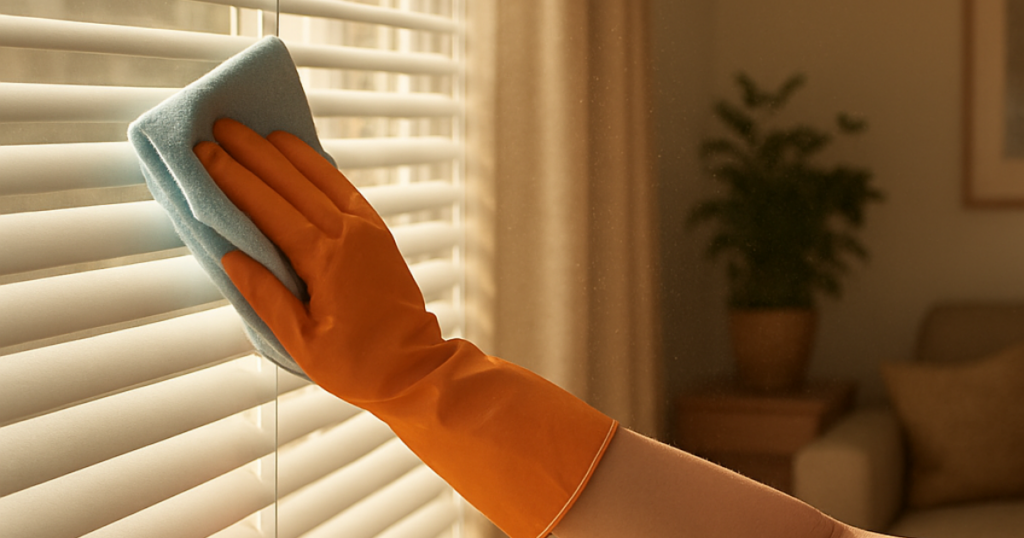
When choosing window treatments, appearance and privacy matter — but so does maintenance. Some blinds collect dust quickly and require detailed cleaning, while others can be wiped down in seconds.
The easiest blinds to clean are faux wood blinds, roller shades, and high-quality vinyl blinds. These materials resist moisture, don’t trap as much dust, and can typically be cleaned with a simple wipe or light vacuuming.
If you want help picking the best blinds for you, just book a free design consultation here.
Here’s how the most common blind types compare.
🥇 1. Faux Wood Blinds (Easiest Overall)
Faux wood blinds are one of the simplest window treatments to maintain.
Why they’re easy to clean:
- Smooth, non-porous surface
- Moisture resistant
- Can handle damp cloth cleaning
- Resistant to staining and warping
- Dust can be removed with a microfiber cloth, and kitchen buildup can be wiped away without damaging the finish.
Best for: Kitchens, bathrooms, high-traffic living areas.
🥈 2. Roller Shades
Roller shades are extremely low-maintenance because they don’t have individual slats.
Why they’re easy to clean:
- One flat surface
- No gaps between slats
- Minimal dust buildup
- Quick vacuum or wipe-down
- There are fewer moving parts, which also reduces grime accumulation around cords and hardware.
Best for: Large windows, sliding doors, modern interiors, households that want minimal upkeep.
🥉 3. Vinyl / PVC Blinds
High-quality vinyl blinds are also easy to maintain.
Why they’re easy to clean:
- Non-porous material
- Resistant to moisture and grease
- Can be wiped with mild cleaning solutions
- Keep in mind that thinner, low-end vinyl can bend or warp during aggressive cleaning — quality matters.
Best for: Playrooms, laundry rooms, basements.
🟡 Moderately Easy to Clean Blinds
Cellular (Honeycomb) Shades
- Can trap dust inside the cells
- Require vacuum with brush attachment
- Not ideal for grease-heavy kitchens
- They’re great for insulation but require more care than faux wood or roller shades.
Aluminum Blinds
- Easy to wipe
- But many thin slats = time-consuming
- Can dent during cleaning
- They don’t warp from moisture, but the narrow slats collect dust more easily.
🔴 Hardest to Clean
Real Wood Blinds
- Sensitive to moisture
- Require dry dusting
- Can stain or warp with water
- They offer a beautiful finish but require more maintenance than synthetic alternatives.
What Makes Blinds Easy (or Difficult) to Clean?
Comparing blinds durability mostly involves how different materials perform long term. Cleaning difficulty usually depends on:
- Number of slats
- Surface texture
- Moisture resistance
- Material thickness
- Kitchen grease exposure
- Sun exposure and dust levels
Flat surfaces and moisture-resistant materials are always easier to maintain.
What This Means for Your Home
If low maintenance is a priority, faux wood blinds and roller shades are often the most practical long-term choices. They resist daily buildup, handle moisture well, and require minimal effort to keep looking clean.
The best way to compare ease of maintenance is to see the materials in person. Feeling the finish, examining the surface texture, and testing the mechanism can quickly show which option fits your home and lifestyle best.
If you’re unsure which blinds make sense for your space, visit our showroom or schedule a complimentary design consultation. Small differences in material and construction can make a big difference in long-term upkeep.