
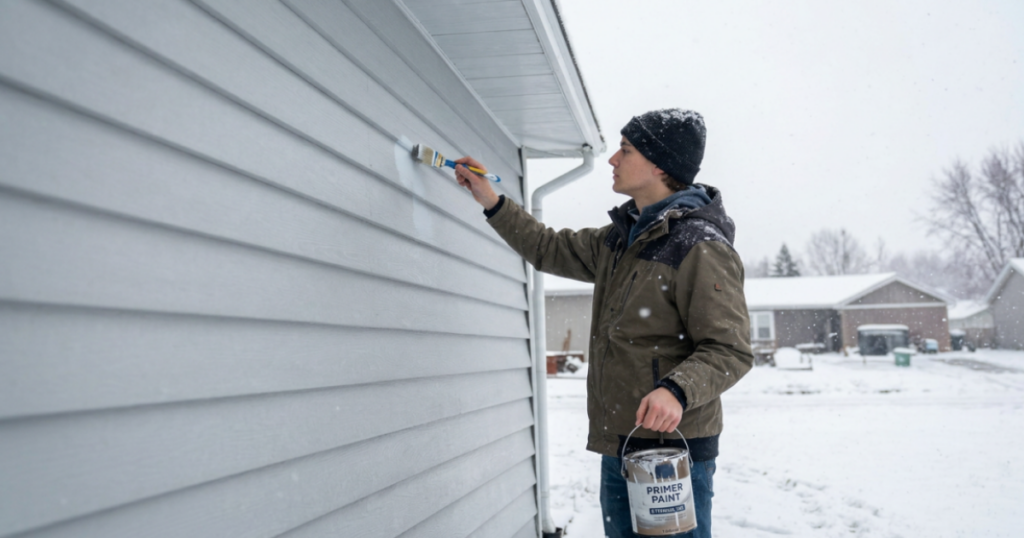
Painting in cold temperatures can affect how paint dries, cures, and adheres to a surface. While some modern paints are designed to perform better in cooler conditions, applying paint when it is too cold can lead to problems with the final finish.
Temperature plays an important role in how paint behaves. When conditions are outside the recommended range, the paint may not form a strong, durable coating.
What Happens to Paint in Cold Weather?
When paint is applied in temperatures that are too low, several issues can occur:
1. Paint Takes Much Longer to Dry
A surface that normally dries within hours may take much longer in cold conditions. Cold temperatures slow down the drying process. This can lead to:
- Longer wait times between coats
- Extended project timelines
- Increased chance of dust or debris sticking to wet paint
2. Paint May Not Cure Properly
Drying and curing are not the same thing. Paint may feel dry on the surface but still be soft underneath. Poor curing can affect:
- Durability
- Hardness
- Resistance to wear
- Overall lifespan
3. Poor Adhesion
This is especially common when painting exterior surfaces. One of the biggest concerns when painting in cold weather is adhesion. If paint does not properly bond to the surface, you may see:
- Peeling
- Cracking
- Flaking
- Bubbling
4. Uneven Finish
This is more noticeable with glossy finishes because higher sheen paints tend to reveal surface flaws. Cold temperatures can affect how paint flows and levels. The result may include:
- Brush marks
- Roller texture
- Uneven sheen
- Visible imperfections
What is the Minimum Temperature to Paint?
The recommended temperature depends on the specific paint product. Many traditional paints perform best when:
- Air temperature is above 50°F
- Surface temperature is above 50°F
However, some newer exterior paints are formulated for lower temperatures. Always check the paint manufacturer’s recommendations before starting.
Can You Paint Outside When It’s Cold?
Exterior painting is more challenging because the paint and surface are both exposed to outdoor conditions. Before painting outside, consider:
- Temperature
- Surface temperature
- Wind
- Humidity
- Upcoming weather
Even if the air temperature seems acceptable, a shaded surface may be much colder.
What Happens If You Paint a House Exterior in Cold Weather?
Cold weather can create condensation on surfaces, which interferes with adhesion. Exterior paint applied in cold conditions may:
- Dry slowly
- Fail to cure correctly
- Lose durability
- Develop finish problems
Can You Paint Inside When It’s Cold?
Interior painting is generally easier in cold weather because you have more control. However, extremely cold indoor temperatures can still cause issues. To improve results:
- Keep the room at the recommended temperature
- Maintain airflow
- Avoid painting on damp surfaces
- Allow proper drying time
How Can You Help Paint Dry Faster in Cold Weather?
If you must paint in cooler conditions:
- Keep indoor temperatures stable
- Improve ventilation
- Allow extra drying time
- Avoid rushing between coats
- Follow product instructions
- Do not try to force drying with excessive heat because it can create uneven results
Can You Paint Below 50 Degrees?
Sometimes, but it depends on the product. Some paints are specifically designed for cooler temperatures, but standard paints may not perform properly. The safest approach is to choose a product designed for the conditions you are working in.
What Temperature Is Too Cold to Paint?
There is no single temperature that applies to every paint product. Factors include paint chemistry, interior vs exterior application, surface temperature, humidity and weather conditions. The paint label is always the best guide.
Final Thoughts
If you’re unsure whether conditions are right for your project, visit one of our Benjamin Moore locations to speak with our paint experts and choose the right products for your job.