
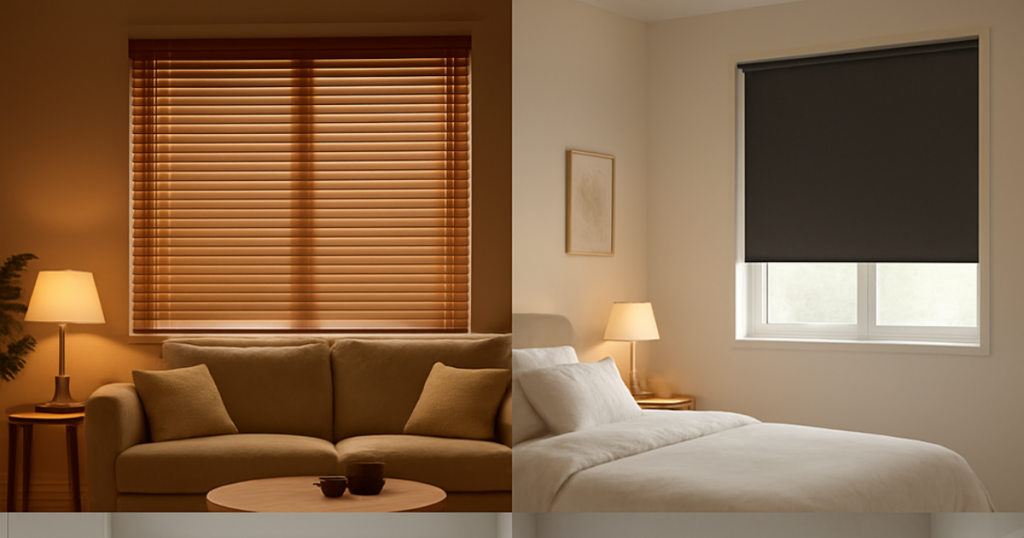
Blinds are not one-size-fits-all. The right option for your home depends on the room, how much light you want to control, your privacy needs, and even moisture levels. Choosing thoughtfully ensures your window treatments look great and function properly in every space.
Here’s how to choose the best blinds for each room in your home.
Living Room: Balance Light & Style
Living rooms need flexibility.
Best options:
- Wood blinds
- Faux wood blinds
- Layered shades
- Motorized blinds
Why:
- You’ll want adjustable light throughout the day
- They should complement your design style
- They act as a major visual feature
- If your living room faces direct sun, UV protection is also important to protect flooring and furniture.
Kitchen: Durability & Easy Cleaning
Kitchens require moisture resistance and easy-to-clean blinds. Easy-to-wipe materials are key in a kitchen.
Best options:
- Faux wood blinds
- Aluminum blinds
- Roller shades
Avoid:
- Real wood (can warp in humidity)
- Heavy fabric that absorbs grease
Bathroom: Moisture Resistance First
Bathrooms demand humidity-safe materials. Privacy is also a top priority in this space.
Best options:
- Faux wood blinds
- Vinyl blinds
- PVC-based shades
Avoid:
- Real wood
- Fabric-heavy treatments
Bedroom: Privacy & Light Blocking
Bedrooms are most important and require maximum control. It’s paramount to have the right window treatments for proper sleep.
Best options:
- Blackout roller shades
- Cellular shades
- Layered blinds with drapery
If light sensitivity is an issue, blackout options are essential. For added convenience, motorized blinds allow for scheduled opening and closing.
Home Office: Glare Control
In a home office, glare reduction is crucial.
Best options:
- Solar shades
- Adjustable wood blinds
- Motorized blinds
- Light-filtering roller shades
You’ll want:
- Screen visibility
- Daytime brightness
- Controlled direct sunlight
Dining Room: Design Statement
Dining rooms are often more decorative.
Best options:
- Wood blinds
- Roman shades
- Layered treatments
This is where you can prioritize aesthetics over heavy-duty functionality.
What About Style?
Once functionality is determined, consider:
- Modern interiors → roller shades, metal blinds
- Traditional homes → wood blinds, Roman shades
- Transitional spaces → faux wood, layered textures
Blinds should support your overall design — not compete with it.
Manual vs Motorized Blinds
Motorization is growing in popularity for a variety of reasons:
- Improves convenience
- Eliminates cords
- Enhances safety (Read about the safety of Cordless vs. Corded Blinds)
- Works well for hard-to-reach windows
For large or high windows, motorization can be a game changer.
What This Means for Your Home
The best blinds depend on how you use each space. Before choosing:
- Assess privacy needs.
- Consider moisture levels.
- Think about daily light patterns.
- Match your interior style.
If you’re unsure, scheduling a design consultation can help narrow options quickly and prevent costly mistakes. Book a consultation with our designer today!