
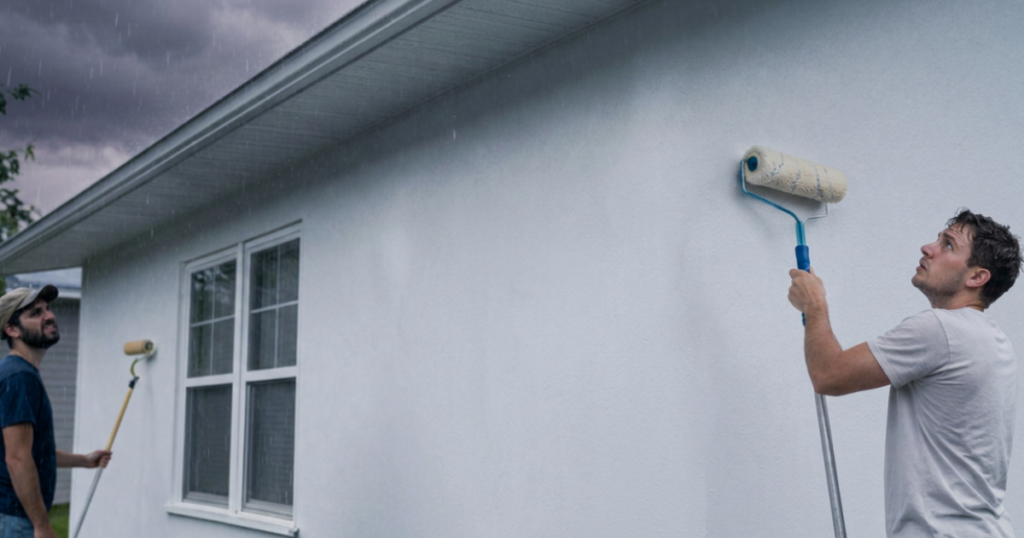
No, you generally should not paint a house in the rain.
Rain can interfere with paint adhesion, dilute wet paint, and create an uneven finish. Even if the rain is light, moisture on the surface can prevent exterior paint from properly bonding to siding, trim, and other exterior materials.
While modern exterior paints are more durable than ever, most still require a period of dry weather before and after application to achieve the best results. If you’re planning an exterior painting project, understanding how rain affects paint can help you avoid costly mistakes and premature paint failure.
Why You Can’t Paint a House in the Rain
Exterior paint is designed to adhere to clean, dry surfaces. When rain or moisture is present, several issues can occur:
- Poor adhesion
- Streaking
- Uneven coverage
- Reduced durability
- Premature peeling or blistering
Even if rain stops before painting begins, surfaces may still be damp enough to affect how the paint performs. For this reason, professional painters typically avoid painting when rain is actively falling or expected shortly after application.
What Happens if it Rains on Fresh Paint?
The impact depends on how long the paint has been drying. If rain hits paint shortly after application, it can:
- Wash away uncured paint
- Leave visible streaks
- Create uneven sheen
- Cause spotting or marks
- Affect long-term adhesion
The sooner rain arrives after painting, the greater the risk of damage. Heavier rain generally causes more problems than a brief light mist.
How Long Does Exterior Paint Need to Dry Before Rain?
This is one of the most important questions homeowners ask when planning an exterior painting project.
For most latex exterior paints:
- A minimum of about 4 hours of dry weather is often recommended
- 24 hours is generally considered much safer
For oil-based paints:
- Drying before rain may require 24 to 48 hours or longer
- Temperature, humidity, sunlight, and airflow all affect drying times.
Because products vary, always follow the manufacturer’s recommendations for the specific paint being used.
Can You Paint Right Before Rain?
In most cases, no.
If rain is expected within a few hours, postponing the project is usually the safer choice. Even if paint feels dry to the touch, it may still be vulnerable to moisture beneath the surface. Professional painters often look for a weather window that provides enough time for the paint to properly dry before any precipitation arrives.
Can You Paint Outside After It Rains?
Yes, but the surface must be fully dry first. The amount of drying time needed depends on: the surface material, temperature, humidity, sun exposure, and airflow.
Porous materials such as wood may require additional drying time after rainfall. Painting over damp surfaces can lead to adhesion problems and premature coating failure.
What is the Best Weather for Exterior Painting?
Most exterior painting projects benefit from:
- Dry conditions
- Low humidity
- Temperatures between 50°F and 85°F
- Moderate airflow
- No rain in the immediate forecast
These conditions help paint dry more evenly and achieve better long-term performance. Throughout areas like Astoria, Forest Hills, and Brooklyn, many homeowners schedule exterior painting projects during spring and fall when temperatures are often more moderate.
Does Humidity Matter as Much as Rain?
Yes. Even without rainfall, high humidity can slow drying and curing times. Excess humidity can:
- Extend drying times
- Increase tackiness
- Affect adhesion
- Delay recoating schedules
This is why professional painters pay attention to both rain forecasts and humidity levels before starting exterior work.
Should You Stop Painting If It Starts Raining?
Yes.
If rain begins while painting, work should typically stop immediately. Continuing to paint on wet surfaces can create finish issues and may require additional preparation or repainting later. Once conditions improve and surfaces have fully dried, the project can usually resume.
Final Thoughts
Waiting for favorable weather conditions will help ensure the best adhesion, a more attractive finish, and longer-lasting results.
If you’re planning an exterior painting project and need paint, primers, or expert advice, visit one of our local paint shops to speak with our paint experts and find the right products for your project.