
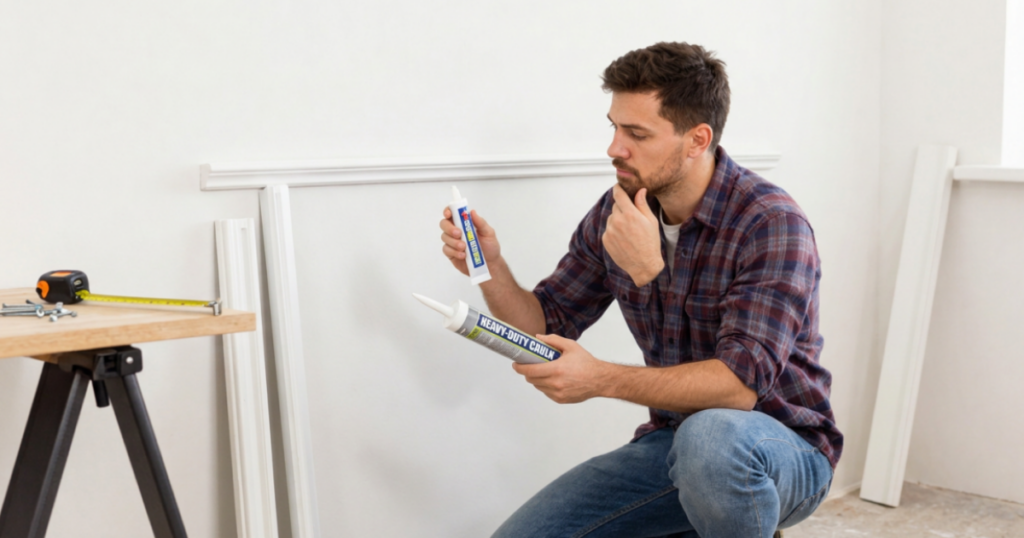
Yes, some types of caulk can act as an adhesive, but most caulks are primarily designed to seal gaps and joints rather than permanently bond materials together.
This is one of the most common questions homeowners ask when tackling DIY projects. Since many caulks feel sticky when applied, it’s easy to assume they can replace glue or construction adhesive. In reality, the answer depends on the type of caulk, the materials involved, and how much holding power the project requires.
For some light-duty applications, caulk may work as an adhesive. For heavier or structural projects, a dedicated construction adhesive is usually the better choice.
What Is Caulk Designed For?
Caulk is primarily used to:
- Seal gaps
- Block air leaks
- Prevent water intrusion
- Fill joints between materials
- Create a flexible waterproof seal
Common areas where caulk is used include:
- Around tubs and showers
- Along countertops
- Around windows and doors
- Baseboards and trim
- Exterior siding and penetrations
- The primary purpose of caulk is sealing, not bonding.
Does Caulk Have Adhesive Properties?
Yes, many caulks have some adhesive qualities.
For example, silicone caulk often adheres well to:
- Glass
- Tile
- Metal
- Ceramic
- Certain plastics
- Can also stick to surfaces like wood, drywall, and trim.
However, adhesion alone doesn’t necessarily mean the product is intended to hold materials together under load or stress.
Can Silicone Caulk Be Used As An Adhesive?
Silicone caulk is probably the closest thing to a combination sealant and adhesive.
Many silicone products:
- Bond well to smooth surfaces
- Remain flexible after curing
- Resist moisture and weather
- Provide long-lasting durability
Because of these qualities, silicone is sometimes used for:
- Attaching small decorative pieces
- Bonding mirrors (when approved by the manufacturer)
- Securing lightweight bathroom accessories
- Certain exterior sealing applications
However, silicone is still not a substitute for construction adhesive when significant holding strength is required.
When Can Caulk Be Used As An Adhesive?
Caulk may work for:
- Lightweight Trim Repairs: Small pieces of trim or molding may sometimes be temporarily secured with caulk during installation.
- Decorative Applications: Lightweight decorative materials may benefit from the combination of sealing and mild adhesion.
- Bathroom & Kitchen Projects: Certain silicone products can help secure components while also creating a waterproof seal.
When Should You Use Construction Adhesive Instead?
Construction adhesive is usually the better choice when bonding strength matters.
Examples include:
- Installing paneling
- Attaching wood to concrete
- Mounting heavy materials
- Securing large trim components
- Subfloor applications
- Structural woodworking projects
Construction adhesives are specifically formulated to create stronger and more permanent bonds than standard caulk. Caulk is designed primarily for sealing. Construction adhesive is designed primarily for bonding.
Can You Use Caulk Instead of Glue?
For small decorative projects, sometimes. For projects requiring strength, durability, or load-bearing support, glue or construction adhesive is usually the better option.
Using caulk in place of adhesive may result in:
- Weak bonds
- Premature failure
- Materials separating over time
Choosing the right product from the start often saves time and frustration later.
Final Thoughts
If you’re unsure whether your project calls for caulk, sealant, or construction adhesive, visit one of our Benjamin Moore paint stores near you. Come in and speak with our team about the right product for the job.