
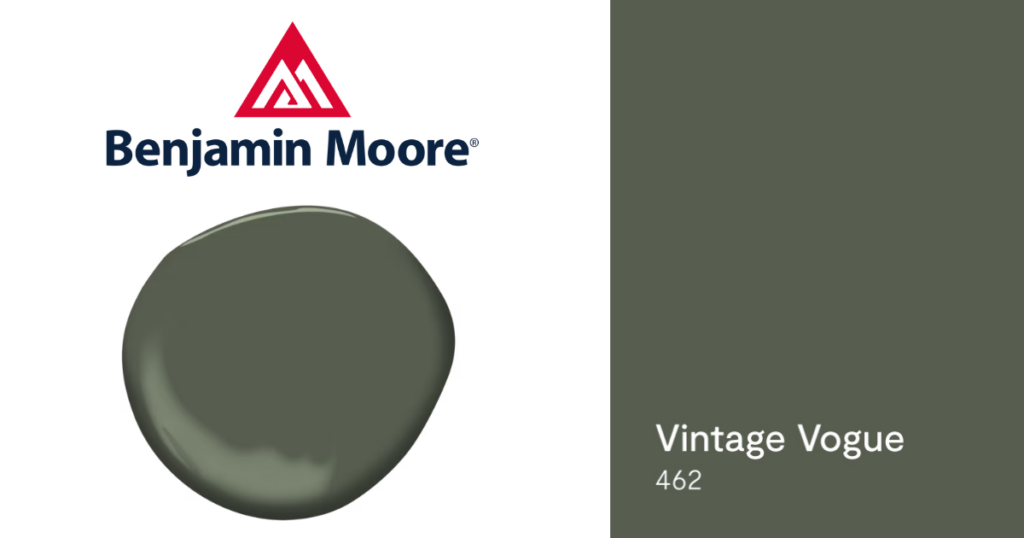
If you’re searching for a deep, dramatic green that feels timeless rather than trendy, Vintage Vogue by Benjamin Moore is one of the most sophisticated options available.
This rich, dark green has become increasingly popular for cabinetry, built-ins, dining rooms, and bold exterior accents. Here’s everything homeowners should know before using it.
What Color is Benjamin Moore Vintage Vogue?
Vintage Vogue is a deep, saturated forest green with subtle blackened depth. Unlike softer sage greens, Vintage Vogue makes a confident statement. It is:
- Dark
- Rich
- Earthy
- Slightly muted (but not gray-heavy)
What Are the Undertones of Vintage Vogue?
Undertones are critical with dark colors.
- In bright light, it shows more green.
- In low light, it deepens and feels almost velvety.
Vintage Vogue has:
- A strong green core
- Subtle cool undertones
- Slight blackened depth
It does not typically read:
- Bright emerald
- Yellow-green
- Blue-heavy
What is the LRV of Vintage Vogue?
The Light Reflectance Value (LRV) of Vintage Vogue is approximately 11. This means:
- It absorbs most light
- It creates a moody atmosphere
- It works best in rooms with adequate lighting
- With an LRV this low, lighting dramatically affects how it feels.
Is Vintage Vogue Warm or Cool?
Vintage Vogue leans slightly cool, but it’s not icy. This paint color feels grounded and earthy rather than blue or crisp. Compared to grayer greens, it feels more saturated and traditional.
Where Does Vintage Vogue Work Best?
1. Kitchen Cabinetry
Vintage Vogue is stunning on cabinets. It creates depth without going fully black. It pairs beautifully with:
- Brass hardware
- Marble countertops
- Warm white walls
2. Built-Ins and Accent Walls
Vintage Vogue feels intentional and architectural. If you want bold contrast without harshness, Vintage Vogue works well for:
- Fireplace built-ins
- Library shelving
- Home offices
3. Dining Rooms
This is where Vintage Vogue shines. It pairs especially well with wood furniture and warm lighting. Its depth creates:
- Intimacy
- Drama
- A formal, elevated look
4. Exterior Doors & Trim
Vintage Vogue reads stately and classic outdoors. It can also be used for:
- Front doors
- Shutters
- Trim accents
Vintage Vogue vs Dark Green Alternatives
Homeowners often compare Vintage Vogue to softer or grayer greens. For example:
- Pewter Green is more muted and gray
- Essex Green is darker and closer to black
- Hunter Green is more traditional and brighter
Vintage Vogue sits comfortably in the middle — rich, but not overpowering.
Does Vintage Vogue Make a Room Look Smaller?
Because of its low LRV, Vintage Vogue can make a room feel more intimate. However, in well-lit spaces or rooms with high ceilings, it creates depth rather than shrinkage. Pairing it with lighter trim and ceilings helps balance the look.
What Colors Go With Vintage Vogue?
Vintage Vogue pairs beautifully with:
- Warm whites
- Creamy off-whites
- Natural wood tones
- Brass and gold finishes
- Leather furniture
It also contrasts beautifully with soft neutral walls.
What This Means for Your Home
Vintage Vogue is not a safe, neutral green, it’s a statement color. But it’s a refined one. Get this paint color if you want depth without going black or green without going bright or drama without feeling trendy. Want help choosing the best paint color for you? Visit one of our Benjamin Moore paint stores near you for help from our well-trained staff.