
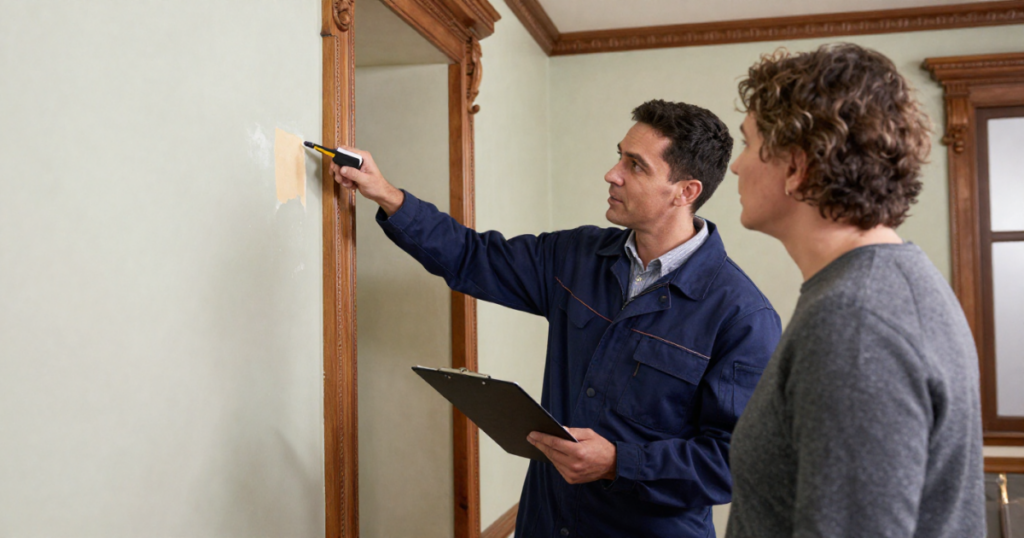
If you suspect your home may contain lead-based paint, the next step is often a professional lead paint inspection. This process helps determine whether lead is present, where it is located, and whether it poses a risk to occupants.
For homeowners, landlords, and property managers, a lead paint inspection is one of the most important steps in understanding safety and compliance requirements—especially in older buildings.
Knowing what to expect can make the process less intimidating and help you take the right next steps with confidence.
What Is a Lead Paint Inspection?
A lead paint inspection is a professional evaluation of painted surfaces in a home or building to determine whether lead-based paint is present.
Unlike visual assessments, inspections use specialized tools and methods to detect lead even when it is buried under multiple layers of paint.
The goal is to:
- Identify the presence of lead-based paint
- Locate where it exists in the property
- Help determine potential risk areas
When Do You Need a Lead Paint Inspection?
You may need a lead paint inspection if:
- Your home was built before 1978
- You are planning renovations or remodeling
- You are buying or selling an older property
- You notice peeling or deteriorating paint
- You are a landlord required to meet local regulations
In many cases, inspections are not optional—they are required for compliance or renovation planning.
What Happens During a Lead Paint Inspection?
It’s important to know if you have lead in your home. And if you do, you need to know if lead paint removal or encapsulation is the next step. A typical inspection is straightforward but highly detailed.
1. Visual Assessment of the Property
The inspector will begin by reviewing areas that are most likely to contain lead paint, such as:
- Windows and window frames
- Doors and door frames
- Trim, baseboards, and molding
- Walls and ceilings
They will also look for signs of deterioration, such as chipping or peeling paint.
2. Testing with Specialized Equipment
The most common professional method is XRF testing (X-ray fluorescence). This allows the inspector to:
- Detect lead through multiple layers of paint
- Get immediate, on-site results
- Test without damaging surfaces
In some cases, paint chip samples may also be collected for laboratory analysis.
3. Documentation and Reporting
After testing, you typically receive a report that includes:
- Locations where lead was found
- Levels of lead detected
- Risk assessment of affected areas
- Recommendations for next steps
This report is often required for compliance, renovations, or remediation planning.
How Long Does a Lead Paint Inspection Take?
The length of an inspection depends on the size of the property.
- Small apartments: 1–2 hours
- Single-family homes: 2–4 hours
- Larger properties: longer depending on complexity
Results from XRF testing are typically available immediately, while formal reports may take additional time.
How Much Does a Lead Paint Inspection Cost?
While pricing can vary widely, many homeowners view it as a necessary step before renovation or abatement begins. Costs vary depending on:
- Property size
- Location
- Type of testing required
- Whether documentation is needed for compliance
What Happens After the Inspection?
Once lead paint is identified, you typically have several options depending on the severity and condition:
- Lead Encapsulation: Sealing the lead paint under protective coatings
- Lead Abatement: Full removal or permanent elimination
- Ongoing monitoring: For low-risk situations
A professional will help determine the safest and most appropriate approach based on your situation.
Why Lead Paint Inspections Matter
Lead exposure is especially dangerous when paint is disturbed during renovations or when deterioration creates dust or chips.
Inspections matter because they:
- Help prevent accidental exposure
- Ensure compliance with regulations
- Guide safe renovation planning
- Protect children and vulnerable individuals
In many cases, inspection is the first and most important step in protecting a property.
Final Thoughts
Whether you are planning renovations, managing a rental property, or simply want peace of mind, understanding what’s in your walls is essential.
If you suspect your home may contain lead paint, Loconsolo Paints offers a free lead abatement consultation. Speak with our team and we’ll guide you toward the next steps. Give us a call or visit any of our paint stores in Queens, Brooklyn, and The Bronx.