
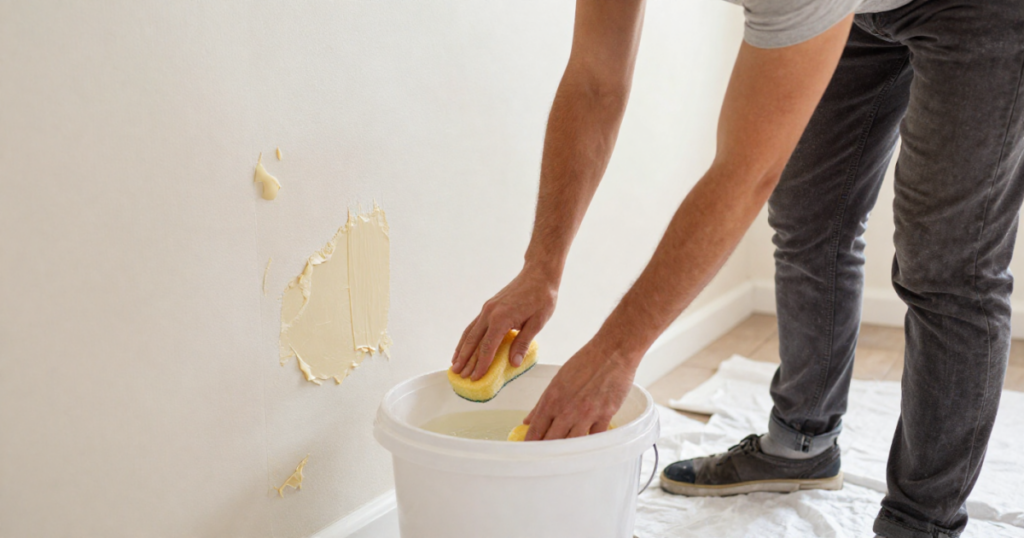
Removing wallpaper is one thing — but getting rid of leftover wallpaper glue is often the real challenge. Even after the paper is gone, sticky adhesive residue can remain on the wall, making it difficult to paint or apply new wallcoverings.
If you’re wondering how to remove wallpaper glue from walls, this guide will walk you through the safest and most effective methods to fully clean the surface and prepare it for painting.
Whether you’re updating a home in Queens, refreshing a brownstone in Brooklyn, or renovating a property in the Bronx, properly removing wallpaper glue is an essential step before any new finish goes on the wall.
Why You Need to Remove Wallpaper Glue Completely
Leftover wallpaper glue can cause problems if not properly removed, including:
- Uneven paint adhesion
- Bubbling or peeling paint
- Visible texture under new paint
- Staining or discoloration
- Poor primer performance
Before painting or installing new wallpaper, the wall should be completely smooth and free of adhesive residue.
How to Remove Wallpaper Glue from Walls
Step 1: Mix a Cleaning Solution
Start with a simple cleaning solution. Mix together warm water and dish soap, or warm water and white vinegar. Vinegar is especially effective for breaking down old adhesive.
Step 2: Soften the Glue
Apply the solution to the wall using a sponge, a spray bottle, or even a paint roller for large areas. Let it soak for 5–10 minutes to loosen the adhesive.
Step 3: Scrape the Residue
Once softened, gently remove the glue using a plastic scraper or a putty knife (used carefully). Avoid damaging drywall or plaster beneath the surface.
Step 4: Wash the Wall Again
After scraping, wash the wall with clean water to remove leftover residue. Repeat the process if the surface still feels sticky.
Step 5: Dry the Wall Completely
Let the wall fully dry before moving to sanding or priming. Good airflow helps speed up the process.
How to Remove Stubborn or Dried Wallpaper Glue
If the glue has been on the wall for a long time, it may require stronger treatment:
- Reapply warm vinegar solution
- Let it soak longer (15–20 minutes)
- Use a sponge with light scrubbing pressure
- Repeat as needed
For very stubborn adhesive, multiple passes are often required.
How to Remove Wallpaper Glue Before Painting
This is the most important step for homeowners planning to repaint. Even a thin layer of glue can:
- Cause uneven paint sheen
- Prevent primer from bonding properly
- Create visible wall imperfections
Before painting:
- Remove all glue residue
- Wash the entire wall
- Allow it to dry completely
- Lightly sand the surface
- Apply a quality primer
Priming is especially important on older NYC walls found in neighborhoods like Brooklyn with pre-war buildings or older homes in Queens and the Bronx, where plaster and drywall surfaces can absorb materials unevenly.
How to Remove Wallpaper Glue from Drywall or Plaster
Drywall (Sheetrock)
- Be gentle — drywall can be damaged easily
- Avoid soaking the wall excessively
- Use light pressure when scraping
Plaster Walls
- Plaster is more durable but can still be damaged if over-scraped
- Multiple light cleaning passes are better than one aggressive attempt
How to Remove Wallpaper Glue with Vinegar
Vinegar is one of the most effective DIY solutions. Why it works:
- Breaks down adhesive bonds
- Safe for most wall surfaces
- Affordable and easy to use
Mix:
1 part white vinegar
1 part warm water
Apply, let sit, then scrape gently.
How to Remove Wallpaper Glue from Painted Walls
If wallpaper was installed over painted walls, you’ll need to be extra careful not to damage the paint layer. Use less aggressive scraping and focus on softening the glue first.
In some cases, repainting may be needed after removal. Avoid painting over leftover glue, using too much water on drywall, scraping too aggressively, skipping primer after cleaning, and not fully drying the wall.
Final Thoughts
If you need help choosing the right primer, paint, or wall preparation products, visit Loconsolo Paints — with locations throughout NYC including Queens, Brooklyn, and the Bronx — for expert guidance and professional-grade materials.