
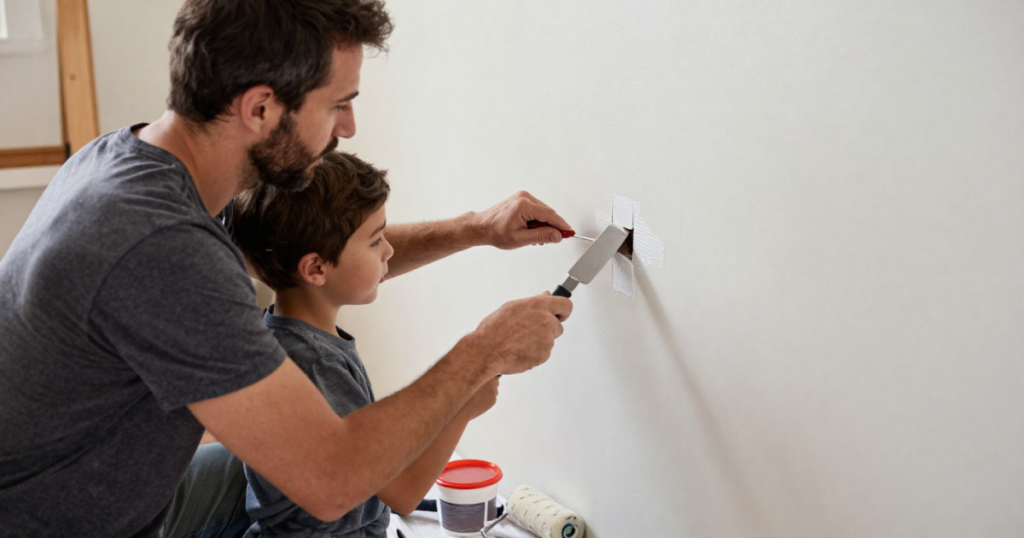
Whether it’s from a nail, screw, doorknob, furniture, or an accidental impact, holes in the wall are one of the most common home repairs. The good news is that most wall damage can be fixed with a few basic tools and the right materials.
In this guide, we’ll show you how to patch a hole in the wall, repair drywall damage, and prepare the surface for a smooth paint finish.
What You Need to Patch a Hole in the Wall
Before starting your repair, gather the right supplies:
- Lightweight spackle or joint compound
- Putty knife
- Sanding sponge or sandpaper
- Drywall patch or mesh patch (for larger holes)
- Utility knife
- Primer
- Matching wall paint
Having the right materials will help create a repair that blends into the surrounding wall instead of leaving a noticeable patch.
How to Patch a Small Hole in the Wall
Small holes from nails, screws, and minor damage are usually the easiest to repair.
Step 1: Clean the Area
Remove any loose drywall, dust, or debris around the hole. A clean surface helps the patching material adhere properly.
Step 2: Apply Spackle or Joint Compound
Use a putty knife to press spackle into the hole. Slightly overfill the area so you can sand it smooth after it dries.
Step 3: Smooth the Surface
Once dry, lightly sand the repaired area until it is flush with the rest of the wall.
Step 4: Prime and Paint
Apply primer to the repaired area before painting. This helps prevent the patch from absorbing paint differently than the surrounding wall.
How to Patch a Large Hole in the Wall
Larger holes require a little more preparation, but they can still be repaired with the right approach.
Step 1: Create a Clean Opening
Remove damaged or loose drywall and cut the area into a clean shape if needed.
Step 2: Install a Drywall Patch
For larger holes, use a drywall patch or mesh patch to create a stable surface for your joint compound.
Step 3: Apply Joint Compound
Cover the patch with joint compound, extending beyond the edges to blend the repair into the wall.
Step 4: Sand and Repeat
After the compound dries, sand smooth. Larger repairs may require multiple coats to create an even surface.
Step 5: Prime and Paint
Once the repair is smooth, apply primer and finish with paint.
How to Patch a Hole in the Wall With Mesh
Mesh patches are a popular solution for medium-sized drywall holes because they provide support while allowing joint compound to adhere. To use a mesh patch:
- Clean the damaged area
- Apply the mesh patch over the hole
- Cover with joint compound
- Smooth the edges
- Let dry
- Sand and paint
Mesh patches work well for many common drywall repairs, but very large holes may require a more extensive repair.
Can You Patch a Hole in the Wall Without a Patch?
For very small holes, you may not need a drywall patch. Small nail holes and screw holes can often be repaired with spackle alone.
However, larger holes typically require additional support. Trying to fill a large opening without a proper patch may lead to cracking or an uneven repair.
Some DIY methods suggest using household items like toothpaste for tiny holes, but these are usually temporary fixes and are not recommended for a long-lasting repair.
How to Patch a Door Knob Hole in the Wall
A doorknob hole is usually larger and requires more than basic spackle. The repair typically involves:
- Removing damaged drywall
- Installing a patch or backing support
- Applying joint compound
- Sanding smooth
- Priming and painting
Because these repairs are often more visible, taking the time to properly smooth the surface makes a big difference.
How Long Does It Take to Patch a Hole in the Wall?
The repair time depends on the size of the hole.
Small holes:
- About 30 minutes of work
- Additional drying time before sanding and painting
Larger holes:
- Several hours or more depending on the number of coats needed
- The biggest factor is usually drying time between layers
How Much Does It Cost to Patch a Hole in the Wall?
The cost depends on whether you repair the wall yourself or hire someone.
A DIY repair may cost:
- Around $10–$50 for basic materials
Professional repairs vary based on:
- Size of the hole
- Wall condition
- Labor needed
- Whether painting is included
How to Paint Over a Patched Hole in the Wall
Patching the hole is only half the job. Proper painting helps the repair disappear. After the patch is dry:
- Sand the area smooth
- Remove dust
- Apply primer
- Paint the repaired section
- Blend the finish into the surrounding wall
Skipping primer can cause the repaired area to look different from the rest of the wall.
Common Mistakes When Repairing Wall Holes
Avoid these common problems:
- Not Letting the Patch Dry: Painting too soon can cause uneven texture and poor results.
- Applying Too Much Compound: Heavy layers can crack or take longer to dry.
- Skipping Sanding: A smooth repair requires a smooth surface.
- Forgetting Primer: Primer helps create a consistent finish.
Final Thoughts
Learning how to patch a hole in the wall is a useful DIY skill that can help keep your home looking its best. Visit any Loconsolo Paints store location for quality primers, paints, and expert advice to complete your project.