
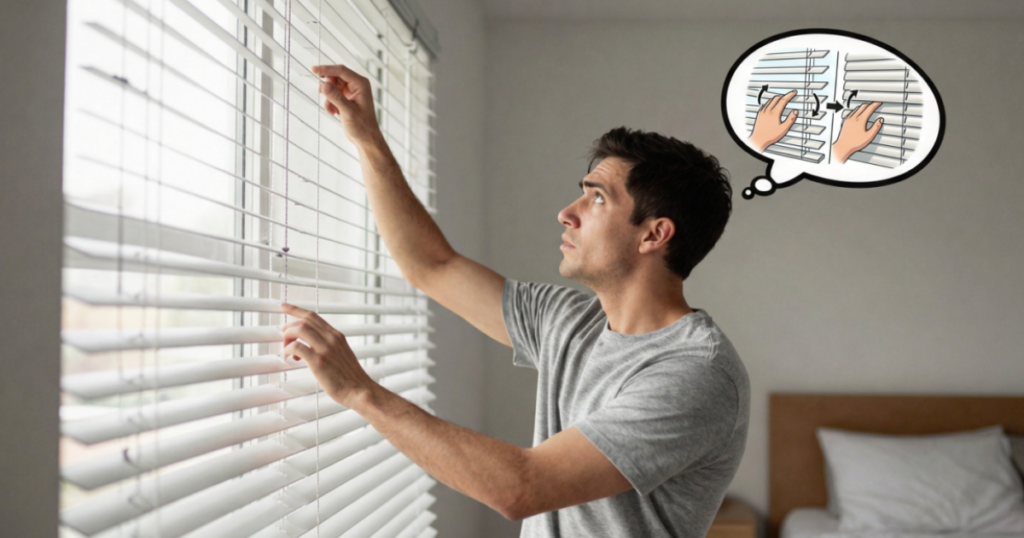
The direction your blinds face can make a noticeable difference in privacy, lighting, and even energy efficiency inside your home.
While many people adjust blinds throughout the day without thinking much about it, the angle of the slats affects how easily people can see inside from outdoors — especially at night or from nearby buildings.
In general, blinds angled upward provide better privacy during the day, while blinds angled downward often offer slightly better light control and a cleaner appearance from outside.
The best direction ultimately depends on your room, lighting conditions, and how much privacy you need.
Should Blinds Face Up or Down for Privacy?
For most situations, blinds facing upward offer better daytime privacy.
When the slats angle upward:
- Outside visibility into the room becomes more limited
- Natural light can still enter the space
- Glare is often reduced
- Privacy improves from street level
This positioning is especially useful for:
- First-floor rooms
- Street-facing windows
- Apartments near neighboring buildings
- Homes in busier areas like Astoria or Williamsburg
Because the slats direct visibility upward toward the ceiling, it becomes harder for pedestrians or nearby neighbors to see directly inside.
When the slats face downward?
Blinds angled downward can still provide privacy, but they are often better suited for:
- Upper-floor rooms
- Rooms needing stronger light blocking
- Reducing harsh sunlight
- Creating a cleaner exterior appearance
Downward-facing slats may also help block more direct sunlight during certain parts of the day.
However, depending on outdoor angles and nearby sightlines, downward-facing blinds can sometimes make it easier for people outside to see into the room.
Do Blinds Provide Privacy at Night?
Blinds alone may not provide complete nighttime privacy. At night, when interior lights are on and it’s dark outside, visibility reverses.
Even closed blinds can allow silhouettes, shadows, or partial visibility depending on:
- Slat size
- Blind material
- Gaps between slats
- Indoor lighting brightness
For stronger nighttime privacy, many homeowners combine blinds with:
- Curtains
- Drapes
- Blackout panels
- Layered window treatments
In homes throughout Queens and Brooklyn neighborhoods like Forest Hills and Sheepshead Bay, layered window treatments continue to remain popular for balancing privacy and natural light.
Which Blind Direction Lets in More Light?
- Blinds angled upward generally allow softer indirect light to enter while reducing glare.
- Blinds angled downward can block more direct sunlight but may darken the room more significantly.
The right position depends on whether you want:
- Maximum privacy
- Softer natural light
- Reduced glare
- Better outside visibility
Are Certain Blinds Better for Privacy?
Yes. Some blind styles naturally provide better privacy than others. Popular privacy-focused options include:
- Faux wood blinds
- Blackout blinds
- Cellular shades
- Layered shades
- Roller shades with blackout fabric
Privacy Tips for Street-Facing Windows
If your windows face a street, sidewalk, or neighboring building, these tips can help improve privacy:
- Angle blinds upward during the day
- Use layered curtains or drapes
- Avoid strong interior lighting near windows at night
- Consider blackout or top-down bottom-up shades
- Add frosted window film where appropriate
These solutions can help maintain natural light while limiting outside visibility.
Final Thoughts About Blinds and Privacy
For most daytime privacy situations, blinds facing upward typically provide the best balance of privacy and natural light. However, the ideal position depends on your room, lighting conditions, and window location.
If you’re exploring blinds, shades, or custom window treatments for your home, visit any of our store locations to speak with our team about window treatment options and design guidance.