
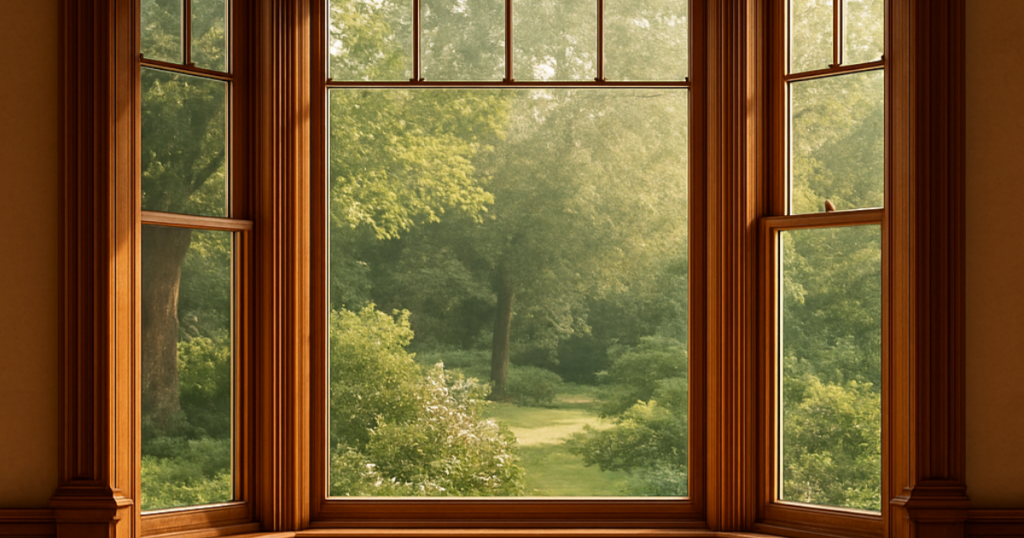
A bay window is a window structure that projects outward from the exterior wall of a building, typically consisting of three or more window panels set at angles. This design creates additional interior space while allowing more natural light to enter the room.
Bay windows are commonly found in living rooms, dining rooms, and bedrooms, where they add architectural character and provide wider views of the outdoors.
The Structure of a Bay Window
A traditional bay window usually consists of three window sections:
- A large center window, often fixed
- Two angled side windows that extend outward from the wall
These side windows are typically set at 30- or 45-degree angles, which creates the signature outward projection.
Some bay windows also include:
- operable side windows for ventilation
- built-in window seats
- extended ledges for décor or plants
The outward structure not only enhances the appearance of a home but also slightly increases the usable interior space.
Different Types of Bay Windows
While the classic three-panel bay window is the most common, there are a few variations homeowners may encounter.
- Box Bay Windows: These have sharper angles and a more squared shape. They’re often used in kitchens or smaller spaces.
- Oriel Bay Windows: An oriel bay window projects outward but is supported by brackets or corbels rather than extending all the way to the ground. These are often seen on upper floors.
- Angled Bay Windows: This is the most traditional style, featuring a large center window with two angled side panels.
Each style offers a slightly different look while maintaining the same core benefit: expanding the window area and bringing in more light.
Benefits of Bay Windows
Bay windows have remained popular in home design for several reasons.
- More Natural Light: Because bay windows include multiple glass panels facing different directions, they allow sunlight to enter from several angles throughout the day.
- Expanded Interior Space: The outward projection creates a small nook inside the room that can be used for seating, storage, or décor.
- Improved Views: The angled design provides a wider viewing area compared to a flat window.
- Added Architectural Character: Bay windows are often considered a desirable architectural feature that adds visual interest both inside and outside the home.
Where Bay Windows Are Most Common
Bay windows can appear in many parts of a home, but they are most often found in:
- Living rooms
- Dining rooms
- Bedrooms
- Reading nooks
- Breakfast areas
These locations benefit the most from added natural light and the extra interior space bay windows provide.
Design Considerations for Bay Windows
When designing or renovating a space with a bay window, homeowners often consider how to make the most of the extra area created by the window structure.
Common design choices include:
- built-in window seating
- decorative cushions or benches
- plant displays
- reading nooks
- additional shelving or storage
Another important consideration is how to dress the windows. Because of their unique shape and multiple panels, bay windows often require specialized window treatments to maintain both functionality and visual balance.
Choosing Window Treatments for Bay Windows
Selecting the right window treatments for bay windows can be slightly more complex than dressing a standard window. The angled structure and multiple panes often require solutions that can fit each section while still looking cohesive.
Looking to get some help? Stop by one of our paint and window treatment stores and speak with our trained team members. Want to save time and get dedicated service? Book a consultation with our interior designer and we’ll help you shop with confidence!