
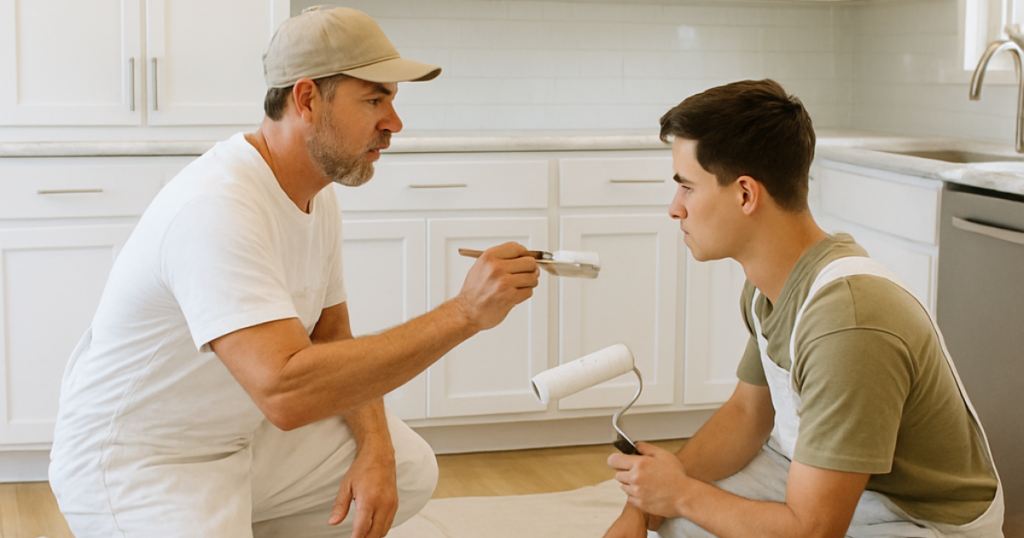
Painting kitchen cabinets is one of the most impactful ways to transform a kitchen without a full renovation. When done properly, painted cabinets can look beautiful and last for years. But the process requires careful preparation, the right products, and realistic expectations.
Here’s what homeowners should know before starting.
Step 1: Decide if Painting is the Right Option
If your cabinets are outdated but solid, painting can be a cost-effective upgrade. If they’re failing structurally, replacement may make more sense long term. Before you pick up a brush, evaluate your cabinets.
Painting is a good option if:
- Cabinet boxes are structurally sound
- Doors are not warped
- Layout works for your needs
- You like the overall cabinet style
Painting may not be ideal if:
- Doors are damaged or sagging
- You want a completely new style
- The kitchen layout needs reconfiguration
Step 2: Remove Doors and Hardware
Before beginning to paint, remove:
- Cabinet doors
- Drawer fronts
- Hinges
- Handles and knobs
Label everything carefully so reinstallation is easier. Set up a clean, dust-free area for painting doors flat.
Step 3: Clean Thoroughly
Kitchen cabinets collect:
- Grease
- Oils
- Food residue
Use a degreasing cleaner to remove buildup. Even cabinets that “look clean” often have invisible residue that will prevent paint from adhering properly. Let surfaces dry completely before moving on.
Step 4: Sand for Adhesion
Light sanding helps primer bond properly. Companies like Festool offer some tools that make this part of the job quick and easy. You don’t need to strip cabinets to bare wood, but you should:
- Scuff glossy finishes
- Smooth imperfections
- Remove loose coatings
- Wipe away dust thoroughly before priming.
Step 5: Use the Right Primer
Priming is critical, and its important to pick the right primer for the job. Skipping primer is one of the most common DIY mistakes. A high-quality bonding primer:
- Prevents bleed-through (especially on oak)
- Improves adhesion
- Increases durability
Step 6: Choose the Right Paint
Cabinets require a durable finish — wall paint is not enough, and decorative finishes won’t last. Cabinet paint should resist chipping and clean easily. Look for products specifically designed for:
- High traffic
- Washability
- Hard, enamel-like finishes
Sheen matters too:
- Satin or semi-gloss are most common
- Higher sheen increases durability but shows imperfections
Step 7: Apply Thin, Even Coats
Apply thin coats and allow proper dry time between each.
Always use:
- High-quality brush for edges
- Microfiber roller or sprayer for flat areas
Most cabinets require:
- 1 coat primer
- 2 coats of paint
Rushing this step leads to streaks, drips, and poor durability.
Step 8: Allow Proper Cure Time
Dry and cured are not the same. Cabinet paint can feel dry in hours but may take days (or longer) to fully cure. Avoid heavy use during this period to prevent dents and sticking doors.
How Long Do Painted Cabinets Last?
When properly prepped and painted, cabinets can last several years. However:
- Factory-finished cabinets typically have harder finishes
- DIY applications may show wear sooner
- High-traffic kitchens accelerate wear
- Maintenance and cleaning habits also impact longevity.
Painted Cabinets vs Replacing Cabinets
Both options have value — the right choice depends on your kitchen’s condition and your long-term goals.
Painting is ideal if:
- You want a color refresh
- Cabinet structure is solid
- Budget is limited
Replacing cabinets may be better if:
- You want soft-close features
- Storage is inefficient
- Style feels outdated
- Boxes are damaged
A new cabinet system offers:
- Factory finishes
- Updated functionality
- Design flexibility
Common DIY Mistakes to Avoid
Small shortcuts often lead to peeling or chipping within a year.
- Skipping primer
- Not degreasing thoroughly
- Using wall paint
- Applying thick coats
- Reinstalling before full cure
What This Means for Your Kitchen
Painting kitchen cabinets can dramatically update your space when done properly. But it’s not the right solution for every home. Before deciding:
- Evaluate cabinet condition honestly.
- Consider long-term durability.
- Compare cost of painting vs replacement.
- Still unsure? Schedule an appointment with one of our specialists and we’ll help you determine the best solution for your space and budget.