
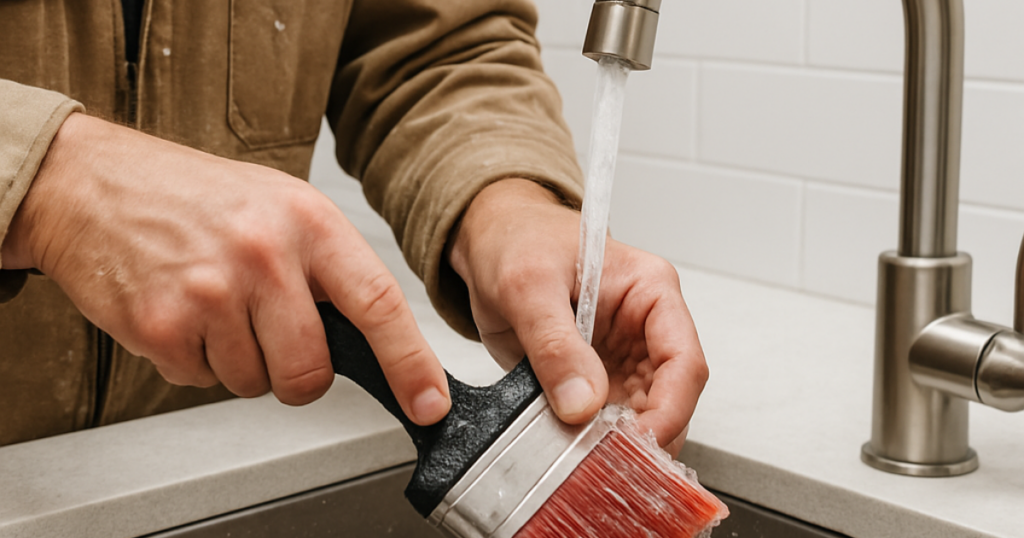
To clean paint brushes, remove excess paint, rinse thoroughly (or use mineral spirits for oil-based paint), wash with mild soap, rinse until water runs clear, reshape the bristles, and let dry flat. Proper cleaning prevents hardened bristles and extends brush life.
Whether you’re using latex paint or oil-based paint, knowing how to clean paint brushes the right way saves money, improves performance, and keeps bristles soft and precise for your next job. Here’s exactly how to do it…
Why Cleaning Paint Brushes Properly Matters
Letting paint dry in a brush, even once, can permanently damage it. A high-quality brush can last for years, but only if it’s cleaned correctly.
Proper brush cleaning:
- Prevents hardened bristles
- Maintains shape and edge precision
- Extends the life of the brush
- Ensures smoother finishes on future projects
- Saves money over time
How to Clean Paint Brushes After Latex Paint
Latex (water-based) paint is the most common type used in homes today — and it’s the easiest to clean.
Step-by-Step Instructions
- Remove Excess Paint: Scrape excess paint off the brush using the edge of the paint can or a brush comb.
- Rinse with Warm Water: Run the brush under warm (not hot) water.
- Work the Bristles: Use your fingers or a brush comb to gently work water through the bristles until the water runs clear.
- Use Mild Soap (If Needed): If paint remains, use a small amount of mild dish soap and work it into the bristles.
- Rinse Thoroughly: Continue rinsing until no soap or paint residue remains.
- Reshape and Dry: Gently shake out excess water, reshape the bristles, and let the brush dry flat or hang it with bristles facing down.
How to Clean Paint Brushes After Oil-Based Paint
Oil-based paint requires solvents for proper cleaning.
Step-by-Step Instructions
- Remove Excess Paint: Scrape off as much paint as possible.
- Use Mineral Spirits or Paint Thinner: Pour a small amount into a metal or glass container.
- Swirl the Brush in the Solvent: Work the bristles gently until paint dissolves.
- Repeat with Clean Solvent (If Necessary): For heavily saturated brushes, use a second clean container.
- Wash with Soap and Water: After solvent cleaning, wash the brush with warm water and mild soap.
- Reshape and Dry Properly: Reshape the bristles and allow to dry flat or hanging.
- ⚠️ Always dispose of solvents properly according to local regulations.
How to Soften a Hardened Paint Brush
If paint has already dried in your brush, it may still be salvageable.
For latex paint:
- Soak in warm, soapy water for several hours
- Use a brush comb to gently loosen paint
For oil-based paint:
- Soak in mineral spirits
- Work carefully with a comb
- If bristles are stiff and permanently separated, replacement may be necessary.
How to Store Paint Brushes Overnight
If you’re painting again within 24 hours:
- Wrap the brush tightly in plastic wrap or aluminum foil
- Store it in a cool area
- For latex paint, some painters refrigerate wrapped brushes overnight
This prevents paint from drying between coats.
Pro Tips for Keeping Paint Brushes in Great Condition
- Never soak a brush upright on its bristles
- Avoid hot water (it can loosen adhesive inside the ferrule)
- Use a brush comb regularly
- Always reshape bristles before drying
- Store brushes in their original sleeve if possible
Taking two extra minutes to clean properly can extend a brush’s life dramatically.
Frequently Asked Questions
- How long can you leave paint on a brush before cleaning? For latex paint, you should clean it immediately after use. Even 30–60 minutes of drying can start stiffening bristles.
- Can you clean paint brushes in the sink? Latex paint can typically be rinsed in a utility sink, but avoid letting large amounts of paint solids go down the drain. Always check local disposal guidelines.
- What happens if you don’t clean paint brushes properly? Paint hardens near the ferrule (the metal band), causing bristles to flare and lose their sharp edge — making precise cutting and smooth finishes difficult.
- Is hot water bad for paint brushes? Yes. Hot water can loosen the glue that holds bristles in place. Always use warm water instead.
What it Means for Homeowners
Knowing how to clean paint brushes properly is one of the simplest ways to improve your results on every paint project. Remember, a well-maintained brush always applies paint smoothly, cuts clean lines, lasts longer, and saves you money. Whether you’re a homeowner tackling a weekend project or a contractor working daily, proper brush care is a small step that makes a big difference.