
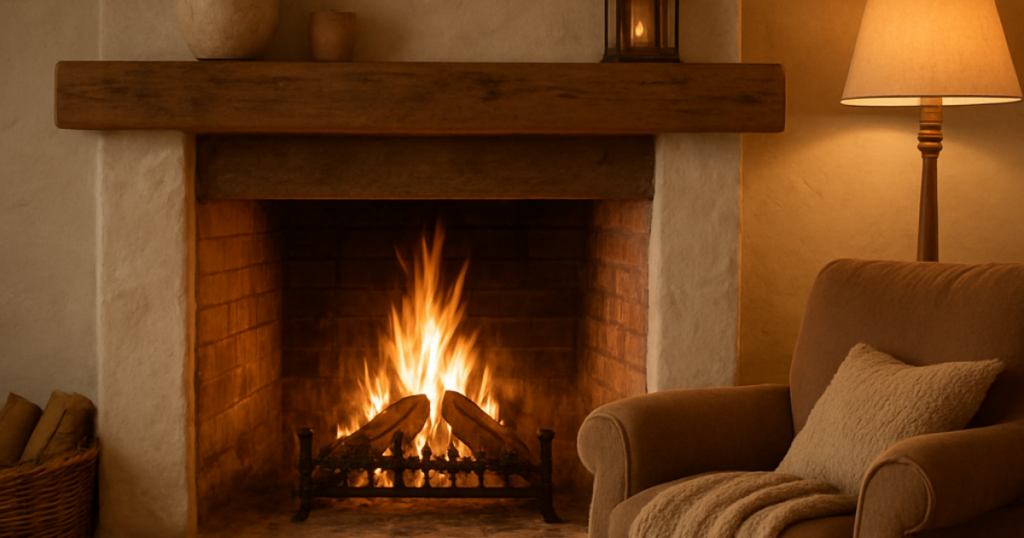
If your fireplace feels dark, dated, or too heavy for the room, limewash can completely transform it without hiding the natural texture that makes it beautiful in the first place. Unlike traditional paint, limewash creates an old-world finish that lets brick or stone breathe and show through.
Limewash is a mineral-based coating made from crushed limestone and water. Instead of forming a plastic-like layer on top of the surface (like latex paint), it soaks in and creates a breathable, matte finish with natural variation. It’s especially popular for people who want a lighter fireplace without the “painted brick” look.
Why Homeowners Love Limewash for Fireplaces
- It softens harsh red or orange brick
- It brightens dark stone without looking flat
- It keeps texture and character visible
- It creates a high-end, European-style finish
- It ages beautifully over time
Can You Limewash Any Fireplace?
Limewash works best on:
✔ Brick
✔ Stone
✔ Masonry
✔ Unsealed concrete
It does not work well on:
✖ Previously painted surfaces (unless stripped)
✖ Sealed or glossy surfaces
✖ Metal or wood mantels
If your fireplace has already been painted with standard paint, limewash won’t absorb properly. In that case, mineral-based masonry paints are a better option.
Tools & Materials You’ll Need
- Limewash (pre-mixed or traditional slaked lime)
- Water (for dilution)
- Drop cloths or plastic sheeting
- Painter’s tape
- Masonry brush or large natural bristle brush
- Spray bottle with water
- Mixing bucket
- Stir stick
- Rags or sponge (optional for distressing)
How to Limewash a Fireplace: Step-by-Step Guide
Step 1: Clean the Fireplace Surface
Limewash needs a clean, porous surface to bond properly. Avoid harsh chemical cleaners, which can leave behind residues that interfere with absorption.
- Remove dust and debris with a dry brush or vacuum
- Wash the surface with mild soap and water
- Scrub off soot stains, dirt, and residue
- Let the fireplace dry completely
Step 2: Protect Surrounding Areas
This step saves a lot of cleanup later. Limewash is thin and can be watery, so drips happen.
- Tape off mantels, trim, and walls
- Cover floors and hearth with drop cloths
- Remove décor and fireplace tools
Step 3: Dampen the Brick or Stone
Before applying limewash, lightly mist the surface with water using a spray bottle. The surface should be damp, not dripping. This helps:
- Improve absorption
- Prevent the limewash from drying too fast
- Create a softer, more even finish
Step 4: Mix the Limewash
Most limewash products need to be diluted with water. Depending on the exact product and finish you want, the ratios will vary (always follow manufacturer instructions). A typical ratio is one part limewash and one part water. Stir thoroughly and keep stirring occasionally during use, as minerals can settle.
Step 5: Apply the First Coat
Using a masonry or natural bristle brush:
- Dip your brush into the mixture
- Apply in crisscross or “X” strokes
- Work in small sections at a time
- Push the limewash into mortar lines and texture
- Don’t worry if it looks uneven — that’s part of the charm. Limewash dries lighter and softer than it looks when wet.
Step 6: Adjust the Look (Optional)
After 10–30 minutes, while the limewash is still damp, you can customize the finish.
For a heavier, more solid look: Leave it as-is.
For a softer, more weathered look: Use a damp rag or sponge to gently rub areas and let more brick or stone show through. This technique creates beautiful variation and depth.
Step 7: Let It Dry
Limewash dries in stages. It will look patchy at first — that’s normal. The finish evens out as it cures.
- Touch dry: a few hours
- True color develops: 24–48 hours
Step 8: Apply a Second Coat (If Needed)
After 24 hours, step back and evaluate. Add a second coat if you want:
- More coverage
- A brighter white look
- Less brick color showing through
- If you want, repeat the same process: dampen lightly, apply, and distress if desired
How Limewash Looks on Different Fireplace Materials
Brick Fireplaces
Limewash softens strong red and orange tones while preserving texture. Perfect for modernizing traditional brick without making it look painted.
Stone Fireplaces
Creates a romantic, aged-European feel. Works beautifully on stacked stone and fieldstone.
Concrete Fireplaces
Adds warmth and variation to otherwise flat, gray surfaces.
Does Limewash Work on a Working Fireplace?
Yes, limewash is heat resistant once cured. Limewash is mineral-based, so it handles normal fireplace warmth very well. However:
- Do not apply inside the firebox
- Wait at least several days before using the fireplace
- Avoid extreme heat exposure during the curing period
Is Limewash Permanent?
Limewash is long-lasting but not permanent like paint. Many homeowners love the patina effect. If you want to refresh it, you can simply apply another thin coat. Over time it may:
- Lightly wear in high-touch areas
- Develop more natural variation
- Soften in appearance
Limewash vs Painting a Fireplace
Limewash creates a finish that lets the natural texture of brick or stone show through. Traditional paint provides a solid, uniform color that sits on the surface and can make materials look flat. Limewash is breathable and develops character over time, while paint can chip or peel as it ages. If you want a natural, textured appearance, limewash is usually the better choice; for a bold, fully opaque color, paint may be preferred.
Final Thoughts
Limewashing a fireplace is one of the most dramatic upgrades you can make with a surprisingly simple process, all while keeping the natural beauty of brick or stone intact. Whether your style leans modern, rustic, coastal, or classic, limewash creates a finish you’ll love. Visit a Loconsolo Paints store near you to find limewash and other materials for you next DIY project.