
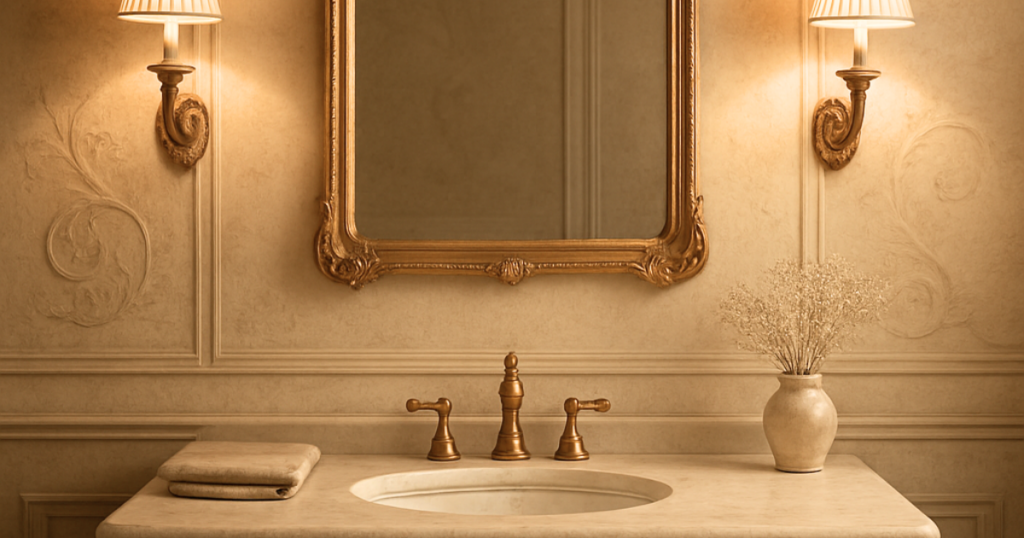
Decorative plaster isn’t just for living rooms and feature walls anymore. As modern interiors shift toward seamless, spa-like spaces, more homeowners and designers are asking: Can decorative plaster be used in bathrooms or other areas prone to wetness?
The short answer: Yes. But only with the right plaster system and protection. Let’s break down where it works, how to do it properly, and when tile might still make more sense.
Why People Want Decorative Plaster in Bathrooms
Bathrooms are no longer purely functional. Today’s design trends lean heavily toward:
- Seamless surfaces
- Natural, stone-like textures
- Soft, matte finishes
- Minimal grout lines
- Spa-inspired atmospheres
Decorative plaster and microcement finishes deliver on those trends listed above. Instead of grout joints and hard grid lines, you get fluid, organic movement across the walls; a look that feels high-end and very chic.
First Things First: Not All Plaster is the Same
This is where a lot of confusion happens. Traditional lime plasters and many decorative finishes are breathable, which is great for interior walls. But bathrooms introduce constant humidity, splashing, and direct water exposure. So it’s important to make sure you are using the correct plaster in the correct place. There are two main categories you’ll want to understand.
Decorative Plasters for Humid Areas (But Not Direct Water)
Some decorative plasters perform beautifully in bathrooms when they are outside of direct splash zones. They add depth, movement, and a soft luxury that paint alone can’t match. These plasters are ideal for:
- Bathroom ceilings
- Powder rooms
- Walls away from the shower or tub
- Guest bathrooms with lighter use
Finishes like pearlescent plasters, Venetian-style plasters, and textured mineral coatings are great examples that can handle normal humidity when properly sealed — to make them bathroom-appropriate, they are protected with a clear, washable topcoat that helps resist moisture and allows for gentle cleaning. These topcoats are known as varnishes and sealers and they turn a decorative surface into a more durable, wipeable finish.
Plaster Systems for Wet Areas (Showers & Splash Zones)
When you move into direct water exposure, like inside showers or behind freestanding tubs, you’ll want a more robust system from companies like MEODED and Daricco. This is where microcement-style decorative plasters come in. Microcement and high-performance acrylic or polymer-modified plasters are designed to:
- Form a dense, durable surface
- Resist moisture penetration
- Handle regular cleaning
- Be sealed into a water-resistant system
Products in this category like Daricco Travertin F are often used for:
- Shower walls
- Wet room designs
- Bathroom floors
- Vanity backsplashes
- When paired with the correct primers and sealers, microcement plasters create a seamless, modern alternative to tile.
How to Successfully Apply Decorative Plaster in Bathrooms
One of the biggest mistakes people make is treating decorative plaster like regular paint. Applying plaster is more than a simple application. Plaster requires more care, especially in bathrooms because of the moisture that it deals with. A successful plaster bathroom installation usually includes:
✔️ Proper Surface Preparation: Walls must be stable, clean, and properly primed. In wet zones, waterproofing layers or reinforced base coats may be required.
✔️ The Decorative Plaster Layer: This provides the visual texture and design — whether that’s smooth stone, soft movement, or a concrete-style look.
✔️ Protective Sealing: This is the critical step for bathrooms. A clear protective varnish or sealer will reduce water absorption, increase washability and stain resistance, and extend the life of the plaster. Without this step, even beautiful plaster can stain or wear prematurely in a bathroom environment.
Where to Use Decorative Plaster in a Bathroom
🛁 Shower Walls:
With a microcement or waterproof plaster system + proper sealing. This creates a seamless, grout-free surface that’s easier to maintain than tile and gives a luxurious spa feel.
🚿 Around Tubs:
Perfect for decorative plaster. These areas benefit from moisture-resistant systems and protective topcoats, especially where splashing occurs.
🧼 Vanity Walls:
A fantastic place for Venetian-style, pearlescent, or textured finishes. A washable sealer helps protect against splashes from sinks.
🌫️ Ceilings:
Decorative plaster performs beautifully here, especially in bathrooms with good ventilation. It adds warmth and texture overhead instead of flat paint.
🚽 Powder Rooms:
Almost anything goes here. Since there’s no shower, decorative plaster is an excellent way to create drama and depth in a small space.
Benefits of Using Decorative Plaster Instead of Tile
✨ Seamless Look – No grout lines means a cleaner, more continuous surface.
🧘 Spa-Like Feel – Soft textures and natural tones create a calming atmosphere that tile often can’t replicate.
🧽 Easier Visual Maintenance – No grout discoloration or mildew lines. Surfaces can be wiped clean when properly sealed.
🎨 Custom Design – From concrete effects to stone-like movement to soft pearlescent finishes, plaster allows for more artistic control than standard tile.
Is Any Maintenance Required?
A properly sealed decorative plaster surface in a bathroom is:
- Wipeable with mild cleaners
- Resistant to everyday moisture
- Durable under normal residential use
With that being said, avoid using abrasive cleaners and strong chemicals. In higher-use bathrooms, reapplying a protective topcoat after several years can help refresh and extend the life of the plaster.
When Tile Might Still Be the Better Choice
Plaster is a craft finish. It requires skill and the right materials, but when done correctly, the results are hard to match. Decorative plaster is amazing — but it’s not automatically right for every situation. Tile may still be the better option if:
- The installer is not experienced with plaster systems
- The space has structural movement issues
- The project requires a very tight budget
Design Styles That Work Beautifully with Bathroom Plaster
Decorative plaster fits especially well with:
- Modern minimalist bathrooms
- Mediterranean and European-inspired spaces
- Wabi-sabi or organic interiors
- Industrial or concrete-look designs
- Luxury spa-style retreats
- Neutral tones, layered lighting, and natural materials like wood and stone pair beautifully with textured plaster walls.
So…Can Decorative Plaster Be Used in Bathrooms?
Yes, and in many cases, it’s a stunning alternative to tile. The key is choosing the right type of plaster and using a complete system that includes proper preparation and protective sealing. When installed correctly, decorative plaster will transform a bathroom into a seamless, sculptural space that feels calm, modern, and high-end.