
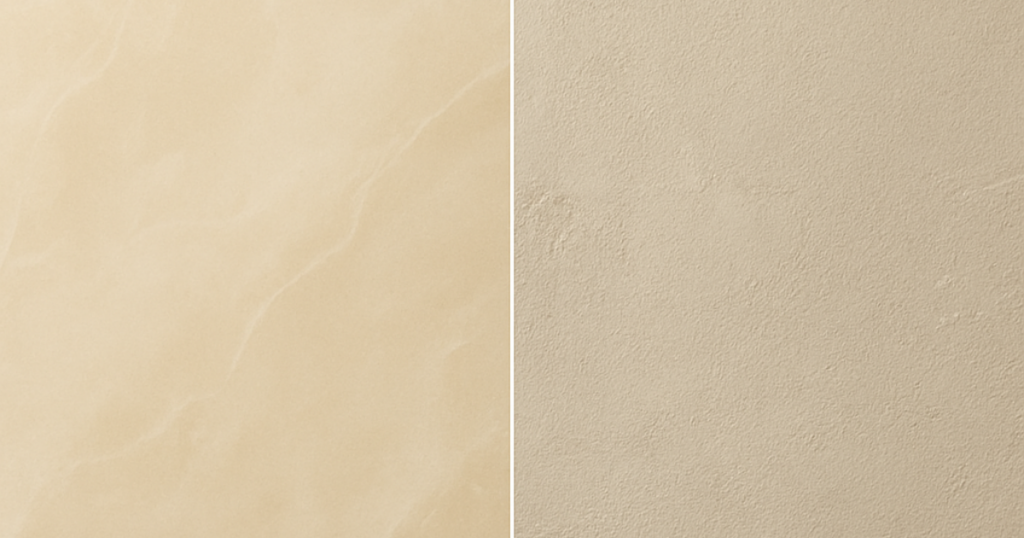
Venetian plaster and Marmorino are two of the most popular decorative plaster finishes used in high-end interiors today. Both originate from traditional Italian lime-based plaster techniques and are known for their depth, movement, and natural stone-like beauty. While they belong to the same family of finishes, they create very different visual effects and suit different types of spaces.
If you’re trying to choose between them, the decision usually comes down to shine level, texture, and the overall mood you want the room to have.
What is Venetian Plaster?
Venetian plaster is a smooth, refined decorative finish traditionally made from slaked lime and fine marble dust. It is applied in multiple thin layers and then compressed and burnished with a steel trowel to create a surface that can range from soft satin to high gloss.
The result is a finish with remarkable depth and translucency that resembles polished marble. Light doesn’t just hit the surface — it appears to come from within the wall, giving Venetian plaster its signature richness and movement.
Key characteristics of Venetian plaster
- Smooth and sleek to the touch
- Can be polished to a satin or glossy sheen
- Strong visual depth and variation
- Elegant, dramatic, and luxurious appearance
Best for: Formal living rooms, dining rooms, entryways, powder rooms, and statement feature walls where you want a refined, high-end look.
Modern decorative systems, including products designed to create polished marble-style finishes, make it possible to achieve this classic Venetian look with updated performance and application methods.
What is Marmorino Plaster?
Marmorino is also rooted in traditional Italian plaster techniques, but it creates a softer, more natural stone effect. Like Venetian plaster, it historically uses lime and marble aggregates, but with a slightly coarser composition that produces a more mineral, matte appearance.
Instead of a glossy, marble-like polish, Marmorino typically has a velvety, honed-stone look. The surface feels organic and architectural, with gentle movement rather than dramatic shine. Marmorino Palladino and Marmorino Tintoretto by MEODED are two great options for those considering.
Key characteristics of Marmorino:
- Matte to soft satin finish
- Subtle texture with a mineral, stone-like feel
- More natural and earthy appearance
- Soft depth without high reflectivity
Best for: Bedrooms, hallways, full-room applications, and spaces where you want warmth and texture without strong shine.
Marmorino-style finishes are especially popular in modern Mediterranean, rustic, wabi-sabi, and minimalist interiors where natural materials and soft surfaces are key to the design.
A Glance at How Venetian plaster and Marmorino Differ
Sheen: Venetian plaster is usually more polished and glossy, while Marmorino leans matte and velvety.
Visual Depth: Venetian plaster creates more dramatic movement and depth; Marmorino offers a softer, stone-like effect.
Texture: Venetian is smoother to the touch, while Marmorino has a slightly more natural mineral body.
Mood: Venetian feels luxurious and decorative; Marmorino feels architectural and organic.
Which Finish is Right for Your Space?
Choosing between Venetian plaster and Marmorino often comes down to the feeling you want the room to have.
Choose Venetian Plaster If You Want:
- A statement wall that catches the light
- A more formal or glamorous atmosphere
- A polished, marble-like surface
- Strong visual movement and depth
Venetian plaster works beautifully in rooms with good lighting, where its subtle sheen and depth can really come alive.
Choose Marmorino If You Want:
- A soft, natural, stone-inspired look
- A calm and organic atmosphere
- Texture without noticeable shine
- A finish that works across multiple walls
Marmorino is often preferred in bedrooms and living areas where comfort and warmth are more important than drama.
How Lighting Affects Both Finishes
Lighting plays a major role in how these plasters appear.
Venetian plaster reacts strongly to light. Natural sunlight or directional lighting can enhance its polished effect and highlight the layered movement in the surface. In low light, it still shows depth but with a more subtle glow.
Marmorino interacts with light in a softer way. Instead of reflecting it, the surface diffuses light, giving walls a gentle, velvety appearance. This makes it a great choice for spaces where you want a relaxed and inviting feel.
Before committing to either finish, it’s helpful to look at large samples under the lighting conditions of your actual space.
Can Venetian Plaster and Marmorino Be Used Together?
Absolutely. Designers often combine both finishes within the same home to create contrast and balance.
For example:
- A polished Venetian plaster feature wall in a dining room
- Marmorino in adjacent hallways or living spaces for a softer transition
Because both finishes share a similar mineral heritage, they complement each other well while still offering visual variety.
Modern Products Inspired by Traditional Finishes
While Venetian plaster and Marmorino are rooted in centuries-old lime and marble plaster techniques, many of today’s decorative plaster materials are modern, engineered formulations inspired by these historic finishes. Companies like MEODED and Daricco design these modern materials so that they meet or exceed the capabilities of their traditional selves. The modern options make application more consistent and durable, while still delivering the depth and movement associated with traditional plaster craftsmanship.
Final Thoughts
Venetian plaster and Marmorino are closely related but create very different moods. Venetian plaster delivers polished elegance and dramatic depth, making it ideal for statement areas and formal interiors. Marmorino offers a softer, more natural stone appearance that works beautifully across larger surfaces and relaxed living spaces.
Both finishes bring craftsmanship, texture, and timeless character to a room — far beyond what flat paint can provide. The best choice ultimately depends on whether you want your walls to shine and stand out, or feel calm, mineral, and quietly sophisticated.