
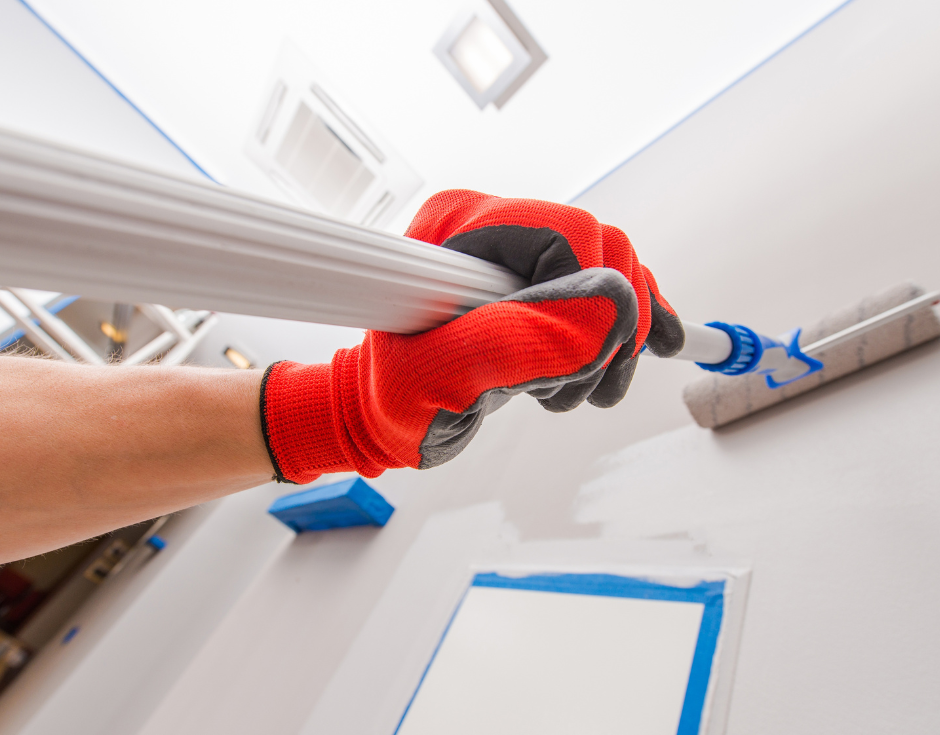
Do You Always Need to Use a Paint Primer?
Depending on the surface you are painting, you most likely need some form of paint primer. Skipping it can lead to uneven coverage or reduced durability in many situations. Primer is essential when you’re painting over dark colors, raw surfaces, stains, or glossy finishes because it helps the topcoat adhere properly.
Finding the correct primer for your job can ensure a smooth, long-lasting finish.
What do Paint Primers Do?
Paint primer can get the initial coat over the hard-to-remove stains. The most popular reasoning behind using a paint primer is to seal any porous openings on the surface your painting, which allows for fewer coats of paint. A primer “primes” the surface for painting. A good tip is to lightly wash the walls and sand down wherever necessary before priming.
A quality primer helps create a uniform surface so your topcoat looks consistent in color and sheen. It improves adhesion on tricky surfaces like glossy finishes, wood, metal, or previously stained areas—helping prevent peeling or uneven coverage over time. By giving your paint something dependable to grip onto, primer extends the life of your paint job and ensures a smoother, longer-lasting finish.
Difference Between Paint & Primer
Primer and paint serve two very different purposes. Primer contains more resin and less pigment, allowing it to seal the surface and create a strong bond that helps paint adhere evenly. Paint, on the other hand, is formulated with pigment and binders to provide color, protection, and the desired sheen—whether flat, eggshell, satin, semi-gloss, or gloss. While both can be applied with a brush, primer prepares the surface, and paint delivers the final look and finish.
Key Things to Remember:
- Use primer when painting over bare surfaces, stains, or drastic color changes.
- Primer improves paint adhesion, durability, and overall coverage.
- Paint provides color, protection, and the final look—but relies on proper priming for best results.
- Skipping primer can lead to uneven sheen, poor coverage, or peeling in tough conditions.
Oil vs. Water-Based Primers
Oil-based primers are ideal for wood or for when using oil-based paint. The oil seals the grains and prevents the paint from being absorbed into the wood and bubbling. Oil-based primer is preferred for outdoor projects because it contains V.O.C., which could be harmful if inhaled. Water-based primers, also known as latex primers, are better for indoor projects, like sheetrock walls or furniture. It is easier to clean up since it is water-based.
Types of Materials that Require Priming
Wood is a highly porous material that requires priming. New drywall is also porous and needs priming. Sometimes a wall can be painted already, and you want to change the paint color. You should still apply a primer. It blocks the previous paint color from bleeding through. This is especially important if you change the color from dark to light. If the surface you are painting is glossy, it is best to sand the surface, then prime it, so it adheres better. No matter the surface, primer can be applied with a paintbrush or roller.
Using Primers on Stains
Surfaces that have already been stained require light sanding and a thicker primer. We suggest Bulls Eye 1-2-3 Water-Base Primer, available at any of our Loconsolo Paints stores in Brooklyn, Queens and The Bronx.
All-in-one Paint Primers
While it may seem like you are saving time by using an all-in-one paint primer, you are, in fact, not using an actual primer. All-in-ones have a higher concentration of solids for better coverage. We suggest using a genuine primer first, then painting two coats after.
Trust Loconsolo Paints with your next project. We carry brands you can trust, like Benjamin Moore and INSL-X.