
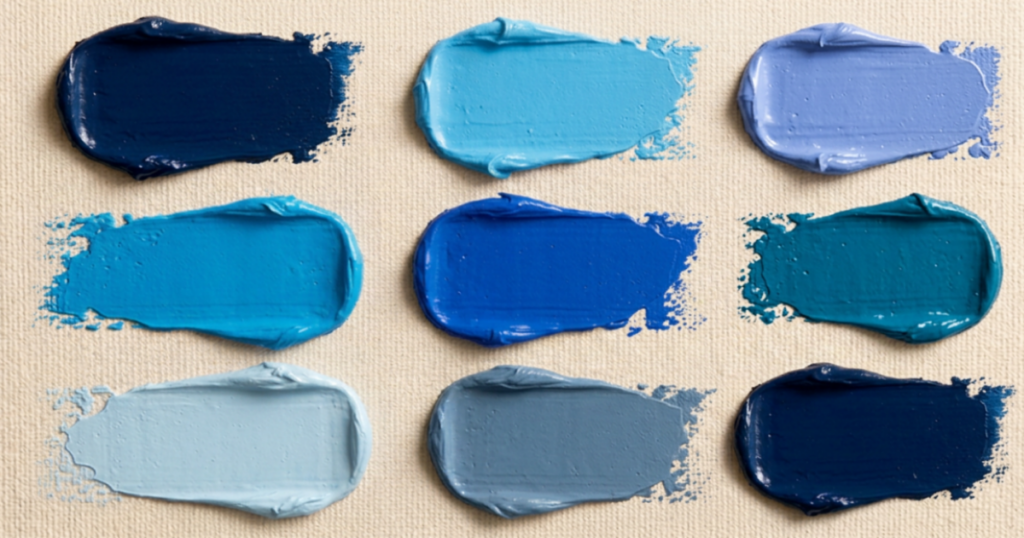
Blue is one of the most popular and versatile colors in interior design. From soft, airy blues to deep navy shades, blue paint can completely change the feeling of a room.
Some shades of blue create a calm and relaxing atmosphere, while others add drama, sophistication, or energy. With so many variations available, choosing the right blue can feel overwhelming.
Understanding the different shades of blue, their undertones, and how they work in a space can help you find the perfect color for your home.
How Many Shades of Blue Are There?
There are hundreds of different shades of blue, each with its own characteristics. Blue can shift depending on its undertones and intensity. Some blues lean toward:
- Green
- Gray
- Purple
- Black
- White
These subtle differences can completely change how a color appears on your walls. A soft blue-green may feel fresh and coastal, while a deep navy may feel elegant and dramatic.
Different Shades of Blue Explained
Blue paint colors generally fall into a few main categories. Understanding these categories can make it easier to narrow down the right shade for your space.
Light Blue Shades
Light blue shades create a bright, peaceful, and relaxing feeling. Light blues work especially well in rooms where you want a calm and open feeling. They are often used in:
- Bedrooms
- Bathrooms
- Living rooms
- Coastal-inspired spaces
Popular light blue shades include:
- Powder blue
- Sky blue
- Baby blue
- Ice blue
Benjamin Moore light blue favorites:
- Benjamin Moore Breath of Fresh Air 806
- Benjamin Moore Palladian Blue HC-144
- Benjamin Moore Healing Aloe 1562
Blue-Green Shades (Teal, Aqua, and Turquoise)
Many blue paint colors contain green undertones, creating shades that fall between blue and green. Blue-green colors are popular for creating a relaxed, natural feel.
And teal is generally considered a blue-green color because it combines blue and green undertones. Depending on the exact shade, teal may appear more blue or more green.
Common blue-green shades include:
- Teal
- Aqua
- Turquoise
- Seafoam
Benjamin Moore blue-green favorites:
- Benjamin Moore Seafoam Green 2039-60
- Benjamin Moore Wythe Blue HC-143
- Benjamin Moore Beach Glass 1564
Gray Blue Shades
Gray-blue shades are some of the most popular choices for modern homes because they feel sophisticated and timeless. These colors combine blue with gray undertones, creating softer, more muted versions of blue.
Common gray-blue shades include:
- Dusty blue
- Slate blue
- Steel blue
- Storm blue
Benjamin Moore gray-blue favorites:
- Benjamin Moore Boothbay Gray HC-165
- Benjamin Moore Smoke 2122-40
- Benjamin Moore Van Courtland Blue HC-145
Gray blues are excellent for living rooms, offices, and bedrooms where you want a calm but refined look.
Dark Blue Shades
Dark blue paint colors create a bold and dramatic appearance. Dark, deep blues pair beautifully with white trim, natural wood, brass, and warm metals.
They work especially well in:
- Dining rooms
- Accent walls
- Offices
- Large rooms
Common dark blue shades include:
- Navy
- Indigo
- Midnight blue
Benjamin Moore dark blue favorites:
- Benjamin Moore Hale Navy HC-154
- Benjamin Moore Newburyport Blue HC-155
- Benjamin Moore Blue Note 2129-30
Warm vs Cool Blue Shades
Not all blues feel the same. Some blues feel cool and crisp, while others feel warmer and more inviting.
Cool blues often have:
- Green undertones
- Gray undertones
- A fresh, airy appearance
Warm blues often have:
- Purple undertones
- Softer depth
- A cozier feeling
The lighting in your room will affect how the undertones appear, so always test paint samples before committing.
How to Choose the Right Blue Paint Color
The best blue will work with the entire room, not just the wall color. When selecting a blue paint color, consider the following things:
Lighting
Natural light can change the appearance of blue paint.
- North-facing rooms often receive cooler light, which can make blues appear cooler.
- South-facing rooms usually have warmer light and can handle a wider range of blue shades.
Room Purpose
Different blues create different moods.
- For relaxing spaces use: Soft blues, Gray blues, Blue-greens
- For dramatic spaces use: Navy, Deep blues, Rich indigo shades
Existing Colors
Consider the colors of everything in the room.
- Flooring, Countertops, Cabinets
- Trim, Fabrics, Wallpaper
- Furniture, Rugs, Light fixtures
What Colors Go With Blue Walls?
Blue is easy to pair with many other colors. Popular combinations include:
- Blue and White: A timeless combination that feels clean and classic.
- Blue and Natural Wood: Creates warmth and balances cooler blue tones.
- Blue and Beige: Softens blue and creates a comfortable, inviting space.
- Blue and Brass: Adds contrast and a more elevated look.
Popular Blue Paint Colors for Interior Walls
Some of the most popular blue paint styles include:
- Soft Blue Paint Colors which are best for: Bedrooms, bathrooms, and relaxing spaces
- Blue-Green Paint Colors are best for: Living rooms, dining rooms, and spaces inspired by nature
- Navy Blue Paint Colors which are best for: Accent walls, cabinets, statement spaces
Final Thoughts
There are countless shades of blue. Whether you prefer a light coastal blue, a calming gray-blue, a rich teal, or a dramatic navy, the right shade can completely transform your space.
Looking for the perfect blue paint color? Visit any Loconsolo Paints store and let our color experts guide you through the process. Our knowledgeable team is always happy to help you find the right paint for your home.