
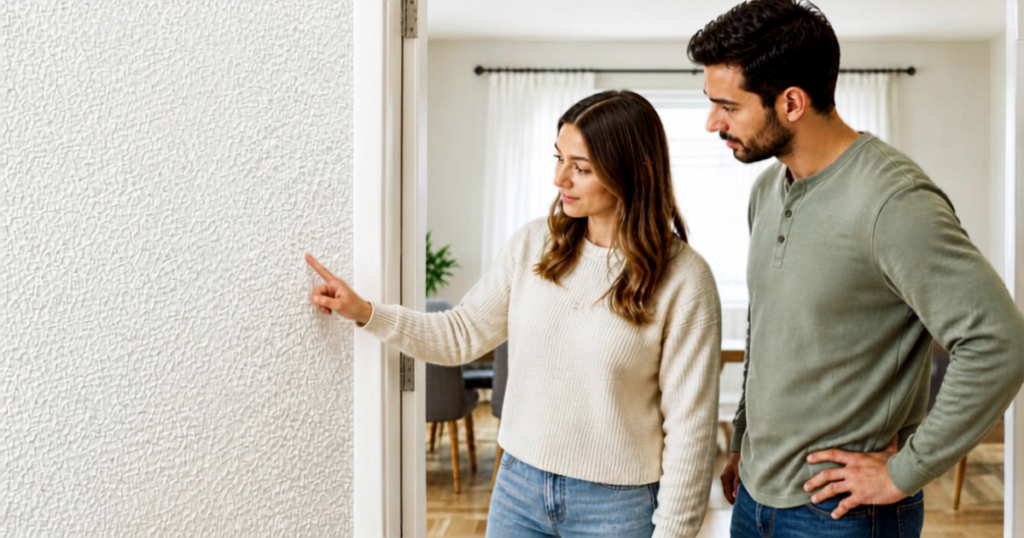
The orange peel effect on paint is an uneven, dimpled finish that resembles the surface of an orange peel. Instead of drying into a smooth, uniform film, the paint develops a noticeable texture across the surface. It can occur when paint is applied with a roller or sprayer and is usually an unwanted result of application technique, the tools being used, drying conditions, or the way the paint is flowing and leveling.
Orange peel shouldn’t be confused with an intentional orange peel wall texture. If you’re trying to deliberately create that look, the materials and application process are different. Here, we’re focusing on orange peel that appears unexpectedly in an otherwise smooth paint finish.
What Causes the Orange Peel Effect on Paint?
Orange peel can have several causes, and determining how the paint was applied is a good place to start. A wall painted with a roller can develop the effect for different reasons than a surface that was spray painted.
1. Using the Wrong Roller Nap
The thickness of a roller cover, known as its nap, affects the texture it leaves behind. A thicker nap is useful for getting paint into rough and textured surfaces, but it can leave more texture when used on a smooth surface.
If you’re seeing small dimples in paint applied with a roller, the roller cover may simply be too thick for the surface and finish you’re trying to achieve. For smooth surfaces, a shorter nap generally produces a smoother finish.
2. Applying Too Much or Too Little Paint
The amount of paint being applied can also affect how well the finish levels. Applying paint improperly can leave behind noticeable roller texture rather than allowing the coating to form a consistent film.
Keep your paint roller properly loaded and apply the paint according to the manufacturer’s recommended coverage and film thickness. Trying to stretch too little paint across a large area or applying an excessively heavy coat can both contribute to an uneven finish.
3. Overworking the Paint
Continuing to roll or brush paint after it has begun to set can interfere with its ability to level properly. As the coating starts drying, going back over it can create roller marks and texture that remain visible after the paint has dried.
Work systematically, maintain a wet edge, and avoid repeatedly going back over areas that have already begun to dry.
4. Paint Drying Too Quickly
Paint needs enough working time to flow and level after it is applied. High temperatures, direct sunlight, excessive airflow, or other conditions that cause the coating to dry too quickly can make application marks and texture more noticeable.
Always follow the paint manufacturer’s recommendations regarding acceptable temperature, humidity, drying time, and application conditions.
5. Improper Spray Technique or Setup
When spraying paint, orange peel is often related to how well the coating is being atomized and allowed to flow together after reaching the surface. Incorrect air pressure, spray distance, fan pattern, fluid delivery, or paint viscosity can all contribute to a textured finish.
Spray equipment should be set up for the particular coating being applied rather than relying on the same settings for every product.
How to Fix Orange Peel Paint
If the orange peel effect has already developed, the solution will depend on how severe the texture is and what type of paint or coating was used.
- First, allow the paint to dry thoroughly before attempting a repair. Trying to smooth or recoat paint that hasn’t dried sufficiently can make the finish worse.
- Once dry, lightly sand the affected surface until the raised texture has been smoothed. Remove all sanding dust and make sure the surface is clean before repainting. Severe orange peel may require more sanding to create an appropriately smooth and uniform surface before another coat is applied.
- When repainting, don’t simply repeat the same application method. Determine what likely caused the texture first. That may mean switching to a shorter-nap roller, changing your technique, correcting the spray setup, or painting under better environmental conditions.
- Always follow the coating manufacturer’s directions for sanding, recoating, and application, particularly with specialty coatings.
- Want more info? Read our post about how to fix peeling wall paint.
How to Prevent the Orange Peel Effect When Painting
Preventing orange peel is easier than sanding and repainting a finished surface. Start by selecting an applicator appropriate for both the surface and the paint you’re using.
- On smooth walls, a quality roller with the appropriate nap can help minimize unwanted texture. Keep the roller adequately loaded with paint, work in manageable sections, maintain a wet edge, and avoid excessive pressure or repeatedly rolling over paint as it begins to dry.
- Pay attention to the conditions in the room as well. Extremely warm surfaces or conditions that make the paint dry too quickly can reduce the amount of time it has to flow and level.
- When spraying, take the time to properly set up the equipment for the coating. Spray pressure, tip or nozzle selection, distance from the surface, fan pattern, viscosity, and application speed can all affect the final appearance. A test spray can help you identify problems before coating the actual surface.
- Most importantly, follow the application instructions for the specific paint you’re using. Different coatings can have different requirements for applicators, film thickness, drying times, thinning, spraying, and environmental conditions.
Can a Paint Roller Cause an Orange Peel Effect?
Yes. A paint roller can leave an orange peel effect, particularly when the roller nap is too thick for the surface or the paint isn’t being applied and leveled properly.
For a smooth wall, using a thinner nap can help create a smoother finish. Benjamin Moore, for example, recommends a 3/8-inch roller cover for typical walls and ceilings and specifically suggests switching to a thinner nap if you notice small orange-peel-like dimples developing while painting.
Technique matters too. Avoid pressing excessively hard on the roller or continuing to work an area as the paint starts to dry. Keep enough paint on the roller to maintain an even application and work from unpainted areas back into the wet edge of the previous section.
What Causes Orange Peel When Spray Painting?
Orange peel can also occur when spraying paint, but the causes are often related to spray setup and atomization rather than roller selection.
If the coating isn’t being properly atomized, the individual droplets may not flow together sufficiently to form a smooth film. Incorrect spray pressure, an unsuitable tip or nozzle, holding the sprayer too far from the surface, an improper fan pattern, or applying a coating at the wrong viscosity can all contribute to the problem.
Temperature and drying speed matter as well. If the coating begins drying before it has enough time to flow and level, the texture created during spraying can remain visible in the finished surface.
Before spraying an entire wall, cabinet, door, or other surface, test your setup on an appropriate practice surface. Make adjustments as necessary and always use the spray settings and application procedures recommended for the particular coating and equipment you’re using.
Need Help Getting a Smoother Paint Finish?
The paint you choose matters, but so do your rollers, brushes, sprayer setup, surface preparation, and application technique. If you’re unsure which products or painting supplies are right for your project, stop by Loconsolo Paints.
Our knowledgeable team can help you choose the right paint, roller cover, primer, tools, and other supplies for the surface you’re working on. If you’re already dealing with an orange peel effect, tell us what you used and how you applied it, and we’ll help you determine the best way to move forward.
Visit one of our NYC Benjamin Moore stores for expert help and everything you need for your next painting project.