
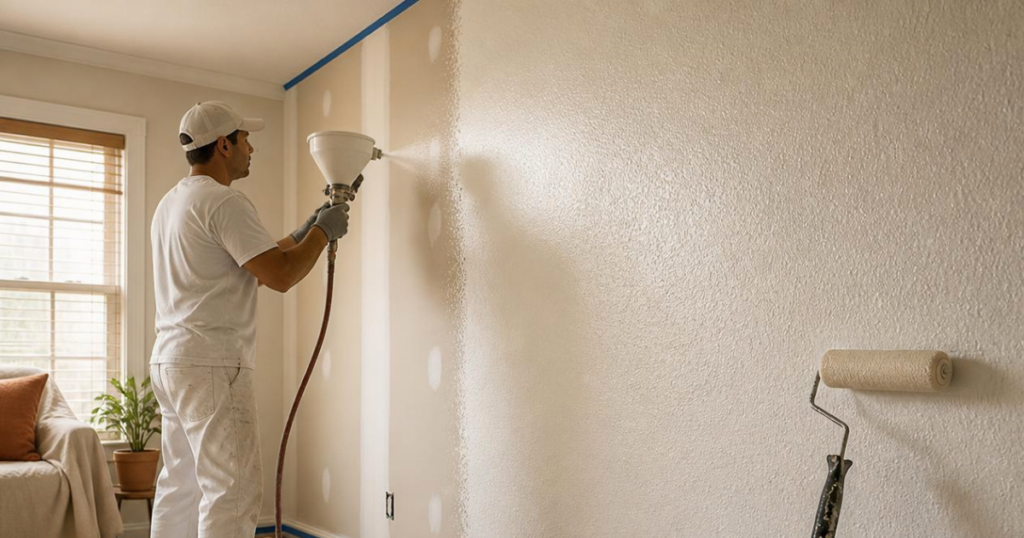
Orange peel texture is a lightly dimpled wall finish named for its resemblance to the surface of an orange. It is typically sprayed onto drywall to add subtle texture, create visual interest, and help make minor surface imperfections less noticeable.
This is different from the unwanted orange peel effect that can sometimes appear when you’re trying to achieve a smooth painted finish. If that’s the problem you’re dealing with, check out our guide to the orange peel effect on paint to learn what causes it and how to fix it.
What is Orange Peel Wall Texture?
Orange peel is a sprayed wall texture made up of small droplets that dry into a slightly raised, dimpled surface. It is more subtle than heavier textures such as knockdown and can range from a very fine pattern to a more noticeable texture depending on how it is applied.
After the texture dries, the wall can be primed and painted to achieve the desired color and finish.
Why Use Orange Peel Texture on Walls?
Orange peel texture adds dimension to walls without creating the heavier appearance of more pronounced wall textures. It can also help make small drywall imperfections less noticeable, making it a useful option when a perfectly smooth wall isn’t the goal.
The amount of texture can also be adjusted, allowing you to create anything from a very subtle finish to a more noticeable orange peel effect.
What Do You Need to Create Orange Peel Texture?
For a traditional sprayed orange peel texture, you’ll generally need:
- Wall texture compound or a product intended for creating spray texture
- Hopper gun or appropriate texture sprayer
- Air compressor, if required by your equipment
- Drop cloths and plastic sheeting
- Painter’s tape
- Mixing bucket and mixing tools, if using a compound that requires mixing
- Appropriate eye, respiratory, and other protection
- Primer and paint for finishing the wall
Always follow the instructions for the particular texture material and spraying equipment you’re using.
How to Create Orange Peel Texture on Walls
- Prepare the Walls: Start with a clean, dry, and sound surface. Repair holes, cracks, loose material, and significant imperfections before applying the texture. Sand repaired areas as necessary and remove dust from the wall.
- Protect the Room: Sprayed texture can travel well beyond the area you’re aiming at. Remove or cover furniture and carefully mask floors, windows, doors, trim, outlets, fixtures, and anything else you don’t want coated.
- Prepare the Texture Material: Prepare the texture material according to the manufacturer’s instructions. If the product requires mixing, achieving the proper consistency is important for getting an even spray pattern and allowing the equipment to work correctly. Avoid automatically adding extra water or altering the mixture simply to change the texture. Stay within the manufacturer’s recommendations for the product you’re using.
- Set Up the Sprayer: Set up your hopper gun, compressor, or texture sprayer according to the equipment and material manufacturers’ instructions. The combination of air pressure, nozzle or orifice size, material flow, and spraying distance can influence the size and distribution of the droplets.
- Test Your Orange Peel Texture: Before spraying the wall, test the setup on scrap drywall or another suitable practice surface. This lets you see the pattern and make adjustments before committing to the room. If you want a finer orange peel texture, adjust your equipment and material within the manufacturers’ recommended settings until you achieve smaller, more subtle droplets. For a heavier texture, adjust the setup to create a more pronounced pattern.
- Spray the Walls: Hold the sprayer at a consistent distance from the surface and move across the wall at a steady pace. Aim for an even distribution of texture rather than concentrating too much material in one area. Work systematically across the wall and periodically check the texture from different angles. Avoid repeatedly spraying an area simply because it looks slightly different while wet—the finished appearance can change as the material dries.
- Let the Texture Dry: Allow the texture to dry completely according to the manufacturer’s instructions. Drying time will depend on the product, thickness of the texture, temperature, humidity, and ventilation. Avoid painting or otherwise disturbing the texture before it has sufficiently dried.
- Prime and Paint the Walls: Once the orange peel texture has dried, finish the surface according to the texture manufacturer’s recommendations. Depending on the material and substrate, this will typically include priming before applying your chosen wall paint. Use a roller nap appropriate for the depth of the finished texture so the paint can adequately cover the raised and recessed areas.
Fine vs. Heavy Orange Peel Texture
Orange peel effect texture can range from very fine and subtle to considerably more pronounced. Spray settings, material consistency, nozzle orifice, distance, and application technique can all influence the final pattern.
That’s why testing first is so important. Create a sample and adjust the setup until you’re happy with the appearance before moving onto the walls.
Can You Create Orange Peel Texture With a Roller?
A roller can be used with certain textured coatings or materials to intentionally create a textured finish, but it won’t necessarily produce the same pattern as a traditional sprayed orange peel texture.
If you specifically want the classic orange peel appearance, using a texture product and application method designed for that purpose will generally give you greater control over the finished pattern.
Can You Paint Over Orange Peel Texture?
Yes. Once the texture is properly dry and prepared, it can be primed and painted. Choose a roller nap that can reach into the texture rather than one intended exclusively for perfectly smooth surfaces, and avoid applying so much paint that you begin filling in the texture.
Visit Our Paint Stores and Create Orange Peel Texture
If you’re planning to add orange peel texture to your walls, stop by Loconsolo Paints. Our team can help you find the appropriate products, tools, primer, paint, and supplies for your project. Tell us the type of surface you’re working with and the finish you’re trying to achieve, and our knowledgeable team will be happy to help you get what you need.
Visit one of our NYC paint stores for expert help with your next painting project.