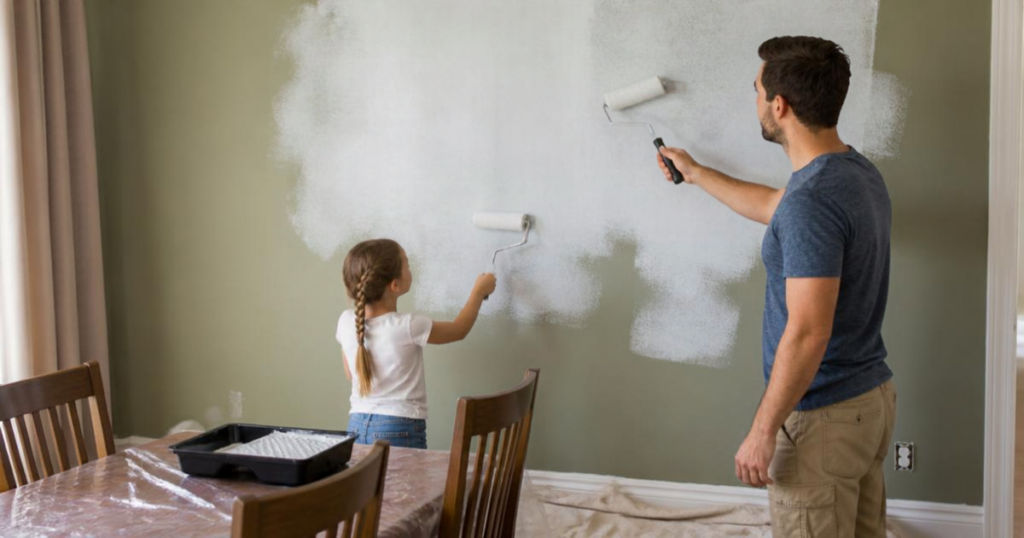
No, you don’t always need to prime before repainting. If the existing paint is in good condition, firmly adhered, clean, and compatible with the new paint, you can often repaint the surface without applying a separate primer first.
Primer becomes more important when the existing surface has stains, repairs, bare spots, adhesion problems, or other conditions that could affect the new paint. What you’re painting over is usually the biggest factor in determining whether primer is necessary.
When Do You Need to Prime Before Repainting?
While many previously painted surfaces don’t require primer, there are several situations where you should consider using one. You’ll always want to prime bare drywall, but what about already painted walls?
1. There Are Bare or Unpainted Areas
If scraping, sanding, repairs, or damage have exposed the underlying surface, those areas may need to be primed before repainting. Spot priming can often address these areas without requiring you to prime the entire surface.
2. You’ve Made Repairs
Spackle, joint compound, wood filler, and other repair materials can absorb paint differently than the surrounding surface. Priming repaired areas helps seal them and can prevent an uneven appearance after painting.
3. You’re Painting Over Stains
Water stains, smoke, grease, marker, and other discoloration may bleed through new paint. An appropriate stain-blocking primer can help prevent these stains from showing through the new finish. Make sure the source of any stain, such as a water leak, has been corrected first.
4. The Existing Paint Is Glossy
Glossy surfaces can make it more difficult for new paint to adhere properly. The surface should be cleaned and prepared as required, which may include sanding to dull the existing finish. Depending on the existing coating and the paint you’re applying, a bonding primer may also be appropriate.
5. You’re Making a Major Color Change
Primer can be helpful when you’re covering a very dark or strong color with a much lighter one. It creates a more uniform base and can make it easier to achieve consistent coverage with the new color.
6. You’re Painting Over a Different Type of Paint
If you’re unsure whether the new paint is compatible with the existing coating, don’t simply paint over it. Proper surface preparation and the appropriate primer can help create a suitable base for the new coating.
When Can You Repaint Without Primer?
You can often skip primer when the existing paint is in good condition, firmly adhered, and free of stains or other problems. The surface should still be thoroughly cleaned and properly prepared before you repaint it.
If you’re simply refreshing a wall with a similar color and compatible paint, for example, a separate coat of primer is often unnecessary.
Do You Need to Prime Before Repainting the Same Color?
Usually not. If you’re repainting with the same or a similar color and the existing coating is in good condition, you can typically apply the new paint after properly preparing the surface. Primer may still be necessary for repaired areas, stains, exposed substrate, or other problem spots.
Can You Just Paint Over Old Paint?
Yes, you can paint over old paint when it is still firmly adhered and in good condition. Clean the surface first and address any peeling, cracking, holes, stains, or other problems before applying the new paint. If the existing paint is failing, simply covering it with another coat won’t fix the underlying problem.
Come to Our Paint Stores for Paint and Primer
Not sure whether your project needs primer? Stop by Loconsolo Paints. Our knowledgeable team can help you determine whether you need to prime and choose the right Benjamin Moore paint and primer for the surface you’re repainting.
Visit one of our NYC paint store locations for paint, primer, and the supplies you need for your project.