
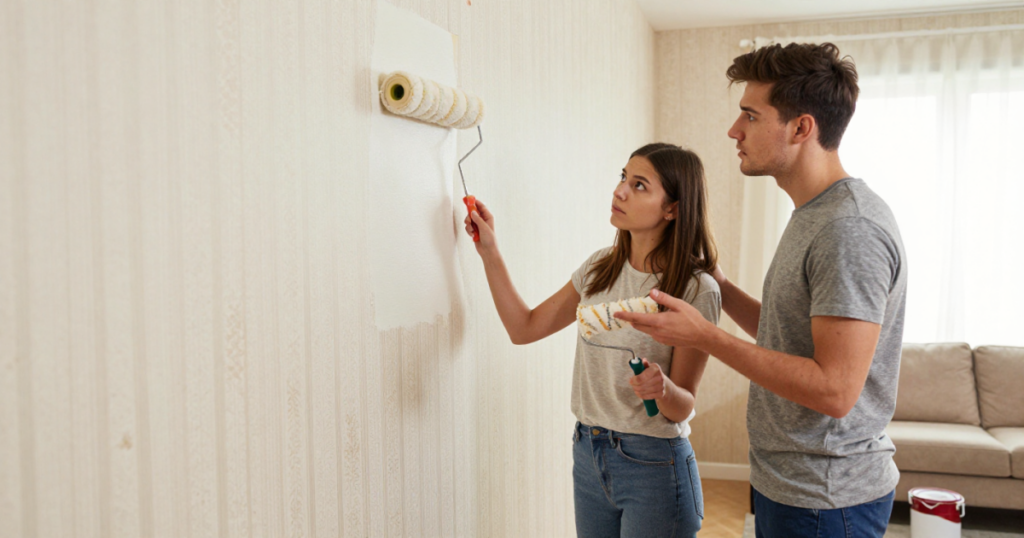
If you’ve ever looked at an outdated wallpapered room and wondered, “Can you paint over wallpaper?” the answer is yes—but it depends on the condition of the wallpaper and how well you prepare the surface.
While removing wallpaper is often the preferred approach, painting over it can be a practical solution in certain situations. The key is knowing when it’s appropriate and following the proper preparation steps to ensure a smooth, long-lasting finish.
This guide explains when you can paint over wallpaper, when you shouldn’t, and how to achieve the best results.
Is It Better to Remove Wallpaper or Paint Over It?
In most cases, removing wallpaper is the best long-term solution. It allows you to inspect and repair the wall underneath while creating the ideal surface for paint. However, painting over wallpaper may be a good option if:
- The wallpaper is firmly adhered to the wall.
- There are no loose seams, bubbles, or peeling edges.
- Removing the wallpaper would likely damage the drywall.
- You’re looking for a quicker renovation without extensive wall repairs.
If the wallpaper is already failing, painting over it will not solve the problem—it will simply hide it temporarily.
Can You Paint Over Old Wallpaper?
Yes, as long as the wallpaper is still securely attached. Older wallpaper should be carefully inspected for:
- Loose seams
- Peeling corners
- Air bubbles
- Water damage
- Mold or mildew
Any of these issues should be addressed before painting. If the wallpaper is deteriorating, removal is usually the better option.
Can You Paint Over Wallpaper Glue or Adhesive?
Painting directly over wallpaper glue or adhesive is not recommended. Wallpaper adhesive can react with paint, causing:
- Poor adhesion
- Uneven sheen
- Visible streaks
- Peeling or blistering over time
If wallpaper has already been removed, thoroughly wash the walls to remove as much adhesive as possible before priming.
Can You Paint Over Wallpaper Paste?
Wallpaper paste should also be cleaned from the wall whenever possible. Even small amounts of leftover paste can affect how primer and paint bond to the surface. After cleaning, allow the wall to dry completely before applying primer.
Can You Paint Over Vinyl Wallpaper?
Yes—but vinyl wallpaper requires extra preparation. Because vinyl has a slick, non-porous surface, paint does not adhere well without the proper primer.
Before painting:
- Clean the wallpaper thoroughly.
- Lightly sand glossy areas if appropriate.
- Apply a high-quality bonding primer.
- Finish with two coats of premium paint.
Skipping the primer greatly increases the risk of peeling.
Can You Paint Over Textured Wallpaper?
You can, but keep in mind that paint will not hide the texture. If you want a smooth wall, the wallpaper should typically be removed first. If you don’t mind the texture, painting can be an effective way to refresh the appearance.
Can You Paint Over Patterned Wallpaper?
Yes. Keep in mind that a quality primer helps prevent bold patterns or dark colors from showing through the new paint. In many cases, even with primer, two finish coats are recommended for complete coverage.
Can You Paint Over a Wallpaper Border?
It depends on its condition. If the border is firmly attached with no lifting edges, it can usually be primed and painted. However, because wallpaper borders often begin peeling before the rest of the wallpaper, border removal is frequently the better long-term solution.
Can You Paint Over Peel-and-Stick Wallpaper?
Generally, no. Peel-and-stick wallpaper is designed to be removable, not permanent. Because it isn’t permanently bonded to the wall, painting over it often leads to peeling, bubbling, or failure.
Removing it before painting is the best approach.
How to Paint Over Wallpaper
If you’ve determined your wallpaper is suitable for painting, follow these basic steps:
- Again inspect the wallpaper for loose seams, bubbles, or damage.
- Repair any lifting edges using wallpaper adhesive.
- Clean the surface thoroughly to remove dirt and grease.
- Prime the wallpaper using a high-quality bonding primer.
- Apply two coats of premium interior paint, allowing proper drying time between coats.
Proper preparation is the difference between a finish that lasts for years and one that begins peeling after only a short time.
What Primer Should You Use?
Primer is the most important step when painting over wallpaper. Using the right primer significantly improves the durability of your paint job.
Make sure to use a quality bonding primer to help:
- Seal the wallpaper surface
- Improve paint adhesion
- Prevent stains or patterns from bleeding through
- Create a more uniform finish
Final Thoughts
If you’re unsure which primer or paint is right for your project, visit your nearest Loconsolo Paints location. Our paint specialists can recommend the best products and techniques to help you achieve a beautiful, long-lasting finish.
Want to meet with a wallpaper specialist? Book a design consultation with our interior designer today. Consultations can be booked here!