
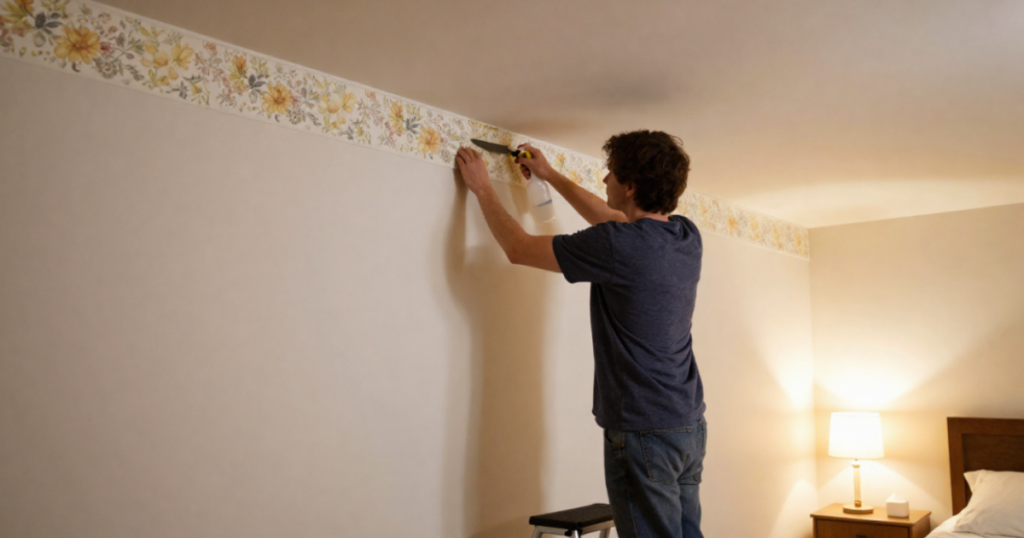
Wallpaper borders were once a popular way to add color and character to a room. But now many homeowners now prefer a cleaner, more modern look. If you’re ready to update your space, learning how to remove a wallpaper border properly can save time and help prevent damage to your walls.
The good news is that most wallpaper borders can be removed with the right tools, a little patience, and the proper technique. This guide will walk you through the process step by step.
What’s Needed to Remove Wallpaper Border
Having everything ready before you start will make the project much easier. Before you begin, gather a few basic supplies:
- Putty knife or plastic scraper
- Spray bottle
- Warm water
- Sponge or microfiber cloth
- Wallpaper remover solution (optional)
- Scoring tool (for vinyl borders)
- Steamer (for stubborn borders)
The 4 Steps to Removing Wallpaper Border
Step 1: Test a Corner
Start by gently lifting one corner of the wallpaper border using your fingernail or a plastic putty knife. Sometimes older borders peel away easily without any additional work.
If the border resists, don’t force it. Instead, move on to softening the adhesive.
Step 2: Soften the Adhesive
Mix warm water with a small amount of mild dish soap, or use a commercial wallpaper removal solution. Spray the wallpaper border generously and allow it to soak for several minutes.
The moisture helps loosen the adhesive behind the border.
Step 3: Peel Slowly
Beginning at a loose corner, slowly pull the wallpaper border away from the wall. Pull at a shallow angle rather than straight outward to reduce the chance of damaging the drywall or paint underneath.
Work in small sections rather than trying to remove long strips all at once.
Step 4: Remove Remaining Adhesive
After the border has been removed, some adhesive may remain on the wall. Use warm water and a sponge or an adhesive remover to clean the surface thoroughly.
Removing all adhesive is important before priming or painting.
How to Remove Old Wallpaper Border
Older wallpaper borders often have stronger adhesives that become brittle over time. If warm water alone isn’t enough:
- Apply additional remover solution.
- Allow a longer soaking time.
- Use a wallpaper steamer if necessary.
- Avoid scraping aggressively, as this can damage drywall.
How to Remove Wallpaper Border from a Painted Wall
Extra care should be taken when removing wallpaper borders from painted walls. To minimize damage:
- Use plastic scrapers instead of metal tools.
- Work slowly.
- Keep the border moist while peeling.
- Avoid excessive force.
- A quality primer can help repair minor surface imperfections before repainting.
How to Remove Vinyl Wallpaper Border
Vinyl wallpaper borders are water-resistant, making them more difficult to remove. Lightly score the surface using a wallpaper scoring tool before applying water or wallpaper remover.
The small perforations allow moisture to penetrate the adhesive more effectively.
How to Remove Self-Adhesive Wallpaper Border
Self-adhesive borders are generally easier to remove than traditional wallpaper borders. Begin peeling from one corner while applying gentle heat with a hair dryer if needed.
The heat softens the adhesive, making removal easier.
What If Adhesive Remains?
Even after the border has been removed, adhesive residue can cause problems if left behind. Always wash the wall thoroughly before painting or installing new wallpaper.
Any remaining adhesive can affect primer and paint adhesion and may lead to peeling or uneven finishes.
Should You Paint Right Away?
Once the wall is clean and dry, inspect it carefully. Proper preparation will help ensure a smooth, professional-looking result. If there are any damaged areas:
- Patch holes or gouges.
- Sand smooth.
- Apply a quality primer.
- Finish with your chosen paint.
Final Thoughts
If you’re preparing to repaint after removing wallpaper, visit a Loconsolo Paints store in NY. Our paint specialists can recommend the right primers, cleaners, and premium paints to help you achieve beautiful, long-lasting results.
Want to meet with a wallpaper specialist? Book a design consultation with our interior designer today. Consultations can be booked here!