
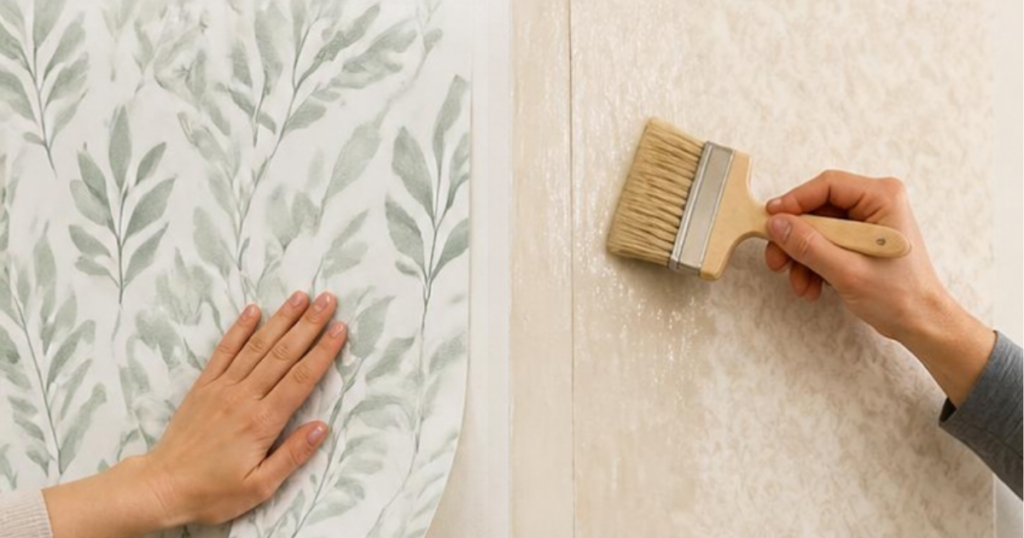
When choosing wallpaper for your home, one of the first decisions you’ll face is whether to use peel and stick or traditional wallpaper. Both offer a wide variety of colors, patterns, and textures, but they differ in installation, durability, cost, and removal.
Peel and stick wallpaper is generally better for temporary decorating and DIY projects, while traditional wallpaper is often the better choice for long-term durability and a wider range of premium finishes. Here’s how they compare.
What is Peel and Stick Wallpaper?
Peel and stick wallpaper is a self-adhesive wallcovering that doesn’t require separate wallpaper paste. You simply peel away the backing and apply the wallpaper directly to a clean, smooth, properly prepared wall.
It’s particularly popular with renters, DIY decorators, and homeowners who like to change their interiors frequently.
Advantages of peel and stick wallpaper:
- No separate wallpaper paste required
- Can often be removed without significant wall damage
- Convenient for smaller projects and accent walls
- Available in numerous colors and patterns
Disadvantages of peel and stick wallpaper:
- May not adhere well to textured or uneven surfaces
- Can peel or lift in areas with excess heat or humidity
- Repositioning large panels can be difficult
- Adhesive may damage paint or leave residue during removal
Peel and stick wallpaper works best on smooth, clean, fully cured painted walls, although compatibility depends on the manufacturer and the surface.
What is Traditional Wallpaper?
Traditional wallpaper is installed using wallpaper adhesive, either applied directly to the wall or to the back of the wallpaper. Some traditional wallcoverings come prepasted, requiring water to activate the adhesive.
Traditional wallpaper includes a broad range of materials, including paper, non-woven, vinyl, and specialty wallcoverings.
Advantages of traditional wallpaper:
- Often provides better long-term durability
- Available in a wide variety of materials, textures, and finishes
- Suitable for large rooms and permanent decorating projects
- Many products offer washable or scrubbable surfaces
Disadvantages of traditional wallpaper:
- Installation can be more involved
- May require professional installation
- Removal can take additional time and preparation
- Adhesives and installation supplies add to the overall project cost
Traditional wallpaper is particularly appealing for homeowners seeking a lasting design with high-quality materials and finishes.
Peel and Stick vs. Traditional Wallpaper: Key Differences
| Feature | Peel and Stick Wallpaper | Traditional Wallpaper |
|---|---|---|
| Installation | Self-adhesive | Requires paste or adhesive activation |
| Durability | Varies; often suited to shorter-term use | Often better for long-term use |
| Removal | Generally easier, depending on surface | Varies by wallpaper and adhesive |
| Cost | Often lower installation costs | May have higher installation costs |
| Design Options | Many printed patterns | Extensive materials, patterns, and textures |
| Best For | Renters, DIY projects, temporary designs | Long-term decorating, premium finishes |
Interested in vintage wallpaper? We have an entire floor filled with decades old options! Visit us at our Astoria, Queens location. Get a sneak peak in our vintage wallpaper video.
Is Peel and Stick Wallpaper Cheaper Than Traditional Wallpaper?
Peel and stick wallpaper can be less expensive to install because it doesn’t require separate adhesive and is commonly installed without professional help.
However, the wallpaper itself isn’t necessarily cheaper. Premium peel and stick products can cost as much as or more than certain traditional wallpapers.
Traditional wallpaper may require additional supplies or professional installation, increasing the upfront cost. On the other hand, a durable traditional wallcovering can provide better long-term value if you don’t plan to redecorate frequently.
When comparing prices, consider the coverage per roll, installation costs, expected lifespan, and whether the wallpaper will need to be replaced.
Which Wallpaper Is Easier to Install?
Peel and stick wallpaper is generally more convenient for smaller DIY projects because it doesn’t require mixing or applying paste. However, aligning patterns, avoiding bubbles, and positioning large panels can still be challenging.
Traditional wallpaper requires more preparation and careful installation. Depending on the product, you’ll need to apply adhesive, position the strips, match patterns, and smooth the wallpaper onto the wall.
For larger projects or expensive wallcoverings, professional installation may be worth considering regardless of which type you choose.
Is Peel and Stick or Traditional Wallpaper Better for Bathrooms?
Traditional wallpaper is often the better option for bathrooms when you choose a moisture-resistant wallcovering specifically approved for that environment.
Peel and stick wallpaper can work in certain bathrooms, particularly well-ventilated powder rooms. However, frequent humidity, condensation, and temperature changes can weaken some self-adhesive products.
Neither type should automatically be considered waterproof. Always check the manufacturer’s recommendations before installing wallpaper in a bathroom.
For more information, read our guide on using peel and stick wallpaper in bathrooms.
Which Wallpaper Is Easier to Remove?
Peel and stick wallpaper is designed to be removable, making it an attractive choice for renters and people who frequently update their decor. However, removal isn’t always damage-free, particularly on poorly prepared walls or delicate paint finishes.
Traditional wallpaper removal depends on the material and adhesive. Some modern non-woven wallpapers are designed to strip off in full sheets, while others require soaking, steaming, or additional removal techniques.
If you’re replacing existing wallpaper, see our guide on how to take wallpaper off the wall.
Should You Choose Peel and Stick or Traditional Wallpaper?
The best choice depends on your project, budget, and how long you plan to keep the wallpaper.
Choose peel and stick wallpaper if:
- You’re renting or decorating temporarily
- You want to complete a small DIY project
- You expect to change the design frequently
- You prefer installation without separate paste
Choose traditional wallpaper if:
- You’re decorating for the long term
- You want premium textures and specialty finishes
- You’re wallpapering a large room
- You want a broader selection of materials and designs
Both options can transform a room, so consider your walls, the environment, and the overall look you want to achieve before deciding.
Shop Wallpaper at Loconsolo Paints in NYC
Visit Loconsolo Paints to explore thousands of wallpaper styles, patterns, colors, and textures.
Our wallpaper showrooms in Brooklyn and Queens offer an extensive selection of wallpaper collections, and our knowledgeable team can help you find a wallcovering that suits your space and design goals.
You can also schedule a one-on-one consultation with our interior designer for personalized assistance choosing wallpaper and coordinating paint colors.