
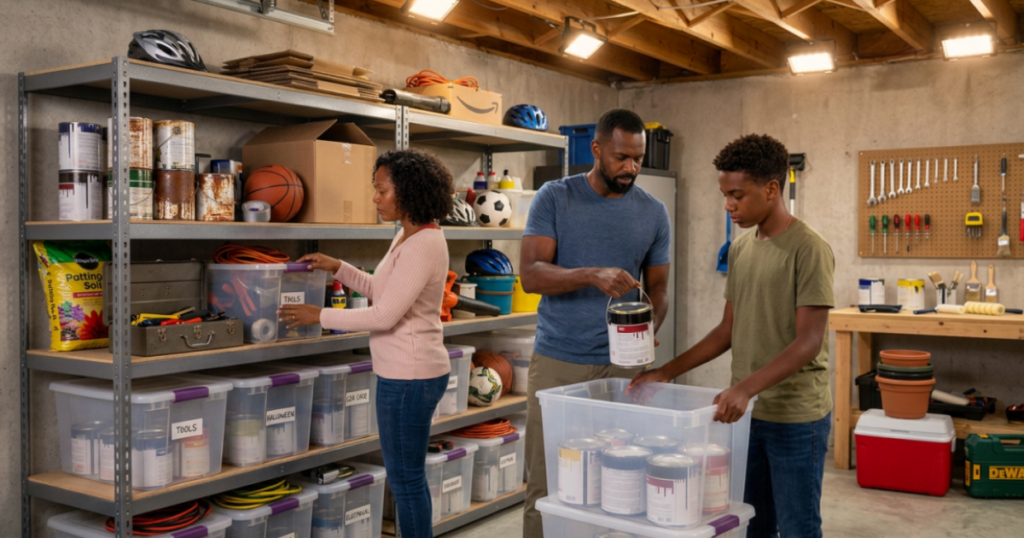
Leftover paint is common after completing a painting project, whether you have a small amount remaining or an entire gallon. Since paint can be expensive, properly storing it allows you to save it for future touch-ups, repairs, or small projects instead of having to purchase new paint later.
The key to storing leftover paint is protecting it from air exposure, extreme temperatures, and damage. With the right storage methods, your leftover paint can remain usable for years.
Why Properly Storing Leftover Paint Matters
Proper paint storage helps prevent the paint from drying out, separating, or becoming unusable over time. A well-sealed paint can makes future touch-ups easy because you can use the exact same color and finish that was originally applied to your walls.
Before storing leftover paint, make sure the paint is still in good condition. If it has been contaminated, has a strong odor, or has dried out significantly, it may no longer be suitable for future use.
5 Steps for Storing Leftover Paint
1. Clean the Paint Can Rim Before Closing
Before putting the lid back on, clean any paint from the rim and grooves of the can. Dried paint buildup can prevent the lid from creating a proper seal, allowing air to enter and causing the paint to dry out over time.
Use a clean rag or paper towel to wipe away excess paint around the opening before closing the can.
2. Seal the Paint Can Tightly
A tight seal is one of the most important steps when storing leftover paint. Carefully place the lid back onto the can and secure it by gently tapping around the edges with a rubber mallet or a similar tool.
Avoid using a regular hammer, which can damage the lid and prevent the can from sealing properly. Take the extra few moments to properly seal the can and you’ll be able to use the old paint for touch ups down the line.
3. Label the Paint Can
Always label leftover paint before storing it. Even if you think you will remember what it was used for, details can become difficult to recall months or years later.
Make sure to include:
- Paint color name
- Paint color number (if available)
- Paint brand
- Room where it was used
- Paint finish (flat, matte, eggshell, satin, semi-gloss, etc.)
- Date purchased or stored
Proper labeling makes future touch-ups much easier and helps you avoid guessing which paint belongs to which room.
4. Store Paint in a Cool, Dry Location
The best place to store leftover paint is somewhere indoors where temperatures remain relatively stable. Extreme heat and cold can affect the paint’s consistency and performance.
A climate-controlled basement, utility room, or interior storage area is typically better than outdoor locations where temperatures fluctuate.
5. Keep Paint Away From Extreme Temperatures
Paint can last for a long time when in a temperature-controlled environment. It should not be stored in places where it can freeze or experience excessive heat. Freezing temperatures can damage the paint’s ingredients, while high heat can cause the paint to separate or deteriorate faster.
Avoid storing leftover paint in areas like:
- Outdoor sheds
- Unheated garages
- Attics
- Areas exposed to direct sunlight
Where is the Best Place to Store Leftover Paint?
The best place to store leftover paint is a dry, temperature-controlled area inside your home. A basement, closet, utility room, or storage area away from heating equipment and direct sunlight is usually ideal.
Many homeowners store paint in their garage, but this can be risky depending on your climate. Garages often experience large temperature swings throughout the year, which can shorten the lifespan of stored paint.
Can You Store Paint in a Garage?
You can store paint in a garage, but it is not always the best option. If your garage experiences freezing temperatures in the winter or extreme heat in the summer, the paint may become damaged over time.
If you do store paint in a garage, keep it off the floor, away from exterior walls, protected from moisture, and in a location with less temperature fluctuation. For the longest lifespan, an indoor storage area is usually the better choice.
How Long Does Stored Paint Last?
The ingredients in paint have a long shelf life, so properly stored leftover paint can often last several years. However, the lifespan depends on factors such as the type of paint, how well the can was sealed, and where it was stored.
Before using stored paint, always inspect it first. Stir the paint thoroughly and check for changes in texture, smell, or appearance.
How To Tell If Stored Paint Has Gone Bad
Before using leftover paint, check for signs that it may no longer be usable. Some common signs include:
- A foul or unusual odor beyond paints’ normal smell
- Mold or mildew growth
- A thick, rubbery texture, or a dried layer that has formed throughout the paint
- Permanent separation that does not mix back together
A small amount of separation is normal after paint sits for a while. Thoroughly stirring the paint can often restore it to its original consistency.
Can You Transfer Leftover Paint to Another Container?
In some cases, homeowners transfer leftover paint into smaller containers to save space. While this can work, the original paint can is usually the best storage option because it contains important information like the color name, formula, and finish. If you do transfer paint, make sure the new container is clean, airtight, and properly labeled.
Final Thoughts
Have old paint? Don’t throw it away! Dispose of it properly and recycle your old paint with us!
Need new paint or want to get color match? Visit any Loconsolo Paints store near you for Benjamin Moore paint expertise, color guidance, and help finding the right products for your next project.