
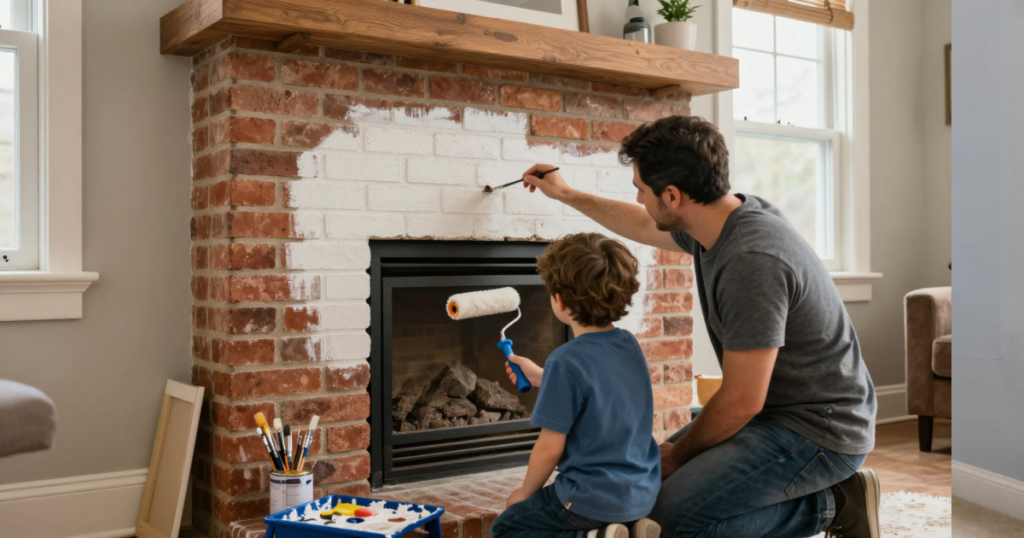
Painting a brick fireplace can completely change the look of a room without replacing the existing brick. To get a durable, even finish, the brick needs to be thoroughly cleaned, properly primed, and painted with a quality interior paint.
Because brick is porous and textured, preparation is especially important. Soot, dust, loose debris, and other contaminants can interfere with adhesion or show through the finished paint if they aren’t addressed first.
What Do You Need to Paint a Brick Fireplace?
Before getting started, gather the supplies you’ll need:
- Wire or stiff-bristle brush
- Vacuum
- Appropriate cleaner and sponge
- Painter’s tape
- Drop cloth
- Paintbrush
- Roller with a 3/8- or 1/2-inch nap
- Primer suitable for brick
- Interior paint
- Safety glasses, gloves, and other appropriate PPE
The exact products you need can vary depending on the condition of the fireplace and the paint you’re using.
How to Paint a Brick Fireplace Step by Step
1. Brush and Vacuum the Brick
Use a stiff brush to remove dust, dirt, and loose debris from the brick and mortar joints. Pay particular attention to the recessed mortar lines. Inspect the mortar while you’re working and address any areas that need repair. Once you’re finished brushing, vacuum the brick thoroughly to remove the loosened debris.
2. Clean the Fireplace
Brick around a fireplace can accumulate soot and other contaminants that shouldn’t be painted over. Clean the brick thoroughly with an appropriate cleaner or soap and water. More stubborn soot or residue may require a degreaser or another cleaner suitable for the surface.
Rinse away cleaner residue as required and allow the brick to dry completely. Because brick is porous and absorbs moisture, Benjamin Moore recommends allowing it to dry for 24 hours before priming and painting.
3. Protect the Surrounding Area
Place a drop cloth around the fireplace and use painter’s tape to protect adjacent walls, trim, flooring, and other surfaces you don’t want to paint.
4. Prime the Brick
Brick should be primed before painting. Use a quality primer suitable for masonry or brick and the conditions of your fireplace. Start with a brush to work primer into the mortar joints and other recessed areas. Then use a roller to cover the faces of the bricks.
Because brick is porous, it may absorb more primer than a typical wall. A second coat of primer may also be necessary when you’re trying to block soot or mineral staining, particularly if you’re painting the fireplace a light color.
Allow the primer to dry according to the manufacturer’s instructions before painting.
5. Paint the Mortar and Detailed Areas
Once the primer is dry, use a brush to apply paint to the mortar lines, edges, and other areas a roller may not reach effectively. Make sure you’re getting paint into the texture of the brick without allowing excess paint to collect in recessed areas.
6. Roll the Face of the Brick
Use a roller with a nap appropriate for the texture of your brick to paint the larger surfaces. Work systematically across the fireplace and watch for missed areas, drips, and excess paint.
7. Apply a Second Coat
Once the first coat has dried for the specified recoat time, apply a second coat using the same process. A second coat can help provide more uniform color and coverage across the porous, textured surface.
What Kind of Paint Should You Use on a Brick Fireplace?
For the exterior brick surrounding an indoor fireplace, use a quality interior paint suitable for brick or masonry. Benjamin Moore recommends products including Aura Interior, Regal Select Interior, and Advance Interior for painted brick fireplaces.
The paint sheen affects the finished appearance as well. Matte and lower-sheen finishes can emphasize the natural look and texture of the brick, while higher sheens reflect more light and are generally easier to clean.
Importantly, regular interior paint should only be used on the outside of the fireplace. Do not use standard wall paint inside the firebox or anywhere exposed to open flame. Those areas require products specifically designed and rated for high-heat applications.
How to Paint a Brick Fireplace White
The painting process is the same whether you’re painting red brick white or choosing another color. However, good cleaning and priming become particularly important with white and other light colors because soot, mineral stains, and the original brick color can be more noticeable through the finish.
Make sure the brick is properly sealed and any staining has been addressed before applying your white finish coats. An additional coat of primer may be necessary if discoloration continues to show through.
What Color Should You Paint a Brick Fireplace?
White is a popular choice for brightening a brick fireplace, while black can create a stronger, more modern focal point. Gray and other neutrals can provide a middle ground while still changing the appearance of traditional red brick.
You don’t have to stick with neutrals. A fireplace can also be a good place to introduce a deeper or more distinctive color that coordinates with the walls, furnishings, and other finishes in the room.
Can You Remove Paint From a Brick Fireplace?
Paint can be removed from brick, but it can be difficult because brick is porous and paint can penetrate its surface and mortar joints. You may not be able to restore painted brick perfectly to its original appearance.
For that reason, it’s worth being confident that you want a painted fireplace before committing to the project.
Come to Our Stores for the Right Paint for Your Brick Fireplace
Stop by Loconsolo Paints before starting your project. Our knowledgeable team can help you choose the right Benjamin Moore primer, paint, color, and tools for painting your brick fireplace.
Visit one of our NYC paint store locations to get everything you need for your fireplace project.