
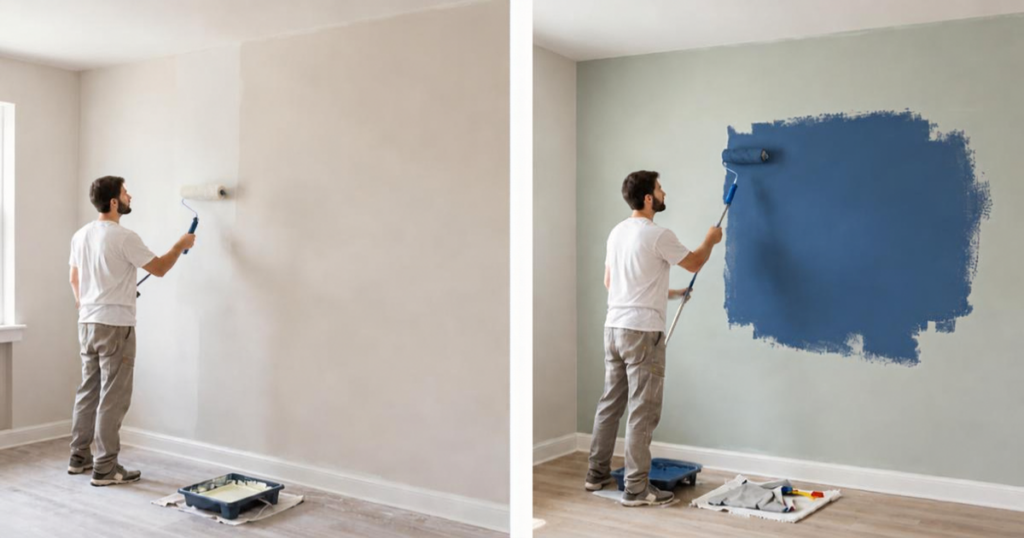
You don’t always need to prime a wall before painting. If the wall is already painted, clean, in good condition, and you’re applying a compatible paint, you can often paint it without using a separate primer.
Primer becomes more important when you’re painting a bare or porous surface, covering repairs or stains, making a major color change, or painting a surface where adhesion may be difficult. The condition of the wall is usually what determines whether primer is necessary.
When Do You Need to Prime a Wall Before Painting?
There are several situations where priming your walls before painting can help you achieve a better and more uniform finish.
1. The Wall Has Never Been Painted
Bare, unpainted surfaces are often porous and can absorb paint unevenly. Applying the appropriate primer first helps seal the surface and provides a more uniform base for your paint. This is particularly important with new drywall or sheetrock, where the drywall paper and joint compound can absorb paint differently.
2. You Repaired or Patched the Wall
Spackle, joint compound, and other wall repairs can be more porous than the surrounding painted surface. Painting directly over them can sometimes leave noticeable dull or uneven areas in the finished wall. Priming repaired areas first helps seal them and create more consistent paint absorption.
3. You’re Painting Over Stains
Water stains, smoke, grease, marker, and other discoloration can sometimes bleed through a new coat of paint. A stain-blocking primer designed for the particular problem can help prevent the stain from showing through the new finish. Make sure the underlying cause of a stain, such as a water leak, has been corrected before painting.
4. You’re Making a Major Color Change
Primer can be useful when you’re making a dramatic change in wall color, particularly when covering a very dark or strong color with something much lighter. Creating a more uniform base can make it easier for the new color to achieve consistent coverage.
5. The Existing Surface Is Glossy or Difficult to Paint
Paint may have trouble adhering properly to certain slick or glossy surfaces. These surfaces need to be properly cleaned and prepared, and a bonding primer may be appropriate to improve adhesion. Primer isn’t a substitute for surface preparation. Any cleaning, sanding, or other preparation required for the existing coating should still be completed before priming.
6. The Wall Is Porous or Uneven
If different areas of a wall absorb paint at different rates, the finished surface can appear inconsistent. Primer can help seal porous areas and create a more uniform surface before the finish coats are applied.
When Can You Paint a Wall Without Primer?
You can often skip a separate primer when the wall is already painted, the existing coating is firmly adhered, and the surface is clean and in good condition. There should also be no significant stains, bare areas, or adhesion problems that need to be addressed.
You’ll still need to properly prepare the wall before painting. Primer can solve specific surface problems, but it doesn’t replace cleaning and other necessary prep work.
Do You Need to Prime an Already Painted Wall?
Usually, no. An already painted wall generally doesn’t need to be primed again if the existing paint is in good condition and the new paint is compatible with it. Primer may still be needed if the wall has stains, repairs, exposed areas, a glossy finish, or another condition that could affect adhesion or the appearance of the new paint.
How Many Coats of Primer Do You Need?
One properly applied coat of primer is sufficient for many wall-painting projects. However, the number of coats can depend on the condition of the wall, the type of primer, and the problem you’re trying to address. Always follow the primer manufacturer’s application and recoating instructions.
What Kind of Primer Should You Use?
The right primer depends on why the wall needs to be primed. A general-purpose primer may be appropriate for many everyday projects, while difficult surfaces may require a bonding primer and stains may require a stain-blocking primer. Choosing a primer for the specific surface and problem is more important than simply applying primer to every wall.
Get the Right Primer at Loconsolo Paints Stores
Not sure whether your walls need primer? Stop by Loconsolo Paints. Our knowledgeable team can help you choose the right Benjamin Moore primer and paint based on the surface you’re painting and its current condition.
Visit one of our NYC paint store locations for paint, primer, and the supplies you need to get the job done.