
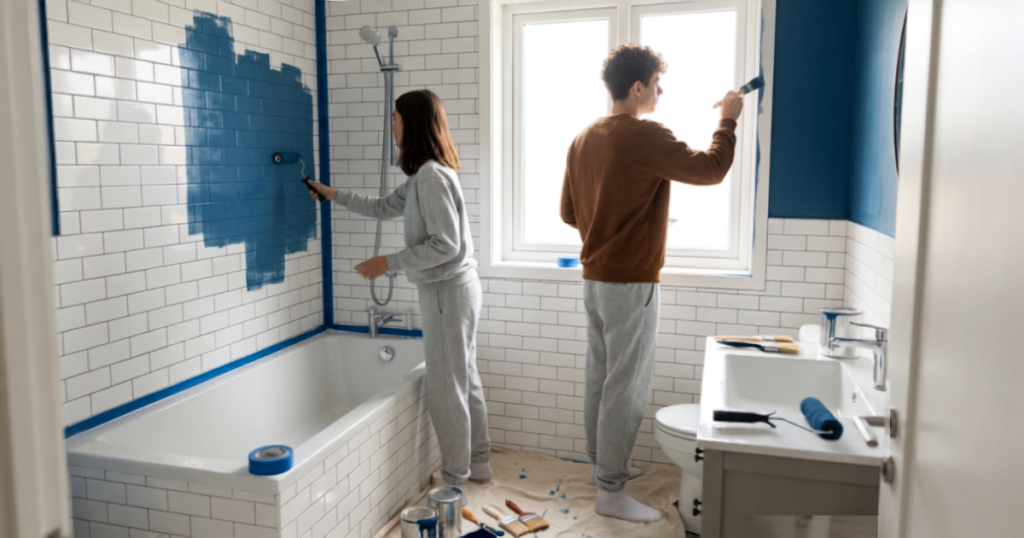
Yes, you can paint bathroom tile. Painting tile can be a great way to update an older bathroom without removing and replacing the existing tile, but proper preparation and the right paint products are essential for getting a finish that adheres well and lasts.
But, not every tiled surface in a bathroom is an equally good candidate for paint. Before getting started, consider what the tile is made from, where it is located, and how much water, wear, and cleaning the surface receives.
If you’re considering a more extensive bathroom update, painting isn’t your only option. You may also want to compare microcement vs. tile for bathrooms to see which surface makes more sense for the look, maintenance, and overall finish you want.
What Bathroom Tiles Can You Paint?
Many ceramic and porcelain tiles can be painted, including the glazed tile commonly found on bathroom walls. Because these surfaces are smooth and nonporous, they require thorough cleaning, sanding, and a high-adhesion bonding primer before painting.
- Bathroom wall tile is generally one of the best candidates for painting, particularly when it is outside areas that receive direct and frequent water exposure. A properly prepared tiled wall can be painted to completely change its color and give an older bathroom a fresh look.
- Ceramic tile can also be painted. The glazed surface needs to be properly prepared so that the primer can form a strong bond with the tile rather than simply sitting on top of the slick surface.
- Porcelain tile can be more challenging because of its dense, nonporous surface. If you plan to paint porcelain tile, proper surface preparation and using products designed to adhere to difficult surfaces are especially important.
- Bathroom floor tile requires more consideration. While certain tile floors can be coated with products approved for floors, they receive considerably more wear than walls. Foot traffic, water, cleaning products, and abrasion can all shorten the life of an unsuitable coating.
- Shower tile and other surfaces exposed to frequent or standing water should not be treated like ordinary bathroom wall tile. A paint that performs well on a bathroom wall is not automatically suitable for a shower floor, tub surround, or another surface that is routinely saturated with water. For these applications, always verify that the specific coating system is approved by the manufacturer for the surface and level of water exposure involved.
How to Paint Bathroom Tile
Painting bathroom tile successfully is largely about preparation. Tile is designed to have a hard, smooth surface, which is exactly what makes it more difficult for paint to adhere. Taking the time to properly clean and prepare it can make a significant difference in the finished result.
1. Repair Damaged Tile and Grout
Before painting, inspect the tile and grout for cracks, loose material, damaged grout, or old sealant. Make necessary repairs and remove deteriorated material before moving forward. Starting with a sound surface gives the primer and paint a much better foundation.
2. Clean the Tile Thoroughly
Bathroom tile can accumulate soap residue, oils, mildew, cleaning-product residue, and other contaminants that interfere with adhesion. Thoroughly clean both the tile and grout and make sure the surface is free of grease, mildew, and buildup.
Once clean, rinse the surface as necessary to remove cleaner residue and allow the tile to dry completely.
3. Sand the Tile
Glossy tile should be sanded to dull the existing finish and provide a better surface for the primer to grip. Benjamin Moore recommends sanding tile with 400-grit sandpaper as part of its tile-painting process.
After sanding, remove all dust, rinse the surface, and allow it to dry before applying primer.
4. Apply a Bonding Primer
Don’t skip the primer when painting bathroom tile. A high-adhesion bonding primer is designed to stick to slick, difficult-to-coat surfaces where ordinary primers may struggle.
INSL-X® Stix® Waterborne Bonding Primer is specifically formulated to adhere to difficult surfaces, including glossy and ceramic tile. Apply the primer evenly and allow it to dry according to the manufacturer’s instructions before applying your topcoat.
5. Paint the Bathroom Tile
Once the primer has dried, apply your chosen topcoat with a quality brush, roller, or appropriate sprayer. Two coats will generally provide better coverage and a more uniform finish than attempting to cover the tile heavily with a single coat.
Follow the paint manufacturer’s recommended drying time between coats. Avoid rushing the process, particularly in a bathroom where good adhesion and durability are important.
6. Allow the Paint to Cure
Dry paint and fully cured paint aren’t the same thing. Even when the surface feels dry, the coating may still need additional time before it reaches its full durability.
Follow the manufacturer’s instructions for cure and return-to-service times before exposing freshly painted tile to cleaning, regular use, or moisture.
What Is the Best Paint for Bathroom Tile?
The best paint for bathroom tile depends on where the tile is located and the conditions it will be exposed to. Rather than choosing a paint simply because it says it is suitable for bathrooms, make sure the primer and paint is appropriate for the tile itself.
For typical bathroom wall tile, Benjamin Moore recommends INSL-X Stix Waterborne Bonding Primer followed by two coats of Aura Bath & Spa Waterborne Interior Paint. Stix is designed to bond to difficult surfaces such as glossy and ceramic tile, while Aura Bath & Spa is formulated for the high-humidity conditions found in bathrooms.
The appropriate coating may be different for bathroom floor tile, shower tile, or other surfaces subject to heavy wear or direct water exposure. Don’t assume that a standard bathroom wall paint is suitable simply because the project is located in a bathroom. Always check the product specifications for the particular surface and application.
If you’re repainting more than just the tile, you’ll also want to choose the right finish for the other surfaces in the room. Check out our guide to what paint sheen to use in a bathroom for help choosing a finish for your walls, ceiling, cabinets, and vanity.
Where Can You Buy Paint for Bathroom Tile?
If you’re ready to paint your bathroom tile, stop by Loconsolo Paints. We carry the primers, paints, tools, and supplies you need to properly prepare and paint difficult surfaces.
Just as importantly, our knowledgeable team is trained to help and loves working with customers to find the right solution for their projects. Tell us what kind of bathroom tile you’re painting and where it’s located, and we’ll help you determine the appropriate products and supplies for the job.
Visit one of our NYC paint store locations to get everything you need to paint your bathroom tile.