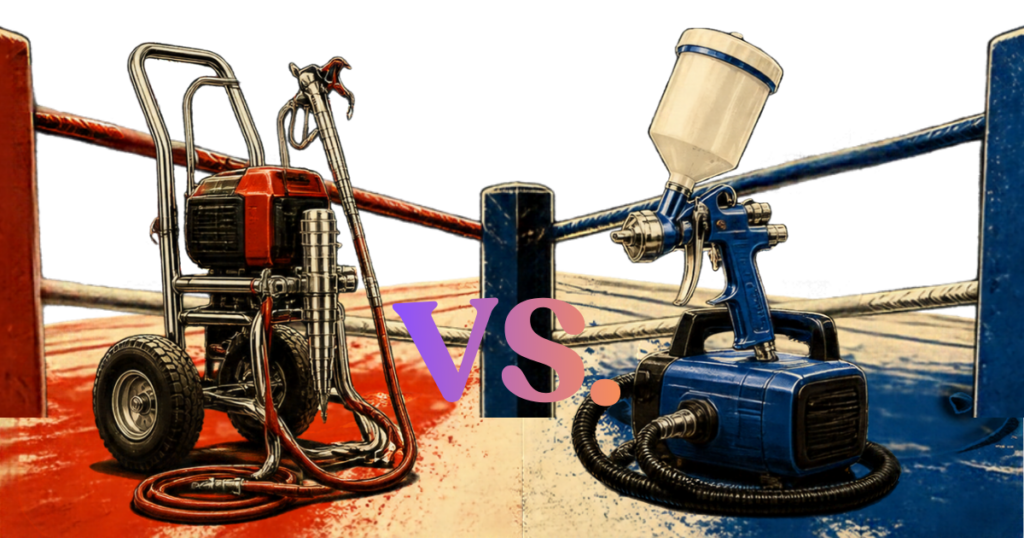
The main difference between airless and HVLP paint sprayers is how they atomize paint. Airless sprayers use high fluid pressure to force paint through a spray tip, making them ideal for covering large surfaces quickly. HVLP (High Volume, Low Pressure) sprayers use airflow to atomize paint, offering greater control for detailed finishing projects such as cabinets, furniture, and trim.
Both types can produce excellent results, but the right choice depends on the coating, surface, project size, and desired finish.
Airless vs. HVLP Paint Sprayers: Key Differences
| Feature | Airless Paint Sprayer | HVLP Paint Sprayer |
|---|---|---|
| How it works | High-pressure fluid atomization | Air-assisted atomization |
| Application speed | Generally faster for large areas | Generally slower |
| Finish quality | Smooth with proper technique | Excellent for detailed finishes |
| Overspray | Can be significant | Often lower with proper setup |
| Coating compatibility | Handles many thicker architectural coatings | Depends on equipment and coating viscosity |
| Best applications | Walls, ceilings, siding, fences | Cabinets, furniture, doors, trim |
| Equipment setup | Pump, hose, and spray gun | Turbine or compressor, spray gun |
| Typical users | Contractors and professional painters | Finishers, woodworkers, DIYers |
What is an Airless Paint Sprayer?
An airless paint sprayer uses a high-pressure pump to force paint through a small opening in the spray tip. The sudden pressure drop causes the coating to atomize into droplets that form a spray pattern. Because airless sprayers can deliver large volumes of paint quickly, they’re commonly used for residential and commercial painting projects.
Typical applications include:
- Interior walls and ceilings
- Exterior siding
- Fences and decks
- Large commercial spaces
- New construction projects
Airless sprayers are particularly useful when productivity and coverage are priorities.
What Is an HVLP Paint Sprayer?
HVLP stands for High Volume, Low Pressure. These sprayers use a relatively high volume of air at low pressure to atomize paint as it exits the spray gun. HVLP systems are commonly used for fine finishing because they provide controlled application and can reduce overspray compared with conventional air spray equipment.
Typical applications include:
- Kitchen cabinets
- Furniture
- Doors and trim
- Woodworking projects
- Decorative finishing
HVLP equipment may use a turbine or compressed air system, depending on the design.
Which Paint Sprayer Gives a Better Finish?
Both airless and HVLP paint sprayers can produce smooth, professional-quality finishes versus a paint brush.
HVLP sprayers are often preferred for detailed finishing because they provide precise control over paint delivery and atomization. This makes them popular for cabinetry, furniture, and woodworking.
Airless sprayers can also produce excellent finishes, particularly when equipped with fine-finish spray tips and properly adjusted pressure settings. The coating, spray tip, surface preparation, and application technique often matter as much as the sprayer type itself.
Is Airless or HVLP Better for Cabinets?
HVLP sprayers are often an excellent choice for cabinets because they provide controlled application and can produce smooth finishes on doors, drawers, and detailed surfaces.
However, professional painters also use airless sprayers with fine-finish tips for cabinet painting, particularly when working on larger projects. The best choice depends on the coating being used, the amount of cabinetry being painted, and the desired finish.
Is Airless or HVLP Better for Walls?
Airless paint sprayers are generally better suited for painting large interior and exterior walls. They can apply architectural coatings quickly and efficiently, making them popular among professional painting contractors.
HVLP sprayers are usually less practical for large wall surfaces because of their lower material delivery rates and potentially longer application times. For extensive residential or commercial painting projects, airless equipment is often the preferred option.
Do Airless or HVLP Sprayers Use More Paint?
Paint consumption depends on the equipment, coating, pressure settings, spray technique, and amount of overspray. HVLP sprayers can offer high transfer efficiency when properly configured, particularly for detailed finishing applications.
Airless sprayers may generate more overspray in certain situations, although modern tips and lower-pressure spraying techniques can help reduce material waste.
Neither system automatically uses less paint in every application.
Can You Use the Same Paint in Airless and HVLP Sprayers?
Some coatings can be used with both airless and HVLP equipment, but not every paint is suitable for both systems. Airless sprayers can often apply thicker architectural coatings with little or no thinning, depending on the machine and product.
HVLP sprayers may require coatings with different viscosity characteristics or manufacturer-approved thinning to achieve proper atomization.
Always check the coating manufacturer’s application instructions and the sprayer’s specifications before use.
Is an Airless or HVLP Paint Sprayer Easier to Use?
HVLP sprayers may offer greater control for small, detailed projects, but achieving a professional finish still requires practice.
Airless sprayers can cover large surfaces efficiently, although users must learn proper spray technique, tip selection, pressure adjustment, and overspray control. Airless equipment operates at extremely high pressure and can cause serious injection injuries. Never place your hands near a spray tip or attempt to stop a leak with your fingers.
Both systems require cleaning, maintenance, and appropriate safety precautions.
Airless vs. HVLP: Which Paint Sprayer Should You Choose?
Choose an airless paint sprayer if you’re primarily painting walls, ceilings, siding, fences, or other large surfaces where speed and coverage are important.
Choose an HVLP paint sprayer if you’re focused on furniture, cabinetry, trim, or other detailed finishing projects where controlled application is a priority.
Professional painters may use both systems depending on the type of work they perform.
Paint Sprayer Repair & Service in NYC
Keeping your paint sprayer properly maintained can help prevent clogs, pressure problems, and unexpected equipment downtime. Loconsolo Paints offers professional paint sprayer repair and service in NYC for Graco and TriTech paint sprayers and spray guns.
Call us at 718-332-1111 to discuss your equipment or ask about our repair services. You can also visit our paint store on Coney Island Avenue in Brooklyn, where our paint sprayer repairs and servicing are performed.