
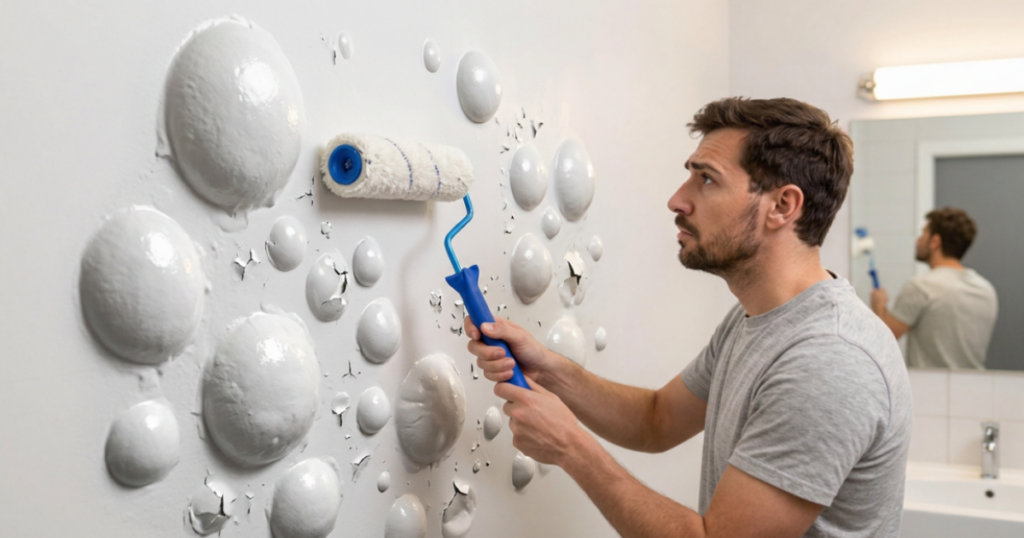
Seeing bubbles appear in freshly painted walls, ceilings, furniture, or other surfaces can be frustrating, especially after putting time and effort into a painting project. Paint bubbling is a common problem that can occur during or after painting, and it usually points to an underlying issue with the surface, application, or environment.
The good news is that paint bubbles can often be prevented once you identify the cause. In this guide, we’ll explain why paint bubbles, what causes it, and how to fix it.
What Causes Paint to Bubble?
Paint bubbles form when the paint film loses adhesion to the surface or traps moisture, air, or solvents beneath it. As pressure builds underneath the paint, small bubbles or blisters begin to appear.
Several different issues can cause paint bubbling, so identifying the source is the first step toward preventing it from happening again.
Moisture Under the Paint
One of the most common causes of paint bubbling is moisture trapped beneath the paint film.
Water from plumbing leaks, roof leaks, condensation, or high humidity can prevent paint from bonding properly. As the moisture tries to escape, it pushes against the paint, creating bubbles.
Bathrooms, kitchens, laundry rooms, and basements are especially susceptible because they experience higher moisture levels.
Painting on a Dirty Surface
Dust, grease, oil, and other contaminants can keep paint from adhering correctly. If a surface isn’t cleaned before painting, the paint may bond to the dirt instead of the wall itself, increasing the likelihood of bubbling or peeling over time.
Painting in High Heat or Direct Sunlight
Painting a surface that is too hot can cause the outer layer of paint to dry faster than the layer underneath. As the lower layer continues to cure, pressure can build and create bubbles or blisters in the paint film.
Whenever possible, avoid painting in direct sunlight or during the hottest part of the day.
Applying Paint Too Thick
Applying paint too heavily can trap solvents or moisture beneath the surface. Multiple thin coats generally produce a smoother, more durable finish than one heavy coat.
Painting Over an Unstable Surface
If old paint is already loose, cracked, or peeling, new paint may not adhere properly. Instead of covering the problem, remove failing paint, prepare the surface properly, and prime before repainting.
Can Spray Paint Bubble?
Yes. Spray paint can bubble for many of the same reasons as traditional paint. Common causes include:
- Spraying too close to the surface
- Applying coats that are too heavy
- Painting in excessive heat or humidity
- Applying a second coat before the first has flashed or dried properly
- Spraying over a dirty or glossy surface
How Do You Fix Bubbling Paint?
The best repair depends on what caused the bubbles. If the paint has not fully dried, allow it to cure completely before deciding whether repairs are necessary. If the bubbles remain:
- Scrape away any loose or bubbled paint.
- Correct the underlying issue, such as moisture or poor surface preparation.
- Sand the area smooth.
- Prime if needed.
- Repaint using thin, even coats.
For a complete walkthrough, read our guide: How To Fix Peeling Paint
How Do You Prevent Paint from Bubbling?
Most paint bubbling can be avoided by following a few simple best practices:
- Paint only on clean, dry surfaces.
- Repair moisture problems before painting.
- Avoid painting in extreme heat or direct sunlight.
- Apply multiple thin coats instead of one thick coat.
- Allow each coat to dry according to the manufacturer’s recommendations.
- Use the proper primer when needed.
Taking the time to prepare the surface properly is one of the best ways to achieve a smooth, long-lasting finish.
Final Thoughts
Stop by a Loconsolo Paints store if you’re unsure what caused your paint to bubble or need help choosing the right primer and paint.
Our team can help you troubleshoot the problem and recommend the right products to get the job done. Visit any of our Benjamin Moore paint store locations today!