
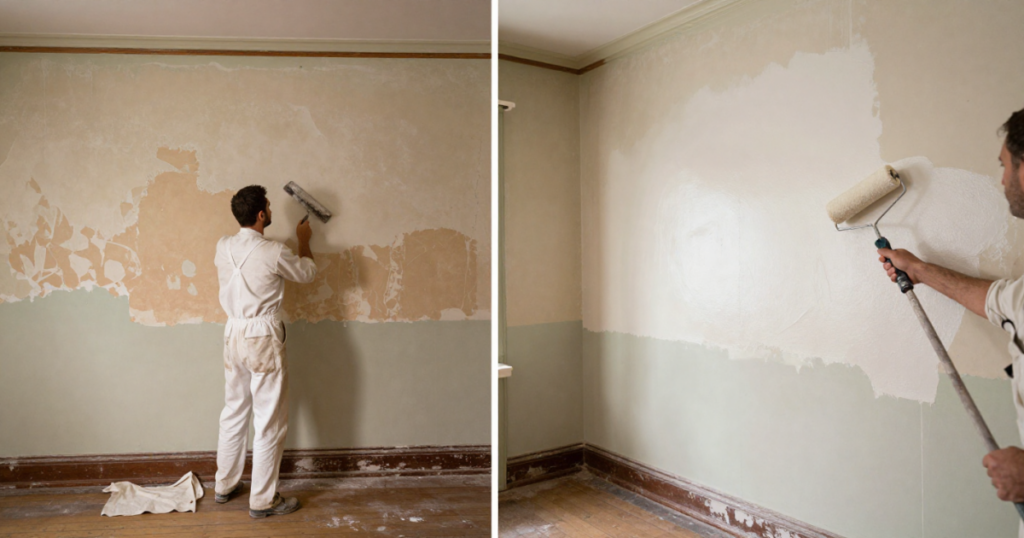
Once lead-based paint is identified in a home, the next step is deciding how to address it. Two of the most common solutions are lead paint removal (abatement) and lead paint encapsulation.
While both methods are used to manage lead hazards, they differ significantly in approach, cost, disruption, and long-term outcomes. Understanding the differences is critical for homeowners, landlords, and property managers making safety decisions.
What Is Lead Paint Removal?
Lead paint removal, also known as lead abatement, is the process of permanently eliminating lead-based paint hazards from a property.
This typically involves:
- Removing painted surfaces entirely
- Stripping and disposing of contaminated materials
- Using containment procedures to prevent lead dust spread
Key Characteristics of lead paint removal:
- Permanent solutions needed
- Highly regulated process
- Requires trained and certified professionals
- Often involves significant disruption
Removal is considered the most complete method of addressing lead hazards.
What Is Lead Paint Encapsulation?
Encapsulation is the process of sealing lead-based paint beneath a protective coating or barrier. Instead of removing the paint, professionals apply:
- Specialized sealants
- Epoxy or polymer coatings
- Durable protective layers designed to lock in lead paint
Key Characteristics of lead paint encapsulation:
- Less invasive than removal
- Faster and often less expensive
- Requires intact underlying surfaces
- Not suitable for severely deteriorated paint
Encapsulation is a containment strategy, not a removal method.
Key Differences Between Removal and Encapsulation
Permanence
- Removal: Permanent elimination of the hazard
- Encapsulation: Temporary containment (requires monitoring)
Cost
- Removal: Typically higher due to labor and disposal
- Encapsulation: Generally more affordable upfront
Disruption
- Removal: High disruption; may require vacating areas
- Encapsulation: Lower disruption; faster completion
Condition of Surfaces
- Removal: Suitable for damaged or deteriorating surfaces
- Encapsulation: Requires stable, intact paint surfaces
Long-Term Maintenance
- Removal: Minimal ongoing maintenance required
- Encapsulation: Must be monitored over time for wear or damage
When Is Lead Paint Removal Recommended?
Lead paint removal is the most thorough and permanent solution available. It is often recommended when:
- Paint is severely peeling or deteriorating
- Renovation work is planned
- Long-term safety is the top priority
- Encapsulation is not structurally viable
When Is Lead Paint Encapsulation Used?
Encapsulation is often used as an interim or lower-impact solution. It may be appropriate when:
- Paint is in good condition
- Surfaces are stable and not actively deteriorating
- A faster or less invasive solution is preferred
- Budget constraints are a factor
Which Option Is Safer?
Both methods can be safe when performed correctly by trained professionals.
- Removal eliminates the hazard entirely, especially important when removing lead from older homes
- Encapsulation contains the hazard but requires ongoing monitoring
The safest option depends on:
- Condition of the property
- Level of exposure risk
- Future renovation plans
- Cost Considerations
Costs vary based on:
- Size of the property
- Severity of contamination
- Method used
- Local labor and compliance requirements
How Professionals Decide Between the Two
The decision is rarely one-size-fits-all. A licensed professional will typically evaluate:
- Surface condition
- Accessibility
- Level of deterioration
- Future use of the property
- Compliance requirements
Final Thoughts
If you are unsure which option is right for your situation, Loconsolo Paints offers a free lead abatement consultation. Visit any of our paint store locations in Queens, Brooklyn, and The Bronx. Our team can help evaluate your property and guide you toward the safest and most appropriate solution.