
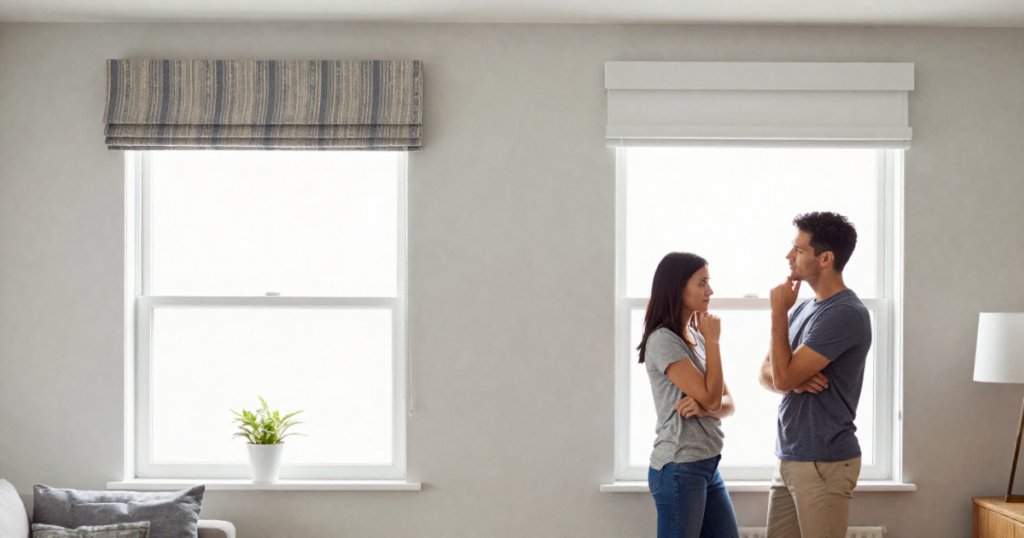
If you’re shopping for blinds, one question you’ll likely encounter is whether to choose blinds with a valance or blinds without one. While the difference may seem minor, a valance can significantly impact the overall appearance of your window treatment.
Some homeowners prefer the finished and decorative look of a valance, while others prefer the clean, minimalist appearance of exposed headrails. The right choice depends on your home’s style, the room’s design, and your personal preferences.
In this guide, we’ll compare valance vs. no valance blinds, including the pros and cons of each option.
What is a Blind Valance?
A blind valance is a decorative piece that covers the headrail and operating hardware at the top of a blind. Valances are commonly found on wood blinds, faux wood blinds, vertical blinds, and custom window treatments.
The primary purpose of a valance is to create a cleaner, more finished appearance by concealing the mechanical components of the blind.
Blinds With a Valance
Blinds with a valance offer a more traditional and polished look. Many homeowners choose valances because they help the window treatment feel more integrated into the room’s design.
Benefits of Blinds With a Valance
- Conceals the headrail and hardware
- Creates a finished appearance
- Adds decorative detail
- Complements traditional interiors
- Often included with premium blind systems
- Help make custom window treatments feel more substantial and tailored
Potential Drawbacks With a Valance
- May appear bulkier than exposed blinds
- Some styles can feel more traditional
- Decorative valances may not suit minimalist spaces
The impact largely depends on the design of the valance itself. Modern valances tend to be much simpler than older, more ornate styles.
Blinds Without a Valance
Blinds without a valance leave the headrail visible. This approach has become increasingly popular in contemporary and modern interiors where clean lines and simplicity are emphasized.
Benefits of No-Valance Blinds
- Clean, minimalist appearance
- Modern aesthetic
- Less visual bulk
- Works well in contemporary spaces
- Simpler overall design
- Many newer homes and apartments favor this streamlined look.
Potential Drawbacks of No-Valance Blinds
- Exposed headrail remains visible
- Less decorative appearance
- May feel unfinished in some traditional interiors
For some homeowners, the exposed hardware isn’t a concern. Others prefer the cleaner finish that a valance provides.
Which Rooms Work Best With Valance Blinds?
Valance blinds often work particularly well in:
- Living rooms
- Dining rooms
- Traditional homes
- Formal spaces
- Rooms with decorative trim and millwork
In homes throughout areas like Forest Hills and Brooklyn Heights, valances are frequently used to complement classic architectural details and traditional interior designs.
Which Rooms Work Best Without a Valance?
No-valance blinds are often preferred in:
- Modern homes
- Contemporary apartments
- Home offices
- Minimalist interiors
- Loft-style spaces
The cleaner appearance helps support a more streamlined and modern design aesthetic.
Which Option Looks Better?
There is no universal answer because appearance is largely a matter of personal preference.
If you prefer:
- A more finished & decorative look, choose blinds with a valance.
- A more modern & minimalist look, choose blinds without a valance.
Both options can look attractive when matched appropriately to the room and overall design style.
Do Valances Affect Privacy or Light Control?
No. A valance is primarily decorative and does not significantly impact the privacy or light control provided by the blinds themselves.
Privacy and light control are determined by: blind material, slat size, blind design, window coverage.
The valance simply covers the hardware at the top of the window treatment.
Final Thoughts
The choice between valance and no-valance blinds comes down to aesthetics and personal preference. If you’re exploring blinds, shades, or custom window treatments, visit one of our window treatment and paint stores to speak with our team. Talk with us about window treatment options, design guidance, and solutions tailored to your space.