
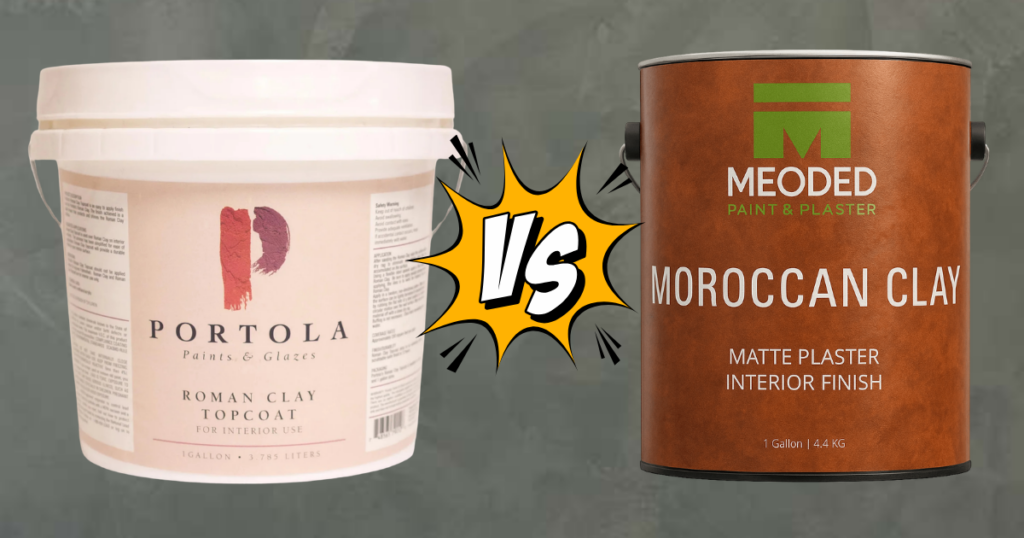
If you’re researching decorative plaster wall finishes, there’s a good chance you’ve come across both Portola Paints Roman Clay and MEODED Moroccan Clay. These two products are often compared because they create a natural, hand-applied look that adds depth and movement to walls.
Homeowners, designers, and painting professionals searching for clay finishes are usually looking for more than standard paint. They want texture, warmth, dimension, and a finish that helps a space feel custom and elevated.
In this guide, we’ll compare Portola Paints Roman Clay and MEODED Moroccan Clay, including:
- Appearance and finish
- Texture and application
- Color options
- Durability and maintenance
- Best spaces to use them
- Which product may be the better fit for your project
What is Portola Paints Roman Clay?
Portola Paints Roman Clay is a decorative interior wall finish designed to create a smooth, layered appearance with natural tonal variation. The finish has become popular in modern organic interiors because it creates movement and depth while still feeling soft and understated.
Roman Clay is typically applied using a putty knife or trowel in multiple thin layers. The final appearance depends heavily on the application technique, lighting conditions, wall texture, and color selection.
Many homeowners searching for Portola Paints are often looking for:
- Organic clay colors
- Textured wall finishes
- Alternatives to Roman Clay
- Decorative wall finishes
Because of its growing popularity, many designers and contractors are now also exploring comparable decorative finishes like MEODED Moroccan Clay.
What is MEODED Moroccan Clay?
MEODED Moroccan Clay is a decorative plaster finish designed to create a natural stone-like appearance with depth, movement, and texture. Like Roman Clay, Moroccan Clay is intended to deliver a handcrafted aesthetic that goes beyond traditional flat wall paint.
Moroccan Clay can range from soft and smooth to more textured depending on the application method and finishing technique. It is frequently used in:
- Luxury residential interiors
- Feature walls
- Dining rooms
- Bedrooms
- Boutique commercial spaces
- Mediterranean and modern organic designs
One reason many designers compare MEODED Moroccan Clay to Portola Paints Roman Clay is because both products create layered visual movement and a sophisticated plaster-inspired appearance.
Portola Paints Roman Clay vs. MEODED Moroccan Clay
Overall Appearance
Both finishes create a soft, natural look with movement and variation throughout the surface.
- Portola Paints Roman Clay is often associated with a smoother, suede-like appearance that works especially well in minimalist and California-inspired interiors.
- MEODED Moroccan Clay tends to offer a slightly more authentic plaster aesthetic with additional depth and dimension depending on the application style.
If you’re looking for:
- A softer contemporary finish, Roman Clay may appeal more.
- A richer plaster-inspired texture with more artisanal movement, Moroccan Clay may be the stronger choice.
Texture and Movement
Texture is one of the biggest reasons homeowners search for decorative finishes like Moroccan and Roman Clay.
- Portola Paints Roman Clay: Roman Clay typically creates subtle texture with layered tonal movement. The finish often appears smooth from a distance while revealing variation and dimension up close.
- MEODED Moroccan Clay: Moroccan Clay can achieve a similarly soft appearance, but it also allows for additional texture and customization depending on the applicator’s technique. This flexibility can make it attractive for designers wanting a more organic or old-world plaster look.
Color Selection
Both brands offer curated color palettes designed around earthy, natural tones. Popular decorative plaster colors often include:
- Warm whites
- Clay neutrals
- Greige tones
- Taupe colors
- Earthy beiges
- Muted greens
- Terracotta-inspired hues
One advantage of working with a decorative finish specialist or paint store is the ability to see samples and discuss how lighting impacts the final appearance.
Application Process
Both Portola Paints Roman Clay and MEODED Moroccan Clay require specialized application techniques. Unlike standard wall paint, decorative plaster finishes are usually applied in multiple layers using hand tools such as:
- Putty knives
- Trowels
- Specialty blades
The final result depends heavily on:
- Surface preparation
- Product thickness
- Application technique
- Dry time between coats
- Burnishing and finishing methods
For best results, many homeowners hire professional painters experienced with decorative plaster applications.
Durability and Maintenance
Decorative clay and plaster finishes are generally durable when properly applied and maintained. Both Roman Clay and Moroccan Clay are often selected because they:
- Hide minor imperfections well
- Create visual depth
- Offer a custom high-end appearance
- Age naturally over time
Maintenance requirements can vary depending on:
- The specific topcoat system
- Room usage
- Moisture exposure
- Cleaning frequency
It’s always important to follow manufacturer recommendations for cleaning and long-term maintenance.
Where These Finishes Work Best
Both Portola Paints Roman Clay and MEODED Moroccan Clay are commonly used in:
- Living Rooms: Decorative clay finishes add warmth and softness that work especially well in gathering spaces.
- Bedrooms: The muted movement and natural texture can help create a calm, relaxing atmosphere.
- Dining Rooms: These finishes often perform beautifully under layered lighting conditions.
- Accent Walls: Many homeowners start with a single feature wall before expanding the finish into additional rooms.
- Commercial Interiors: Restaurants, boutiques, studios, and hospitality spaces often use decorative plaster finishes to create a more upscale and memorable environment.
Is Moroccan Clay a Good Alternative to Roman Clay?
Yes. For homeowners and designers searching for alternatives to Portola Paints Roman Clay, MEODED Moroccan Clay can absolutely be worth considering.
Both products offer:
- Decorative movement
- Handcrafted character
- Natural aesthetic appeal
- Designer-friendly finishes
The right option often comes down to:
- Desired texture level
- Preferred application style
- Color goals
- Overall design aesthetic
- Installer familiarity with the product
Many designers appreciate Moroccan Clay because it can create both refined contemporary finishes and more textured old-world looks depending on the application technique.
Where to Buy Decorative Finishes
If you’re interested in decorative plaster finishes, samples, or guidance, visit our showroom and speak with a paint expert that can help you understand the differences before starting your next paint project. Visit one of our paint store locations in New York and we’ll help you better understand the differences between these finishes before starting your project.