
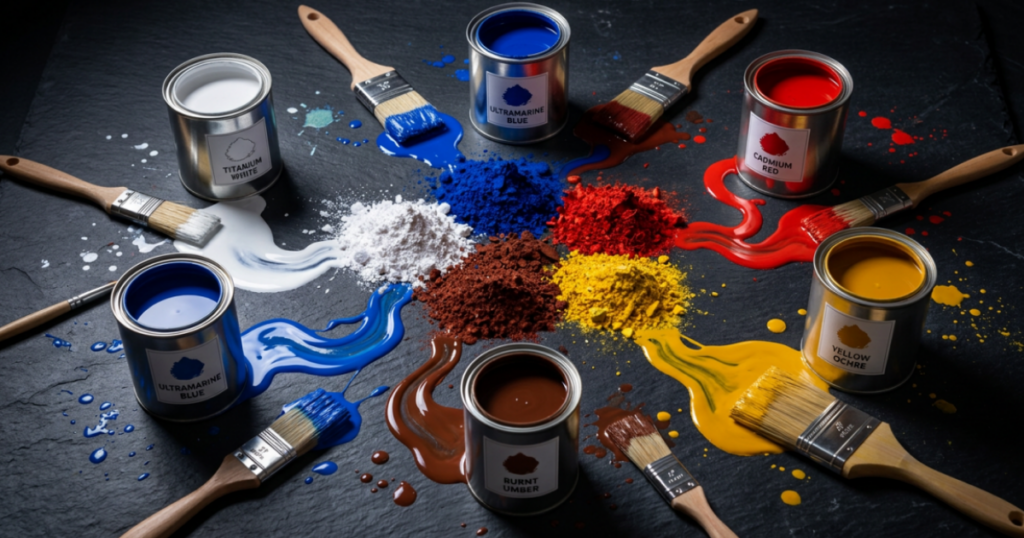
When most people think about paint, the first thing that comes to mind is color. Behind every paint color, however, are carefully selected pigments that help create the appearance, coverage, and performance of the coating.
Pigments are one of the most important ingredients in paint and play a major role in everything from color richness to opacity and durability.
Understanding what pigments are and how they function can help homeowners and professionals better understand why some paints perform differently than others.
What Are Pigments?
Pigments are finely ground particles added to paint to provide color and visual properties.
Different pigments are used to create:
- Whites
- Neutrals
- Bold colors
- Deep tones
- Specialty finishes
Pigments can also affect:
- Opacity
- Brightness
- Coverage
- Fade resistance
- Overall appearance
Paint manufacturers carefully combine pigments within a formula to achieve specific color and performance goals.
Pigments Do More Than Create Color
While pigments are primarily known for creating color, they also influence how paint performs once applied.
Depending on the type of pigment used, pigments may help improve:
- Hiding power
- UV resistance
- Color retention
- Durability
- Finish consistency
This is one reason why paint quality can vary significantly between products, even when colors appear visually similar.
The Difference Between Color and Opacity
Color and opacity are related, but they are not the same thing.
- Color refers to the visible hue of the paint.
- Opacity refers to how effectively the paint hides the surface underneath it.
Some pigments naturally provide stronger opacity than others, which is why certain paint colors cover surfaces more easily while others may require additional coats.
Titanium Dioxide Is One of the Most Important Pigments
One of the most important pigments used in paint is titanium dioxide.
Titanium dioxide is valued for its:
- Brightness
- Opacity
- Hiding power
- Light-reflecting ability
This pigment plays a major role in helping paint achieve strong coverage and clean-looking finishes, especially in whites and lighter colors. Titanium dioxide is commonly found in many premium paint formulations because of its performance characteristics.
Organic vs. Inorganic Pigments
Paint pigments generally fall into two categories:
- Organic pigments
- Inorganic pigments
- Organic Pigments
Organic pigments are often used to create:
- Bright colors
- Vibrant reds
- Intense yellows
- Rich blues
These pigments can produce bold color but may sometimes be more transparent.
Inorganic Pigments
Inorganic pigments are often associated with:
- Strong durability
- Earth tones
- Better opacity
- Improved weather resistance
Both pigment types are used throughout the paint industry depending on the desired appearance and performance goals.
Why Some Paint Colors Require More Coats
Certain paint colors naturally require additional coats because of the pigments used to create them. Some colors contain pigments that are naturally more transparent than others.
Colors such as:
- Bright reds
- Deep yellows
- Vibrant oranges
- Certain dark blues
Even premium paints can require multiple coats when working with highly saturated colors or dramatic color changes.
Pigment Quality Matters
The quality of pigments used in paint can influence:
- Color richness
- Fade resistance
- Consistency
- Coverage
- Long-term appearance
Premium paint manufacturers often invest heavily in pigment technology and formulation quality to help achieve more refined and durable finishes.
This is one reason why trusted premium brands such as Benjamin Moore are widely recognized for strong color performance and consistency across extensive color collections.
Pigments and Long-Term Performance
Pigments also affect how paint ages over time.
Higher-quality pigments may help improve:
- Resistance to fading
- UV stability
- Color consistency
- Exterior durability
This becomes especially important in spaces exposed to sunlight, moisture, and changing environmental conditions.
Final Thoughts
Pigments are one of the most important ingredients in paint, influencing far more than color alone. Coverage, opacity, durability, brightness, and fade resistance are all affected by the pigments used within the paint formulation.
If you’re looking to understand more, come speak with on of our paint experts. We have locations conveniently located throughout NYC including Brooklyn, Queens, and The Bronx. Visit any of our shop locations and we will help you make an informed decision when selecting your paint products and colors.