
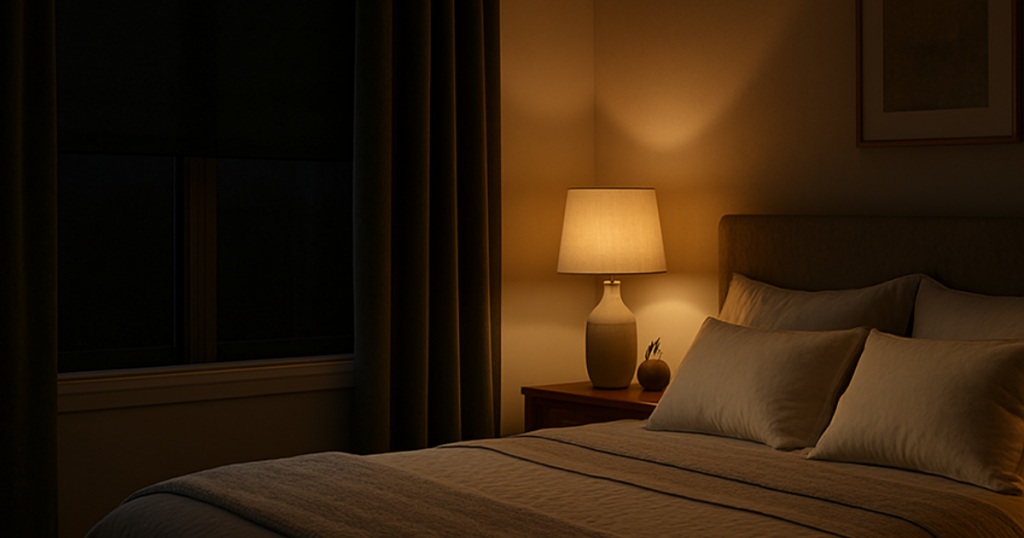
When people think about improving their sleep, they often focus on mattresses, pillows, or bedtime routines. But one important factor is often overlooked: the environment inside the bedroom. Lights, temperature, and outside distractions can all influence how well you sleep.
The right window treatments can play a major role in creating a bedroom that supports better rest. By controlling sunlight, reducing nighttime glare, and helping regulate temperature, blinds, shades, curtains, and shutters can make a noticeable difference in sleep quality.
Book a consultation with our design specialist and we’ll help guide you to a better sleep.
Why Light Matters for Sleep
Our bodies operate on a natural cycle called the circadian rhythm, which is influenced heavily by light. Exposure to daylight signals the brain to stay alert, while darkness helps trigger the production of melatonin, the hormone responsible for sleep.
If too much light enters your bedroom at the wrong time—especially early in the morning—it can disrupt this cycle and cause you to wake sooner than you’d like. This is one reason many people find it difficult to sleep well in bright bedrooms.
Window treatments that control light can help maintain a darker environment, allowing your body to follow a more natural sleep pattern.
Blocking Early Morning Sunlight
Morning sunlight can be one of the most common causes of interrupted sleep, particularly for bedrooms with east-facing windows. As the sun rises, direct sunlight can quickly fill the room with brightness.
Room darkening or blackout window treatments help reduce this light, making it easier to sleep longer and wake up naturally rather than being forced awake by sunlight.
These options are especially useful for:
- Bedrooms
- Nurseries
- Guest rooms
- Apartments in bright urban areas
By reducing early morning light, window treatments can help support a more consistent sleep schedule.
Reducing Light Pollution at Night
In many neighborhoods—especially in cities—bedrooms are exposed to artificial light from streetlights, passing cars, nearby buildings, or outdoor lighting. Even small amounts of this light can affect sleep.
Window treatments with thicker fabrics or liners can reduce outside glare and help create a darker, more relaxing environment at night. Curtains with blackout liners or room darkening shades are commonly used to minimize this type of light pollution.
Temperature Control and Sleep Comfort
Temperature also plays an important role in sleep quality. Bedrooms that become too hot or too cold during the night can make it difficult to fall asleep or stay asleep.
Certain window treatments help regulate temperature by reducing heat transfer through windows.
For example:
- Cellular shades trap air within their honeycomb structure, improving insulation
- Curtains or drapes add a barrier that can help reduce drafts and heat loss
- Shutters provide another layer between the window and the room
These features can help maintain a more stable and comfortable sleeping environment throughout the night.
The Best Window Treatments for Better Sleep
If improving sleep is the goal, several window treatment options are particularly effective in bedrooms.
Popular choices include:
- Room darkening shades that significantly reduce sunlight
- Blackout roller shades designed to block nearly all incoming light
- Cellular shades that combine light control with insulation
- Curtains or drapes with blackout liners for added darkness
Some homeowners also choose layered window treatments, such as combining shades with curtains, which provides both flexibility and maximum light control.
Creating a Sleep-Friendly Bedroom
A comfortable mattress and quiet environment are important, but the way light and temperature behave in a room can also influence how well you sleep. Window treatments that control sunlight and reduce outside glare can help transform a bedroom into a more restful space.
If you’re exploring options for your bedroom, seeing the different fabrics and light-control levels in person can help you better understand how each type of window treatment affects the room. Come by and speak with an interior specialist at one of our window treatment store locations.
With the right combination of light control, insulation, and privacy, window treatments can help create a bedroom environment that supports better and more consistent sleep.